FMCSA grants driverless trucks a 5-year exemption from warning-triangle rules
Aurora and other Level 4 autonomous operators can use cab-mounted warning beacons instead of placing triangles — OOIDA calls it a ‘corporate carve-out’ while a Seventh Circuit lawsuit over the earlier waivers continues.
Summarized from Land Line Media.
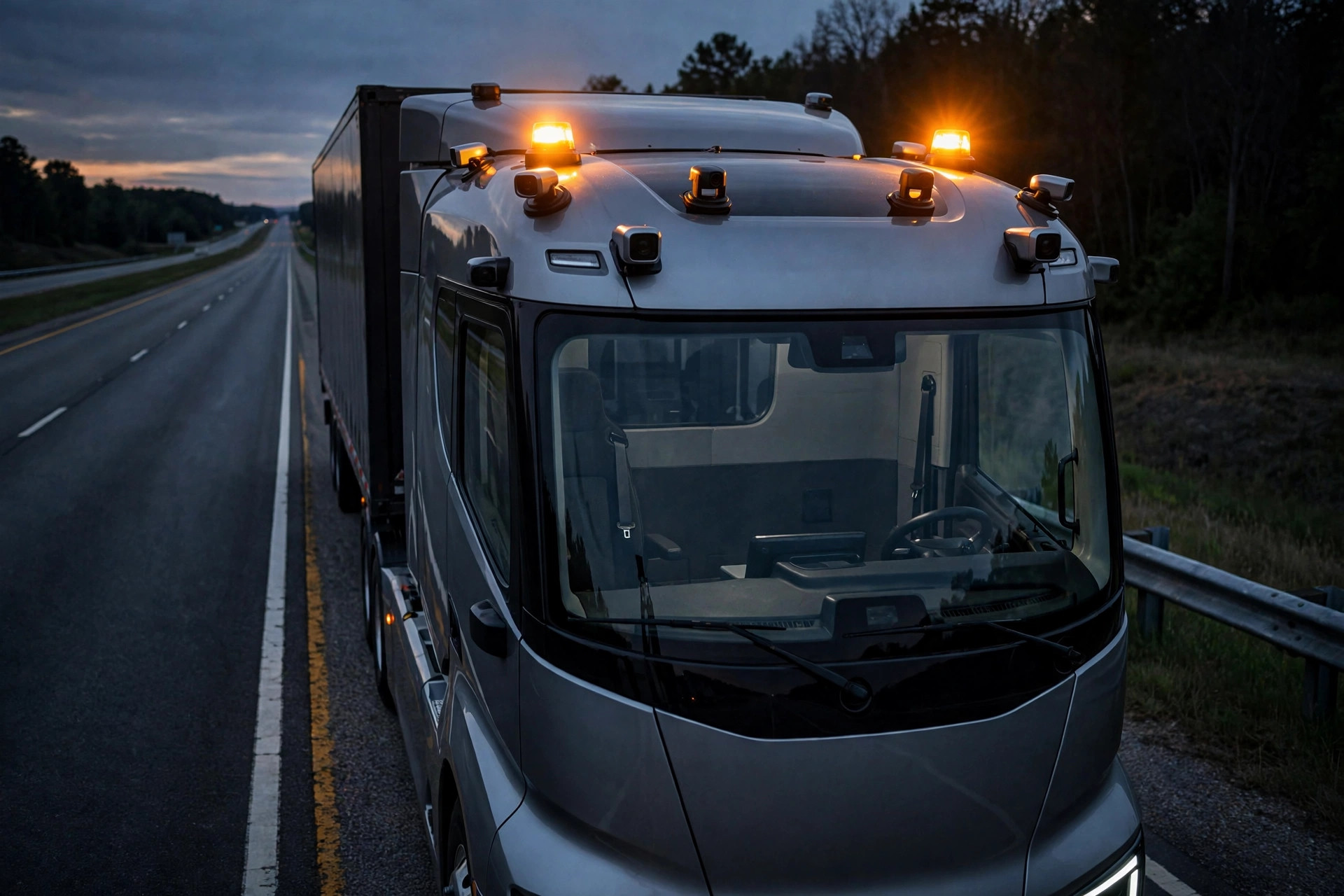
The Federal Motor Carrier Safety Administration has granted Aurora and other autonomous trucking companies a five-year exemption that lets driverless trucks use cab-mounted warning beacons instead of placing reflective warning triangles around a stopped truck, according to Land Line Media on Oct. 9.
The decision, published as a notice in the Federal Register on Friday, covers motor carriers operating Level 4 automated-driving-system-equipped commercial vehicles. Qualifying trucks can flash amber warning beacons mounted high on the cab when stopped on a highway or shoulder — replacing the federal requirement that a driver place warning devices roughly 10 feet, 100 feet, and 100 feet from the stopped vehicle within 10 minutes. FMCSA acknowledged edge cases, such as a truck on its side or failed lights, but wrote that triangles are equally vulnerable: they can be knocked over, placed incorrectly, or never placed at all because of human error or a driver incapacitated in a crash. The exemption took effect Oct. 7, 2026, and runs through Oct. 7, 2031.
The grant came over stiff opposition. FMCSA drew more than 400 comments: the American Trucking Associations and several state associations supported the exemption, while the Owner-Operator Independent Drivers Association, truck safety groups, and individual truckers objected — OOIDA argued the research behind Aurora’s request does not prove beacons work across the curves, hills, weather, trailer types, and emergency conditions federal rules must cover, calling beacons “not an adequate replacement.” OOIDA President Todd Spencer called the exemption a “corporate carve-out” that “sets a troubling precedent.” A separate lawsuit by Illinois carrier Kostas Giannoulias, who hauls freight in Texas and Oklahoma where Aurora runs driverless trucks, asked the U.S. Court of Appeals for the Seventh Circuit to block FMCSA’s earlier temporary waivers; the court denied a stay on Oct. 5, and the fight continues.
Aurora has sought the exemption for years. FMCSA denied a similar request in December 2024, saying it lacked monitoring controls; Aurora sued, then dropped the case after the agency granted temporary waivers starting in October 2025. This five-year grant replaces that patchwork of short-term waivers. Aurora told FMCSA its driverless fleet numbered 109 when it applied in April and could grow to thousands over the exemption period.
Sources
Related coverage
 October 8, 2026 · RegulationsFMCSA's HOS flexibility pilots move to White House review; comments open through Dec. 7
 October 6, 2026 · RegulationsFMCSA advances 14-hour clock-pause pilot: 256 drivers, up to 3 hours of split-duty time
 October 5, 2026 · RegulationsNew Jersey's ABC test for independent contractors takes effect — no carve-outs
Comments
Loading comments…