State trucking groups press Congress on lawsuit abuse, urban parking and staged-accident fraud ahead of midterms
Ohio and North Carolina associations met Reps. Dave Taylor and Mark Harris in district visits, backing bills on staged accidents and chameleon carriers and pointing to a $25,000 to $30,000 excise-tax cost on new trucks.
Summarized from Transport Topics.
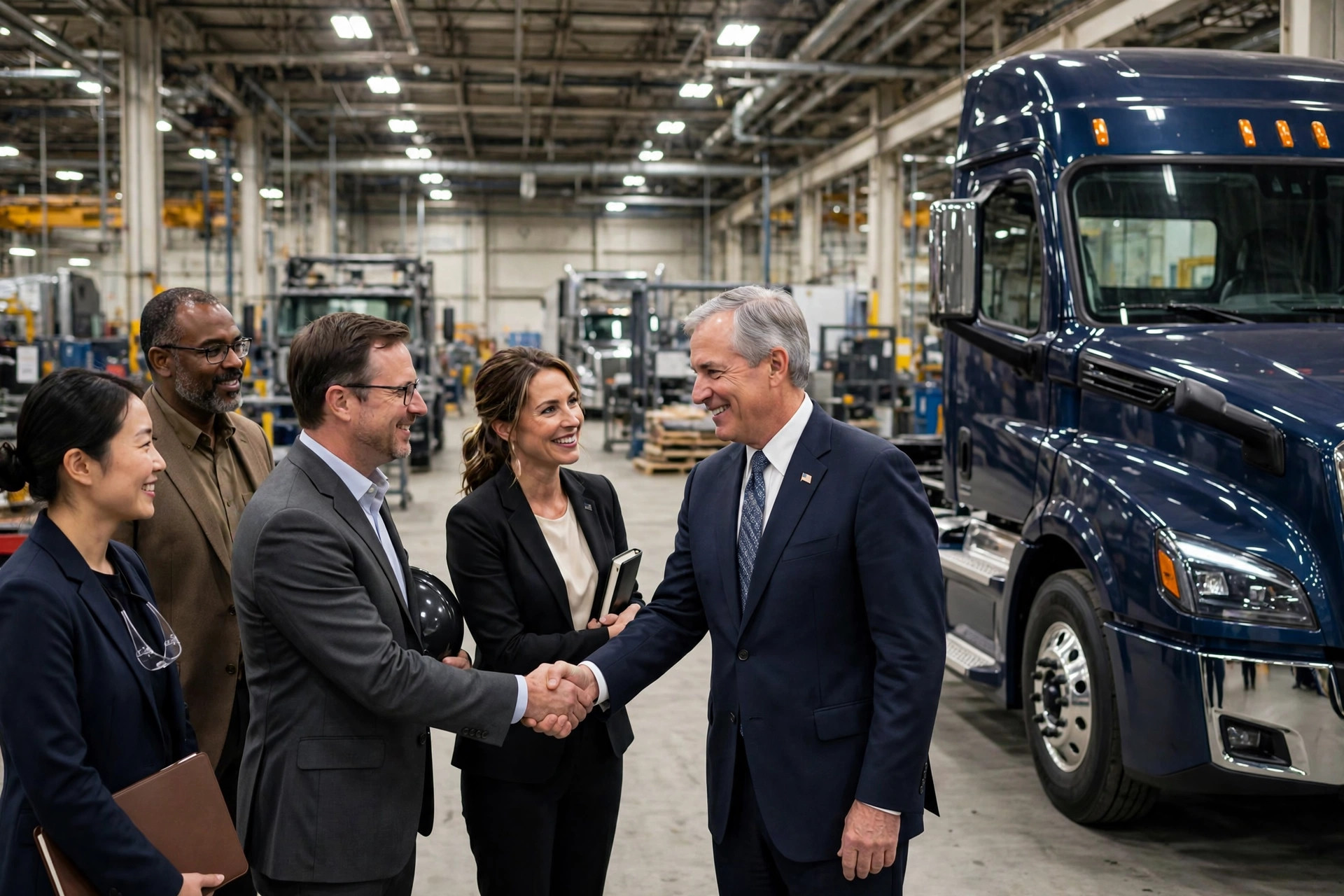
Trucking associations in Ohio and North Carolina used recent district visits to press members of Congress on lawsuit abuse, truck parking and staged-accident fraud in the final weeks before the midterms, according to Transport Topics on Oct. 15.
The Ohio Trucking Association met Rep. Dave Taylor on Oct. 6 at a Kenworth plant in Chillicothe, and the North Carolina Trucking Association met Rep. Mark Harris on Oct. 5 at a company headquarters in Marshville. Association leaders told Transport Topics that large lawsuit awards after crashes, high insurance costs and a shortage of parking where trucks actually need it — in urban areas — are central concerns.
Ohio association president Tom Balzer said the federal excise tax on heavy trucks adds upwards of $25,000 to $30,000 to a new truck's cost, and pointed to Ohio's $150 million state investment in truck parking as evidence of political appetite, while arguing the national need is concentrated near population centers rather than in rural areas.
In North Carolina, association president Ben Greenberg said the group supports the FAIR Trucking Act, the Uniform Vehicle Safety Standards Act and the Staged Accident Fraud Prevention Act. Harris told Transport Topics he supports that staged-accident bill, H.R. 2662, which would create federal criminal penalties for intentionally staging accidents involving commercial vehicles.
Taylor's office said he plans further trucking legislation in the coming months and to stay active in the bipartisan Congressional Trucking Caucus. Taylor has previously introduced the REVOKE Act, aimed at oversight of chameleon carriers that reopen under new names after safety shutdowns, and a bill requiring basic English proficiency for licensing; neither has had a full House vote, according to Transport Topics.
Sources
Related coverage
 October 7, 2026 · Law & safetyFDA clears key hurdle for DOT oral fluid drug testing — but labs still need HHS certification
 October 6, 2026 · Law & safetyOhio's lawsuit-funding disclosure law takes effect today — with a first-in-the-nation foreign-funding ban
 October 4, 2026 · Law & safetyFMCSA returns automatic emergency relief to 30 days
Comments
Loading comments…