Trump to tour Peterbilt's Denton plant Thursday, tout tariff-driven manufacturing
The president tours the Peterbilt plant and speaks to workers Thursday as the White House credits its 25% heavy-truck tariff with 1,000+ new Denton jobs — figures FreightWaves says it could not independently confirm.
Summarized from FreightWaves.
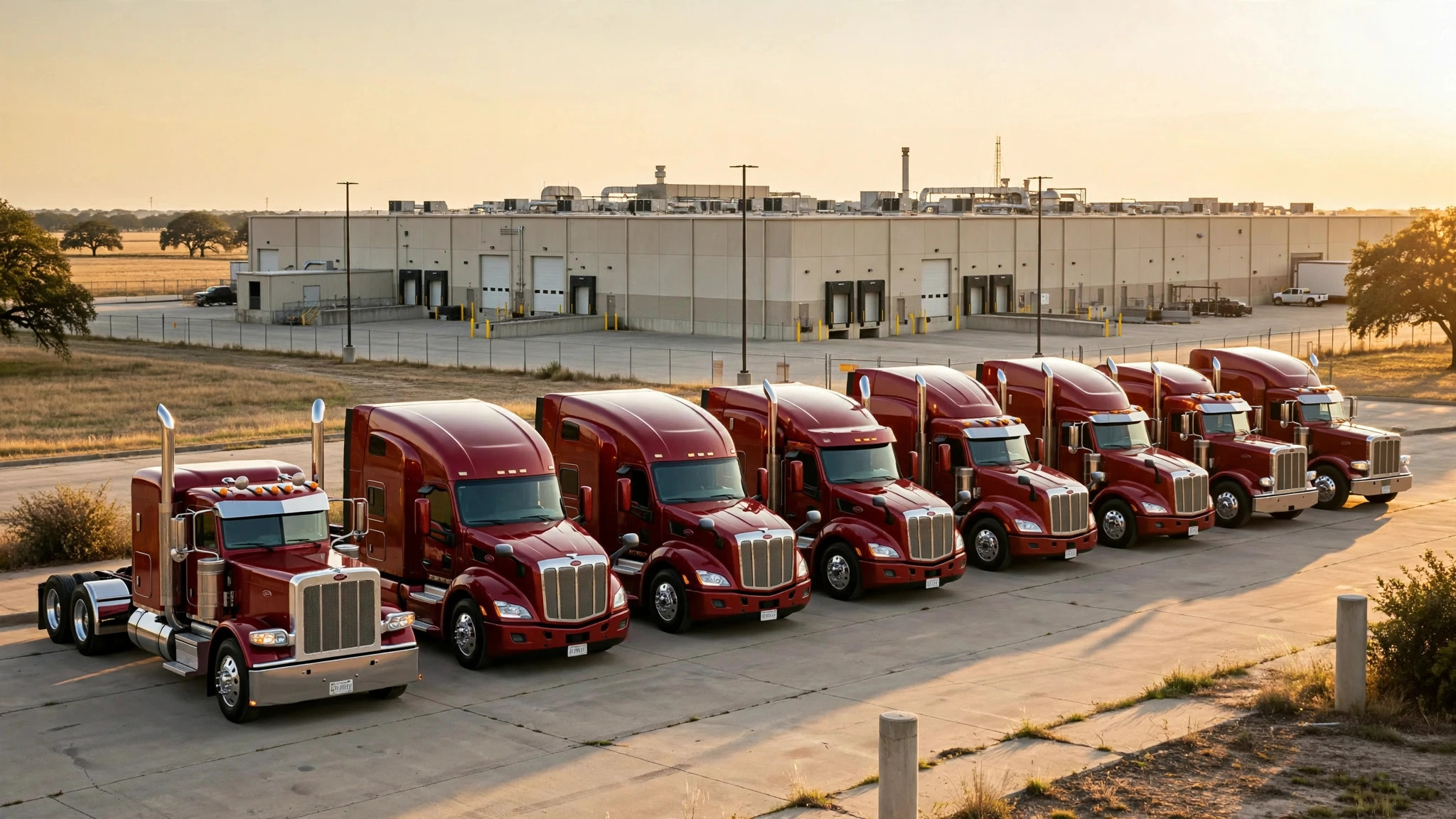
The president will tour Peterbilt's truck factory in Denton, Texas, on Thursday and speak to plant workers, as the White House spotlights the stop as evidence its trade and manufacturing agenda is working.
The White House said Trump will use the appearance to highlight his economic agenda and its impact on U.S. manufacturing. He is expected to discuss what he views as a U.S. manufacturing resurgence resulting from tariffs, tax policy and deregulation. White House spokeswoman Olivia Wales said the administration's policies have generated more than 1 million private-sector jobs and trillions of dollars in announced investments.
The administration is also expected to highlight the 25% tariff imposed Nov. 1, 2025, on imported medium- and heavy-duty trucks, along with tariffs on non-USMCA-compliant truck parts. A White House official told Fox Business that Peterbilt parent PACCAR has increased U.S. truck production and employment since the tariffs took effect, crediting the policy with more than 1,000 additional jobs at the Denton operation and more than 2,000 across PACCAR's U.S. operations. FreightWaves notes those employment figures were provided by the White House and were not independently confirmed in the materials it reviewed.
Government data paints a more complicated picture of the broader manufacturing sector: Bureau of Labor Statistics figures cited by Fox Business show the U.S. economy added 807,000 jobs after Trump returned to office in January 2025, while manufacturing employment declined by 35,000 over the same period. The visit comes at a consequential time for North American truck manufacturing, which is navigating tariffs, changing emissions regulations and a freight market that has constrained demand for new equipment. It also lands weeks before the November midterm elections.
Why it matters: Tariffs meant to push domestic truck production affect where commercial vehicles and parts get built — and ultimately what fleets pay for new equipment.
Sources
Related coverage
 September 29, 2026 · RegulationsFMCSA denies paper-log exemption, cites congressional ELD mandate
 September 29, 2026 · RegulationsNew York argues its $73M CDL case before the Second Circuit
 September 29, 2026 · RegulationsCourt could toss FMCSA's non-domiciled CDL ban 'any day' — visa loophole under fire
Comments
Loading comments…