Cross-border capacity to stay tight into 2027 as driver shortages and visa pullbacks bite
TRAFFIX's October index reads 57 for Canada and 54 for Mexico; C.H. Robinson cites about 25,000 Mexican driver visas withdrawn.
Summarized from FreightWaves.
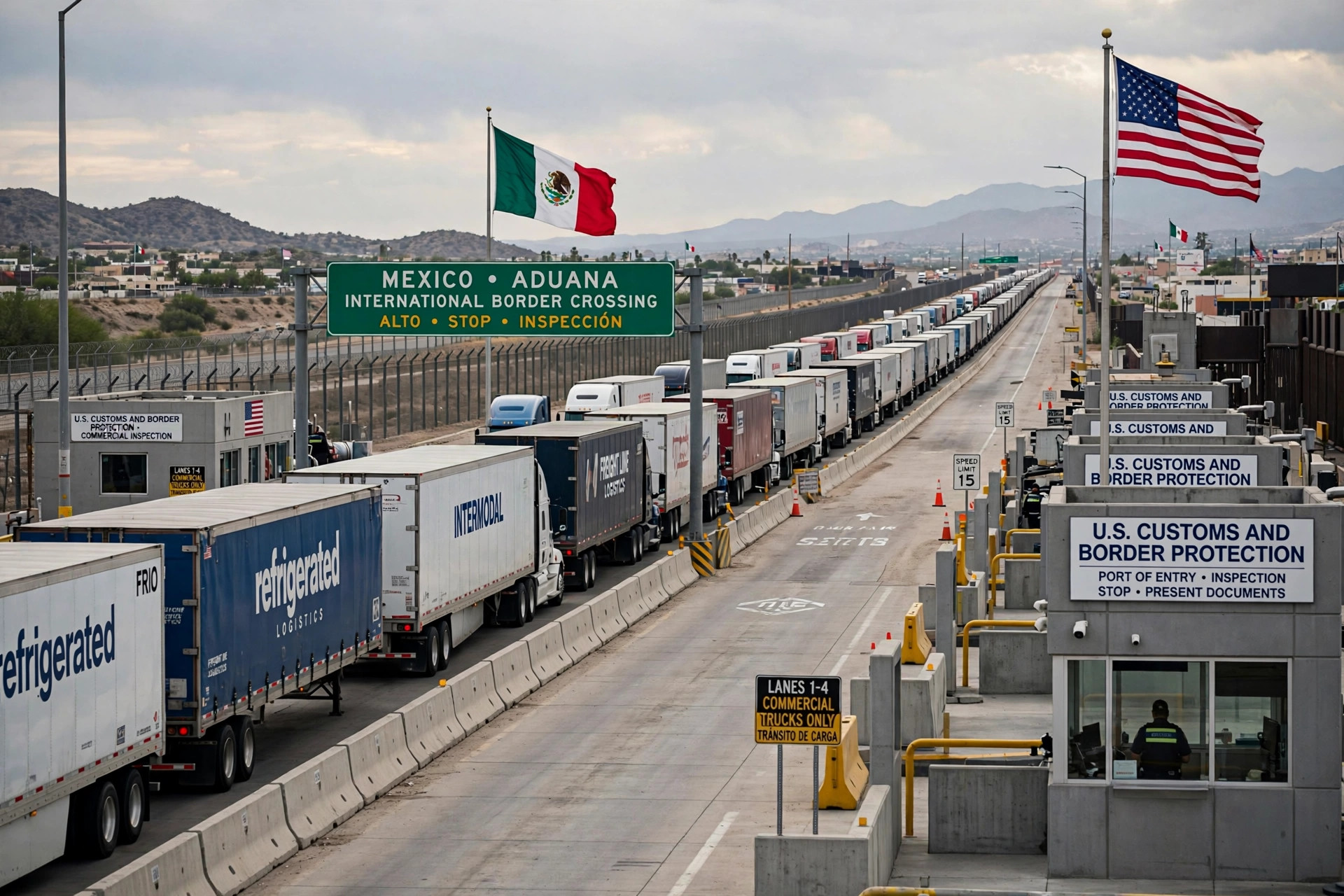
Cross-border trucking capacity is expected to remain constrained into 2027 despite softer freight demand, as driver shortages, regulatory restrictions, and rising operating costs limit the trucks available between the U.S., Mexico, and Canada, according to FreightWaves on Oct. 12.
The outlook follows the release of TRAFFIX's October North American Cross-Border Index, which measures freight market pressures along the U.S.-Mexico and U.S.-Canada corridors. The index registered 57 for Canada and 54 for Mexico, down one point each from September. Readings above 50 indicate tighter market conditions, including elevated costs, limited truck capacity, and regulatory challenges.
Higher interest rates and tighter lending are discouraging new trucking companies from entering the market, preventing the kind of capacity expansion that followed the pandemic-era freight surge. "We're only four or five years later and we're not seeing that," Alex Fuller, vice president of commercial intelligence at TRAFFIX, told FreightWaves. Fuller said financing costs can reach 8% to 9%, making it much harder for drivers to enter the industry or for established carriers to expand fleets.
In Mexico, the squeeze centers on a lack of qualified drivers, U.S. immigration restrictions, and structural bottlenecks at border crossings. Patricio Gutierrez, TRAFFIX's carrier sales manager based in Manzanillo, Mexico, said many drivers are in their 50s and 60s, while younger workers are reluctant to enter the profession because of security concerns and relatively low compensation. A separate October freight market report from C.H. Robinson said U.S. authorities have withdrawn visas from approximately 25,000 Mexican freight drivers, citing Mexican trucking association CANACAR.
On the U.S.-Canada border, carriers are struggling with imbalanced freight flows: demand for Canadian exports stays relatively strong, but weaker south-to-north freight makes return loads hard to find. Lance Halliday, TRAFFIX's Toronto-based regional director of carrier sales, called Florida an especially challenging destination because drivers may wait days for a return shipment or travel hundreds of miles empty. Halliday said rates on some corridors have climbed 25% to 35% over roughly the past month to month and a half, though he did not identify specific lanes or provide a marketwide average.
Carriers are also handing back contract freight because rates set months earlier no longer cover operating costs, pushing more shipments onto the spot market. Halliday said he does not expect significant relief over the next three to six months.
Sources
Related coverage
 October 11, 2026 · BorderMexico's September auto exports plunge 12% as U.S. takes 76% of shipments
 October 9, 2026 · BorderPort of Savannah handled a record 504,015 TEUs in September
 October 8, 2026 · BorderU.S.-Mexico trade hits $94.29 billion in August; Laredo stays the nation's busiest gateway
Comments
Loading comments…