First Russian diesel tanker is on the water: 40,000 tons bound for New York
The Malta-flagged Agioi Fanendes loaded 40,000 metric tons of ultra-low-sulfur diesel at Primorsk, Russia, on Oct. 22 and is due in New York on Nov. 7 — the first identified U.S.-bound shipment under the Trump-Putin diesel deal, and at roughly 300,000 barrels, about 7% of one day's U.S. diesel consumption.
Summarized from FreightWaves.

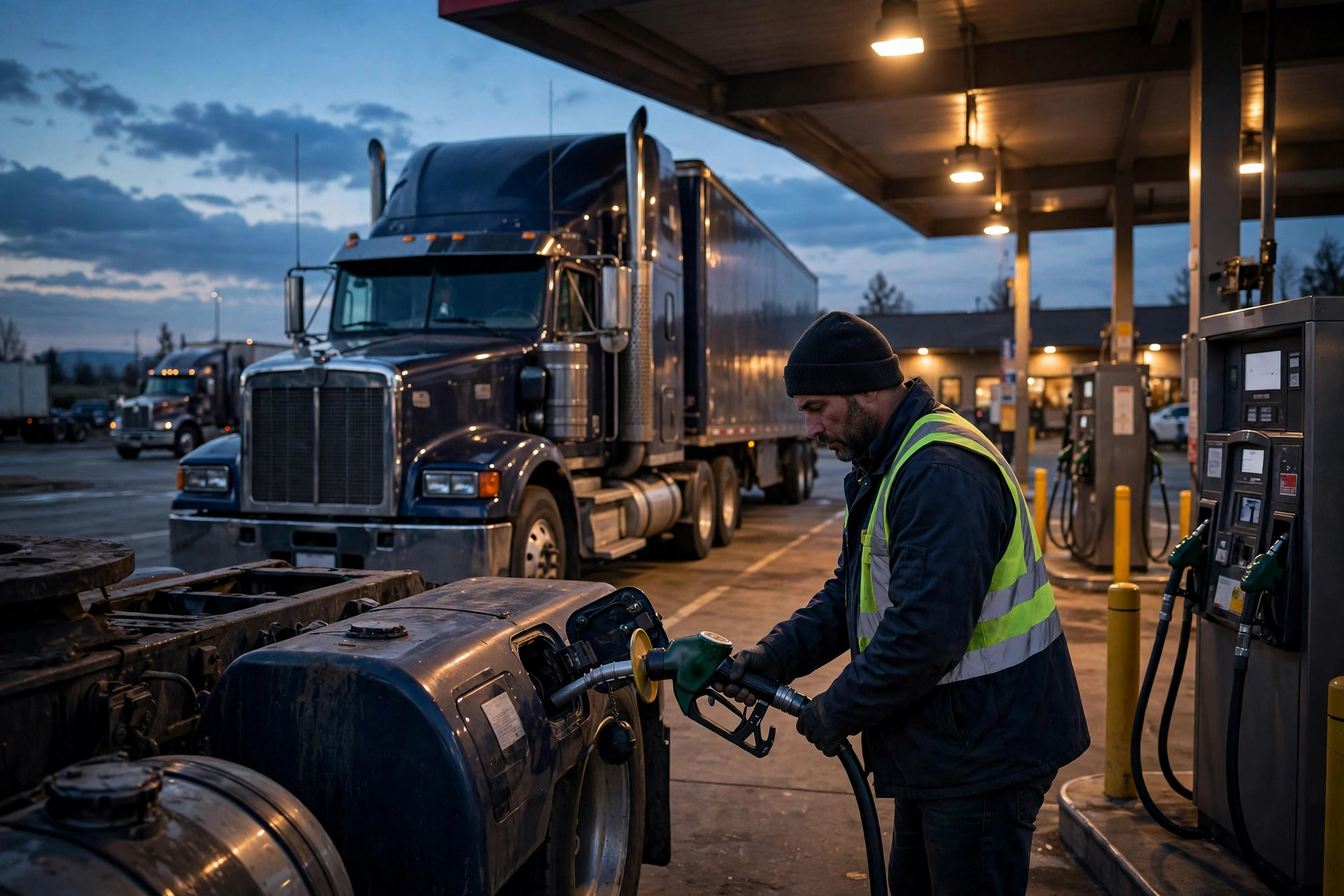
Image: Illustration: AI-generated by CDLWire
The first Russian diesel cargo under the Trump-Putin supply deal is actually moving: a tanker carrying 40,000 metric tons of diesel is heading for New York, according to FreightWaves on Oct. 23, reporting LSEG ship-tracking data cited by Reuters.
The Malta-flagged Agioi Fanendes loaded ultra-low-sulfur diesel at Primorsk, Russia's Baltic Sea oil port, on Oct. 22 and is expected to arrive in the United States on Nov. 7. The buyer and the seller were not immediately identified. The voyage is the first identified U.S.-bound shipment under the agreement President Donald Trump announced on Oct. 9. Reuters reported it as the first U.S. import since Washington's 2022 ban on Russian oil and petroleum imports, although the Associated Press quoted maritime analyst Kpler saying it would be the first Russian diesel delivery since July 2023 — a discrepancy in the last-delivery date that neither report fully resolves.
The legal door for the cargo is General License 135, issued Oct. 9, 2026, by the Treasury Department's Office of Foreign Assets Control. It temporarily authorizes Russian-diesel transactions that would otherwise be prohibited under two sanctions programs, the Russian Harmful Activities Sanctions Regulations and the Ukraine-/Russia-Related Sanctions Regulations. Russia, for its part, lifted its own restrictions on diesel exports. Under the deal as Trump announced it, an initial 300,000 metric tons was to go to U.S. and global markets, followed by 500,000 tons in November and 1 million tons immediately thereafter.
Moscow is presenting the sailing as the start of a flow, not a one-off. Kremlin spokesman Dmitry Peskov confirmed to Reuters on Friday that the first tanker under the arrangement had departed and said regular supplies would follow. Russian Deputy Prime Minister Alexander Novak has said additional shipments are planned as Russian and U.S. companies finalize delivery contracts.
The scale, though, is the part that matters at the pump. At roughly 300,000 barrels, the Agioi Fanendes cargo equals about 7% of the approximately 4 million barrels of diesel the U.S. economy consumes each day, according to the Associated Press, and energy policy experts cited by the AP said the import agreement was unlikely to substantially reduce fuel prices. The shipment comes as the administration seeks to rein in soaring diesel prices ahead of the Nov. 3 midterm elections — and its scheduled arrival, Nov. 7, falls after Election Day.
The deal's politics are drawing fire from both directions. "The diesel deal shows that Washington's Russia policy is now driven by high prices at the pump before the November 3 midterm elections, rather than by any shared trans-Atlantic strategy," said Matthias Matthijs, senior fellow for Europe at the Council on Foreign Relations. Ukraine has urged its partners to tighten restrictions on Russian energy revenue, and President Volodymyr Zelenskyy called the U.S. decision "a weak decision by strong partners," the AP reported.
For drivers and carriers, the practical takeaway is to watch the follow-through, not the headline. One 40,000-ton cargo landing in New York will not rebuild East Coast distillate supply or pull the benchmark price down by itself. What would matter is whether Peskov's "regular supplies" actually sail — the November tranche alone is more than twelve times this first cargo — and whether refiners and distributors contract for them under a temporary license whose politics could shift after the election. Until those cargoes are on the water, diesel stays priced by the same tight supply that has kept it above $6 a gallon this fall.
Today's sailing also answers part of the question left open when CDLWire covered the deal's announcement on Oct. 11: at the time, the White House had not said who was paying for the fuel or when any of it would reach buyers. Fourteen days later, the when is concrete for the first cargo — loaded Oct. 22, due Nov. 7 — but the who is still not public, and neither the administration nor the companies involved have named the buyer, the seller or the price. The license behind the trade is also explicitly temporary, which leaves every follow-on cargo dependent on a sanctions waiver that politics can revisit.
Sources
Related coverage
 October 20, 2026 · DieselEIA: diesel benchmark rises $0.097 to $6.276, ending three weeks of declines
 October 18, 2026 · DieselFuel prices vault 17 spots to No. 1 on ATRI's 2026 Top Industry Issues list
 October 17, 2026 · DieselBrent touches $110 a barrel for the first time since May as diesel futures settle at $4.90
Comments
Loading comments…