Pilot and Tesla open their first two heavy-duty truck charging sites — Ellabell, Georgia and Tulare, California
The first two locations in the planned Pilot–Tesla network opened in October: six stalls in Ellabell, Ga. and four in Tulare, Calif., each delivering up to 1.2 megawatts — enough, Tesla says, for a Semi to recover 60% of its charge in 30 minutes — with Fort Stockton, Texas and North Las Vegas, Nev. nearing completion.
Summarized from Transport Topics.
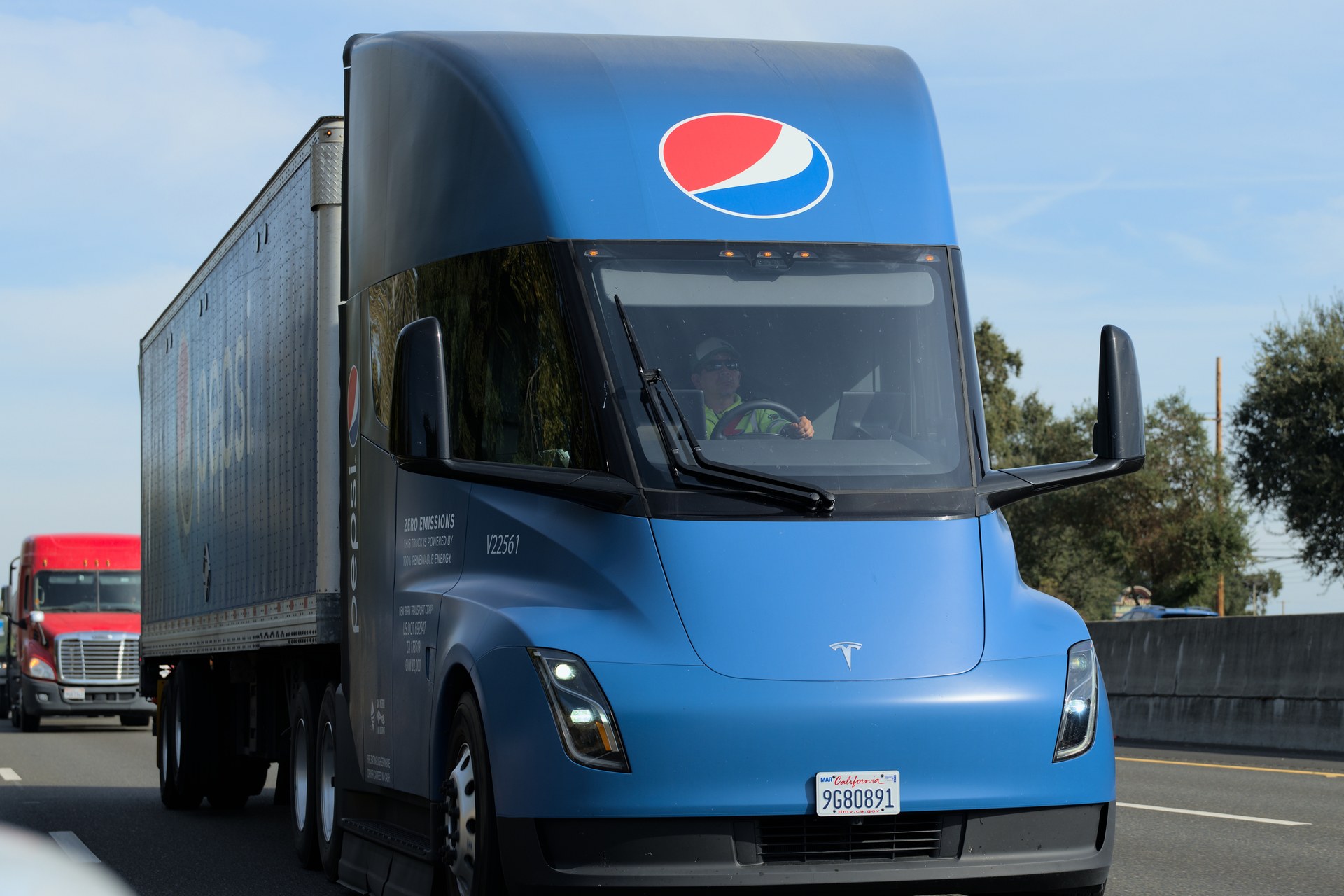
Image: Photo: Dllu, via Wikimedia Commons (CC BY-SA 4.0) (file photo)
Pilot Co. and Tesla Inc. have opened heavy-duty electric truck charging sites at travel centers in Georgia and California, the first two locations in a planned network along major U.S. freight corridors, according to Transport Topics on Oct. 26. The sites in Ellabell, Ga., and Tulare, Calif., opened in October and put Megacharger-class power at ordinary truck stops — the Ellabell site has six heavy-duty charging stalls and the Tulare site has four — rather than at a fleet's own depot.
The hardware figures are the heart of the announcement. Each stall can deliver up to 1.2 megawatts of power, according to Tesla, enabling a Tesla Semi to recover 60% of its charge in 30 minutes. Locations across the broader network will feature four to eight stalls powered by Tesla's V4 cabinet technology. That charging speed is what makes the travel-center model plausible for electric long-haul work: a half-hour stop is in the range of a fuel-and-food break, not an overnight dwell, which is the arithmetic any fleet considering an electric tractor on a corridor route has to make work.
"Pilot is proud to bring heavy-duty charging directly to key trucking routes and pair it with the services and amenities drivers rely on," said Shannon Sturgil, senior vice president of alternative fuels at Pilot. "With these initial locations, we're making fleet electrification a more accessible option for longhaul transportation and are excited to continue working with Tesla to move at the pace and preference of our customers."
The network is already expanding beyond the first two pins on the map. Additional heavy-duty charging locations are under construction, including sites in Fort Stockton, Texas, and North Las Vegas, Nev., that Pilot said are nearing completion. Pilot and Tesla announced their collaboration in January, with plans to install Megachargers at select Pilot and Flying J travel centers along Interstate 5, Interstate 10 and other major freight corridors. The network is expected to include locations in California, Georgia, Indiana, Nevada and Texas.
The siting choices track the freight. Tulare sits in California's Central Valley on State Route 99, inside the broader corridor network the companies named in January; Ellabell serves the Savannah-area freight complex in Georgia; Fort Stockton is a classic I-10 fuel stop in West Texas; and North Las Vegas covers the I-15 corridor. In other words, the first four locations are not a showcase cluster near a single port or city — they are spread across the southern and western long-haul network, which is the pattern a corridor charging system has to follow if tractors are ever going to run it end to end.
For Pilot, the truck chargers are one piece of a wider energy build-out. The project is part of the company's investments in transportation energy, which also include a coast-to-coast passenger electric vehicle charging network and lower-carbon fuels such as renewable diesel and biodiesel. Pilot ranks No. 33 on the Transport Topics Top 100 list of the largest private carriers in North America. The strategic point for drivers is simpler than the portfolio: the country's travel-center business is beginning to treat heavy-duty charging as a forecourt product, sold next to diesel, showers and parking, instead of a depot experiment.
The context from this month's editions is worth holding next to the opening. A zero-emission dealer argued in CDLWire's Oct. 24 edition that Class 8 electrification waits on exactly this kind of infrastructure — megawatt charging that is years from being widely available — while medium-duty trucks can already charge overnight on ordinary power. The Pilot–Tesla openings do not settle that argument, but they are the first concrete counterweight on the Class 8 side: named travel centers, a stall count, a power rating and a charge-time claim that fleets can plan against, with two more corridor sites close behind.
The practical takeaway: if your operation runs, or is asked to run, a Tesla Semi on the Highway 99 corridor in California's Central Valley or through the Savannah gateway, there is now public heavy-duty charging at a travel center on those routes — six stalls at Ellabell, four at Tulare, up to 1.2 megawatts each — and Fort Stockton on I-10 and North Las Vegas are the next two to watch for. Everyone else should read the openings as a timeline marker rather than a route option: two sites are live, the named network covers five states, and corridor electric trucking just moved from announced plans to operating stalls.
Sources
Related coverage
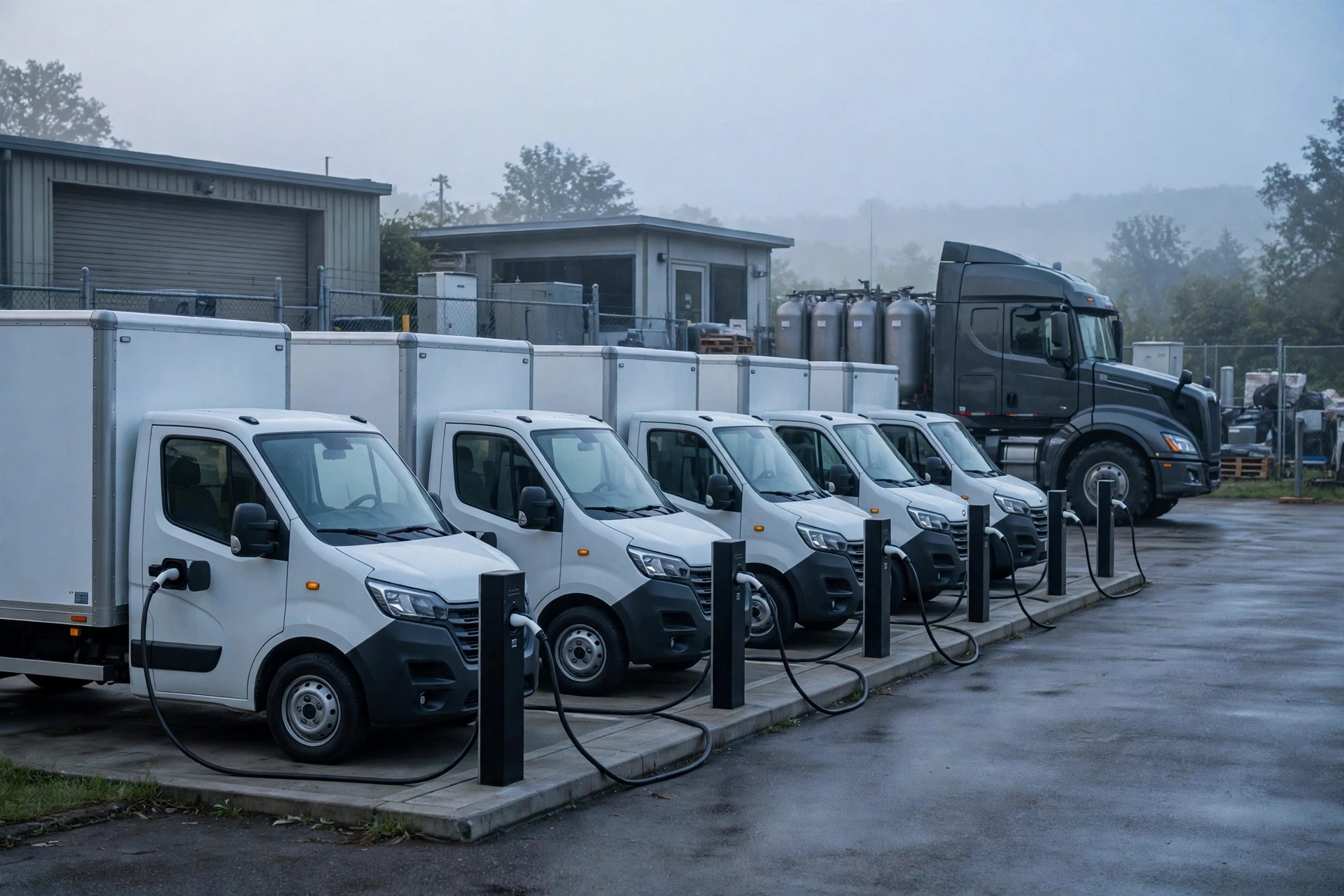 October 24, 2026 · EquipmentA zero-emission dealer says stop aiming at Class 8 first: 'Class 4, 5 and 6 are ready now'
 October 23, 2026 · EquipmentMunich court orders Daimler Truck and MAN to repay cartel-era truck buyers
 October 22, 2026 · EquipmentInternational to add a second shift at San Antonio in early 2027 as output nears 100 trucks a day
Comments
Loading comments…