As B-1 drivers lose visas, Mexican freight shifts to transloading — and U.S. carriers get the second leg
Truck freight crossing both borders rose 30% in value in August while the pool of Mexican drivers cleared to haul it into the U.S. keeps shrinking; Uber Freight's Kyle Toombs says shippers are splitting the trip at the border and transloading, the OOIDA Foundation says its own data shows no noticeable shift yet.
Summarized from Land Line.
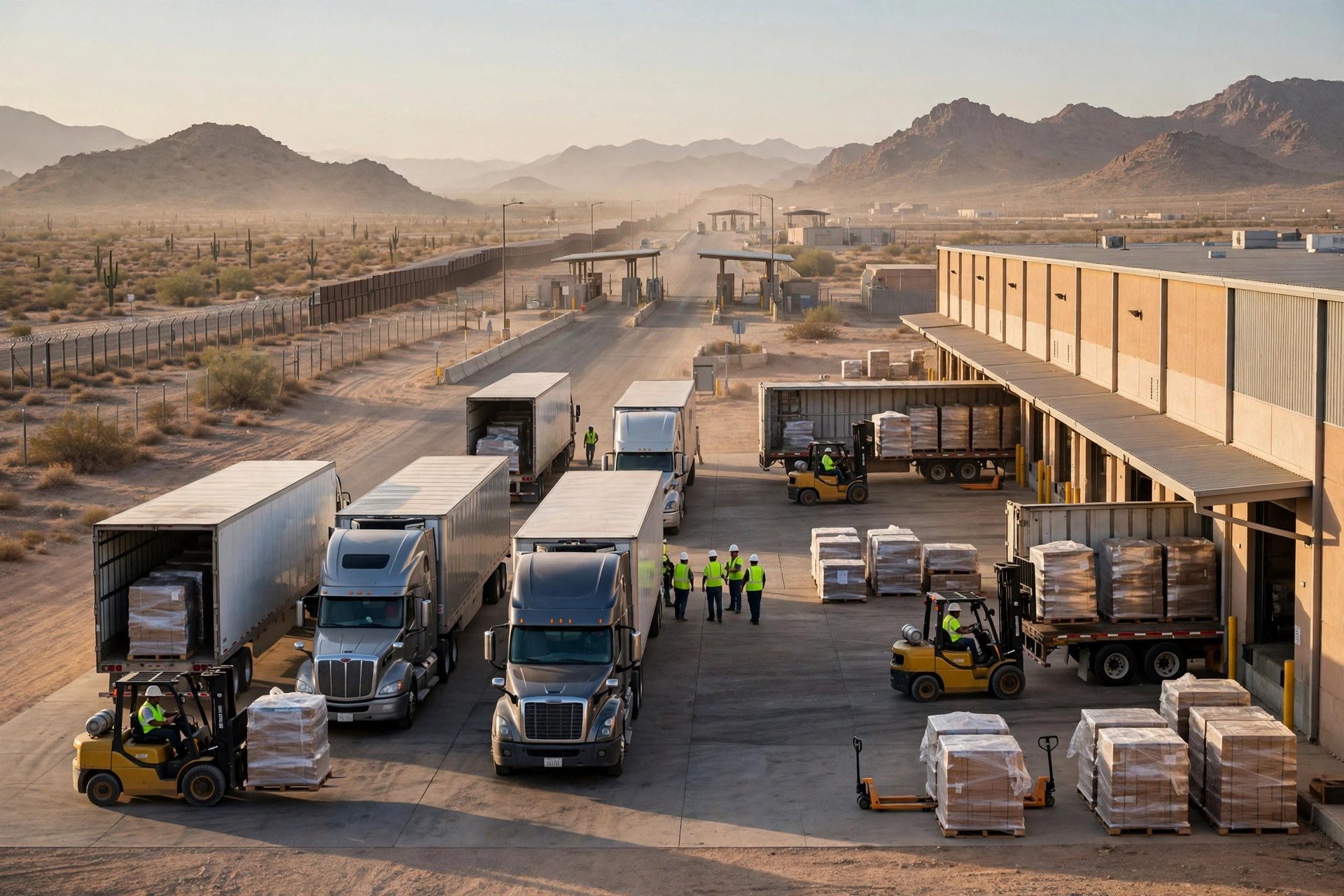
Freight from Mexico is surging while the number of authorized Mexican drivers able to haul it into the United States plummets — and shippers are starting to rebuild the trip around the border, according to Land Line on Oct. 20.
Truck freight crossing both borders shot up 30% in value year over year in August, according to the Bureau of Transportation Statistics — the seventh consecutive month-to-month increase, with volumes up in 10 of the last 11 months, and overall North American growth driven mostly by activity at the southern border. Freight from Mexico has fallen year over year in only two months since April 2025. But about 25,000 Mexican truck drivers have lost their B-1 visas since April 2025, according to Kyle Toombs, senior vice president of capacity solutions at Uber Freight. Federal motor carrier rules for cross-border operations require only a federally issued Mexican equivalent of a U.S. commercial driver license, but immigration rules have strict guidelines for entry, prompting carriers hauling cross-border freight to rely on drivers with B-1 visas. Cross-border freight platform Cargado reports that two-thirds of its carriers in Laredo run majority fleets with B-1 visa drivers, and more than 40% run entirely B-1 drivers.
The shrinking driver pool is changing how the freight moves. In through-trailer service, a shipper hires a U.S. carrier near the border to coordinate the entire trip through Mexican partners, and the freight stays in the same trailer while different drivers and tractors handle portions of the journey. With B-1 availability and approvals tightening, Toombs said, more shippers are arranging the Mexican and U.S. portions separately and turning to transloading: a Mexican carrier brings the freight across the border, where it is transferred into another trailer for the U.S. portion of the trip.
That opens the U.S. leg to carriers and owner-operators who have no Mexican partnerships of their own. A Michigan carrier delivering a load to South Texas, for example, could pick up freight at a transloading facility on the U.S. side and haul it to Detroit as a paying trip home — a load that might previously have stayed inside a border-based carrier's through-trailer network. Higher-value freight that once moved through-trailer is now being transloaded, Toombs said: computer-related parts have been a hot import for two years on the artificial intelligence data center boom, flatbed southbound traffic is heating up as Mexico builds infrastructure to support technology initiatives, and appliances are producing more freight as Mexican manufacturing investments come online.
The strategy still matters as much as the opportunity. Inbound loads to Texas can pay poorly, Toombs warned: Laredo is bustling, but San Antonio tends to have better inbound rates, and a short deadhead from San Antonio or Austin to pick up outbound Mexican freight in a border city can be a viable play. "I think South Texas in particular is a really good area of opportunity," Toombs said. "I think you're going to continue to see more and more freight coming out of there and being transitioned from through-trailer to transloading." One caution against reading the shift as settled: the OOIDA Foundation pointed out that its data is not showing noticeable shifts in Mexican freight, though it noted results could vary across different networks.
Sources
Related coverage
 October 14, 2026 · BorderMexico's heavy-truck exports surge 144.6% in September as U.S. buyers get ahead of EPA 2027
 October 13, 2026 · BorderCross-border capacity to stay tight into 2027 as driver shortages and visa pullbacks bite
 October 11, 2026 · BorderMexico's September auto exports plunge 12% as U.S. takes 76% of shipments
Comments
Loading comments…