He claimed 8.5 million gallons of diesel was for farming, then sold it to truckers tax-free — the sentence is eight years and eight months, and $4,679,112 in restitution
Joseph Kosareff was sentenced in Sacramento County Superior Court to eight years and eight months in state prison and ordered to pay $4,679,112 in restitution to the California Department of Tax and Fee Administration, after pleading guilty to felony money laundering, offering a false instrument for record, filing a false sales tax return and filing a false claim for refund. Prosecutors said that between August 2018 and December 2023 he bought over 8.5 million gallons of diesel, claimed under penalty of perjury that it was exclusively for farming to win state tax exemptions, and illegally resold it to truck drivers without paying taxes. Authorities also seized 21 of his real properties, valued at approximately $4.2 million.
Summarized from California Department of Justice.
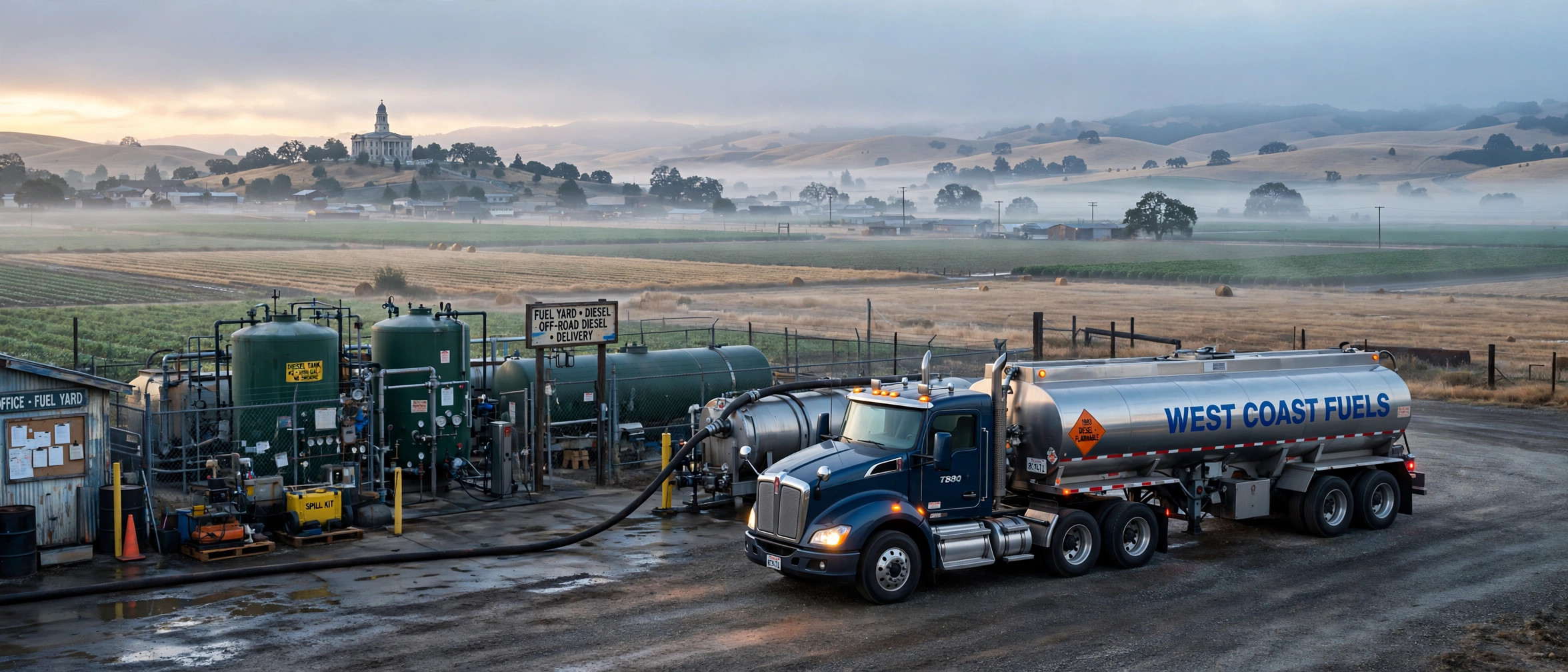
Image: Illustration: AI-generated by CDLWire
A five-year diesel scheme that ran on a single false claim — that millions of gallons of fuel were for farming — ended with a prison sentence of eight years and eight months and a restitution order of $4,679,112, according to the California Attorney General on Nov. 23.
California Attorney General Rob Bonta announced that Joseph Kosareff was sentenced in Sacramento County Superior Court to eight years and eight months in state prison and ordered to pay $4,679,112 in restitution to the California Department of Tax and Fee Administration, for a multi-year diesel fuel tax evasion scheme. The sentence follows Kosareff's own guilty plea: after he was indicted on 97 counts, he pleaded guilty on Dec. 18, 2025, to felony charges of money laundering, offering a false instrument for record, filing a false sales tax return, and filing a false claim for refund. CDLWire reports the underlying scheme as the Attorney General's office states it, in a case that was resolved by that plea rather than by a jury.
The scheme's mechanics, as the Attorney General describes them, were simple and ran for more than five years. Between August 2018 and December 2023, Kosareff bought over 8.5 million gallons of diesel fuel. He fraudulently claimed under penalty of perjury that the fuel was exclusively for farming, in order to secure state sales and excise tax exemptions — the exemptions California law provides for fuel genuinely used in agriculture. He then illegally resold the fuel to truck drivers without paying the taxes the exemptions had excused. The scale is the story in one comparison: 8.5 million gallons is not a farm's fuel shed or a cardlock mistake; spread across the five years and four months the Attorney General dates the scheme, it is a fuel business — one whose entire margin was the tax that lawful sellers collect and remit and that Kosareff, on the state's account, simply kept out of the transaction.
The restitution figure is where that margin comes back. The $4,679,112 ordered paid to the California Department of Tax and Fee Administration is the state's accounting of what the scheme cost the public — and it is separate from what the state took in property. Authorities also seized 21 of Kosareff's real properties, valued at approximately $4.2 million. Read together, the sentence, the restitution and the seizures describe the standard anatomy of a tax-fraud prosecution at this scale: prison time measured in years, a restitution order that follows the defendant beyond it, and the assets bought along the way taken back at the end.
The investigation was conducted by the California Department of Justice's Tax Recovery in the Underground Economy Task Force, known as TRUE — a program established on Jan. 1, 2020 that brings together attorneys, investigators and special agents from the Department of Justice's Special Prosecutions Section and Bureau of Investigation, the Department of Tax and Fee Administration, the California Franchise Tax Board and the Employment Development Department. The officials quoted in the announcement framed the case in those terms. "When individuals cheat the system through tax evasion, they are stealing millions of dollars straight from taxpayers and starving communities of essential public services," Attorney General Bonta said. Trista Gonzalez, director of the Department of Tax and Fee Administration, said the sentence "reinforces CDTFA's responsibility to investigate those who engage in tax fraud and ultimately hold them accountable."
Why a fuel-tax case belongs in a trucking edition is the customer list. The buyers in this scheme were truck drivers. Diesel is the industry's second-largest cost after labor, and in California it is the most expensive diesel in the country — the Energy Information Administration's latest survey, for the week ending Nov. 16, put California diesel at $7.733 a gallon, against a national average of $5.937. In that price environment, an off-the-books seller offering fuel below the taxed price is not offering a mystery discount: the discount is the tax, and the discount is the crime. A driver who buys fuel that cheap from an unlicensed seller is stepping into the end of a chain that investigators reconstruct from the seller's records — purchase records, resale records and the paper trail of the false farm claims — and the five years this scheme ran before the indictment is a measure of how long that exposure can quietly accumulate around everyone in the chain.
The professional lesson is the mirror image of the E-ZPass warning this edition carried on Sunday: verify the channel, not just the price. Fuel bought from a licensed retailer, a cardlock network or a carrier's own tanks comes with invoices that stand up in an audit and a tax record that is the seller's problem, not the buyer's. Fuel bought cheap from a man with a tank and a story about farm exemptions comes with neither. Kosareff's buyers are not named in the Attorney General's announcement, and CDLWire will not speculate about consequences for any individual driver — but the structure of the case is the warning: the seller pleaded guilty, the state seized 21 properties and counted $4,679,112 in restitution, and every gallon of the 8.5 million was documented well enough to indict on 97 counts. In a business where fuel is bought by the hundreds of gallons and the records outlive the transaction by years, the cheapest gallon on the route is sometimes the most expensive one a driver ever buys.
Sources
Related coverage
 November 15, 2026 · DieselDiesel drops below $6 a gallon for the first time in two months
 October 27, 2026 · DieselEIA: diesel benchmark rises $0.076 to $6.352 — the Rockies set a record at $6.521
 October 27, 2026 · DieselRussian refiners are raising diesel output toward 180,000 tons a day to feed the Trump deal — analysts doubt it moves the price
Comments
Loading comments…