Refrigerated spot rates jumped $0.181 to $3.73 a mile — the strongest gain ever recorded for the week before Thanksgiving, and the highest level since the first week of 2022
Broker-posted spot rates in the Truckstop.com system rose for all three equipment types in the week ended Nov. 20, but refrigerated rates did the work: up $0.181 a mile to $3.73, the largest increase since mid-year, the third highest on record and 44.5% above the same week last year. Dry van rose $0.023 to $2.91 and flatbed rose $0.02 to $3.20, lifting the total market rate $0.026 to $3.19 — its first increase in seven weeks — even as truck postings grew faster than loads and the Market Demand Index fell to its lowest in three weeks.
Summarized from The Trucker.
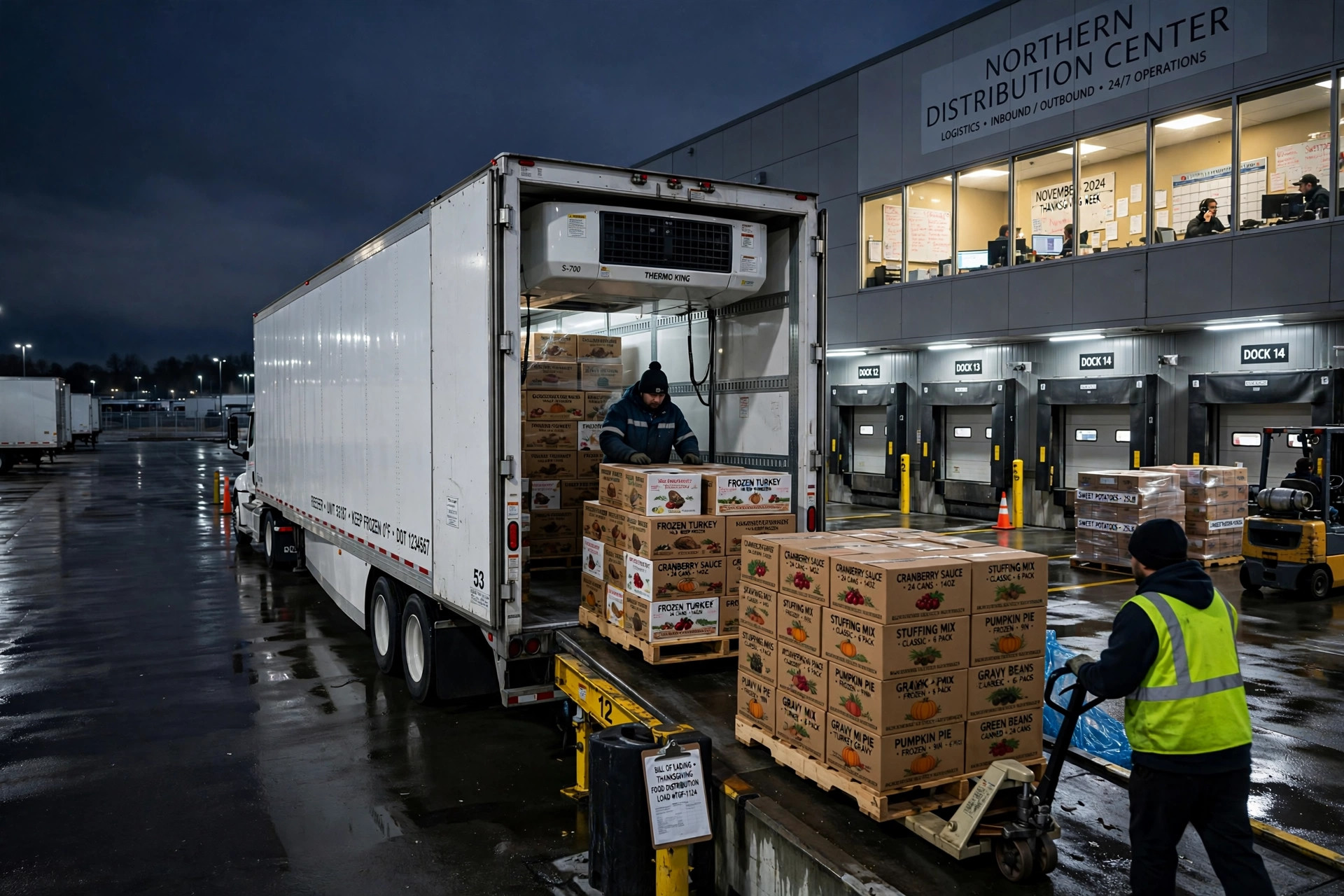
Image: Illustration: AI-generated by CDLWire
Refrigerated spot rates did something last week they have never done in the week before Thanksgiving — they jumped $0.181 a mile, to the highest level since the first week of 2022 — according to The Trucker on Nov. 23, reporting the Truckstop.com and FTR Transportation Intelligence spot market data for the week ended Nov. 20.
The headline numbers are refrigerated numbers. Broker-posted refrigerated rates in the Truckstop.com system rose $0.181 per mile to $3.73 — the largest weekly increase since mid-year, the strongest gain ever recorded for the week before Thanksgiving, and the third highest rate on record in the series. Against a year ago, refrigerated rates were up 44.5% versus the same 2025 week. The increase was national in shape: rates rose for loads originating in all regions, and were up sharply in all of them except the Northeast, where the increase was only modest. Refrigerated loads rose with the rates — load activity increased 7.1% week over week, with volume more than 21% higher than during the same week last year — which is what separates a rate spike with freight behind it from a rate spike on an empty board.
The other two equipment types rose, but softly, and the contrast is the market's real shape this week. Dry van spot rates increased $0.023 to $2.91 a mile, after easing less than $0.01 during the previous week; dry van rates were more than 46% higher than during the same 2025 week, but FTR's own characterization is that the increase for dry van rates was softer than usual for this week of the year. Dry van loads ticked up 1.0% week over week, with volume more than 23% higher than a year ago, and rates declined modestly for loads originating in the Northeast and South Central regions while rising elsewhere. Flatbed spot rates moved up $0.02 to $3.20 a mile — the first increase in five weeks, and, FTR said, the most flatbed rates have risen during a comparable week in four years — with rates about 39% higher than the same 2025 week. Flatbed loads moved the other way, declining 1.7%, though volume was still about 31% higher than a year ago; the decline was concentrated in the Midwest, the second largest flatbed region, while postings rose everywhere else.
The total market figure blends those three stories into one modest line. The total broker-posted rate rose $0.026 to $3.19 a mile — the first increase in seven weeks, as the soft dry van and flatbed increases diluted the refrigerated jump — and total rates were about 40% higher than in the same week last year. Excluding a calculated fuel surcharge, to isolate the portion of the rate not needed for fuel cost recovery, total spot rates were up 38% versus the same week last year; that calculation is based on diesel prices through the week ending Nov. 16, the week the Energy Information Administration's survey put the national average at $5.937 a gallon. Total load activity increased 2.3% week over week, after falling more than 6% during the previous week, and volume was close to 22% higher than during the 2025 week.
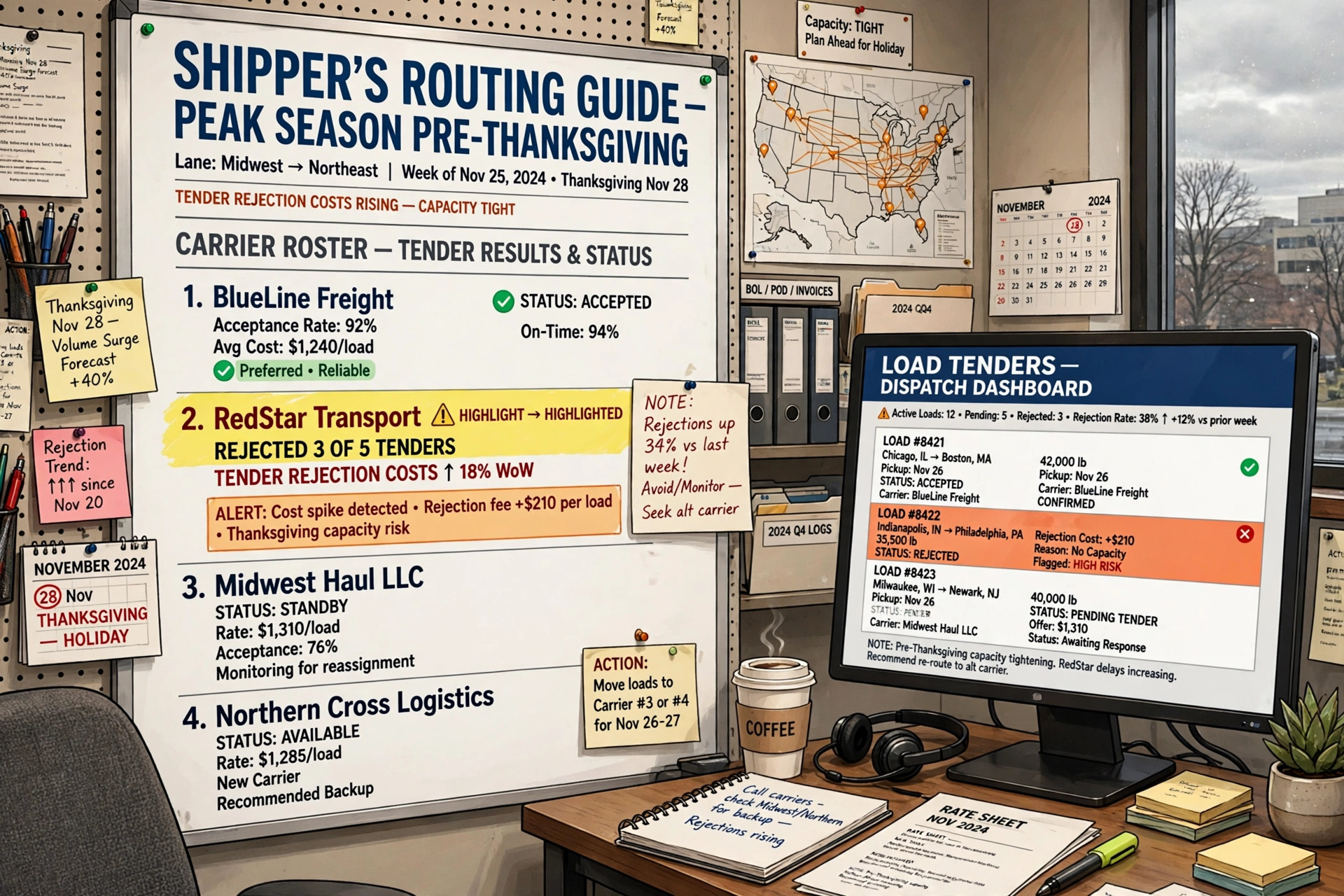
One number in the release cuts against reading this as a simple capacity crunch, and it deserves its place in the story. Truck postings increased 6.1% — faster than loads grew — and the Market Demand Index, the ratio of loads to trucks in the Truckstop system, was the lowest in three weeks. In plain terms, more trucks came looking for freight in the same week rates rose, and the balance of posted loads to posted trucks loosened even as the price of the freight went up. That combination fits the pattern this edition has tracked through November — tender rejections climbing toward 13% before Thanksgiving, a rejected tender costing shippers a 10.69% routing-guide premium — in which the tightening is concentrated in specific equipment and specific weeks rather than spread evenly across the market. Refrigerated freight in the week before Thanksgiving is exactly such a pocket: holiday food freight has a delivery date that cannot slide, and last week the market priced that urgency at a record for the calendar slot.
What happens next is, on FTR's own telling, genuinely uncertain — and the seasonal pattern points down. "Expected rate changes are mixed this week, but refrigerated rates typically fall," FTR said. The week before Thanksgiving is when reefer demand crests, because the freight that has to be in stores for the holiday is already moving; Thanksgiving week itself usually gives some of the gain back. A carrier reading this report should therefore treat the $3.73 print as a peak-season fact, not a new plateau: it is the third highest rate in the series' history and it arrived in the one week of the year when the series' own analysts expect a decline to follow.
The practical takeaway splits by equipment, as the data does. If you run refrigerated, the leverage is now and it is national — rates rose in every origin region, loads rose 7.1%, and the freight is date-certain holiday freight — but negotiate with the seasonal decline in view, because the same report that records the jump warns that reefer rates typically fall this week. If you run dry van, the honest read is a firm market having a soft week: rates are more than 46% above a year ago and still rose, but by less than the season usually delivers, and two regions declined. And for everyone, the Market Demand Index is the caution against over-reading a rate headline: trucks are posting faster than loads are growing, so the truck that chases last week's $3.73 into a market already filling with posted capacity may find this week's board a different place.
Sources
Related coverage
 November 22, 2026 · Fuel & ratesA rejected tender now costs shippers 10.69% more to cover — the backup-plan premium hit its highest level since September
 November 21, 2026 · Fuel & ratesTender rejections climbed back toward 13% before Thanksgiving — SONAR sees roughly 14% next week, and says fuel is not the reason
 November 19, 2026 · Fuel & ratesSpot rates rose more than 4% while diesel fell 3.5% — the early-November jump FreightWaves calls unusual
Comments
Loading comments…