EPA inspectors worked the truck lanes at Pharr and Brownsville last week — the agency is building a standing inspection presence at the land border
EPA inspectors joined CBP officers for a week of inspections at the Port of Brownsville and the Pharr Port of Entry, targeting unregistered pesticides and other banned products arriving by truck from Mexico. It is the first push of the agency's fiscal 2027 import initiative; since January, the coordinated work has inspected 461 products in 181 shipments and blocked over 490,000 pounds of violative goods.
Summarized from U.S. Environmental Protection Agency.
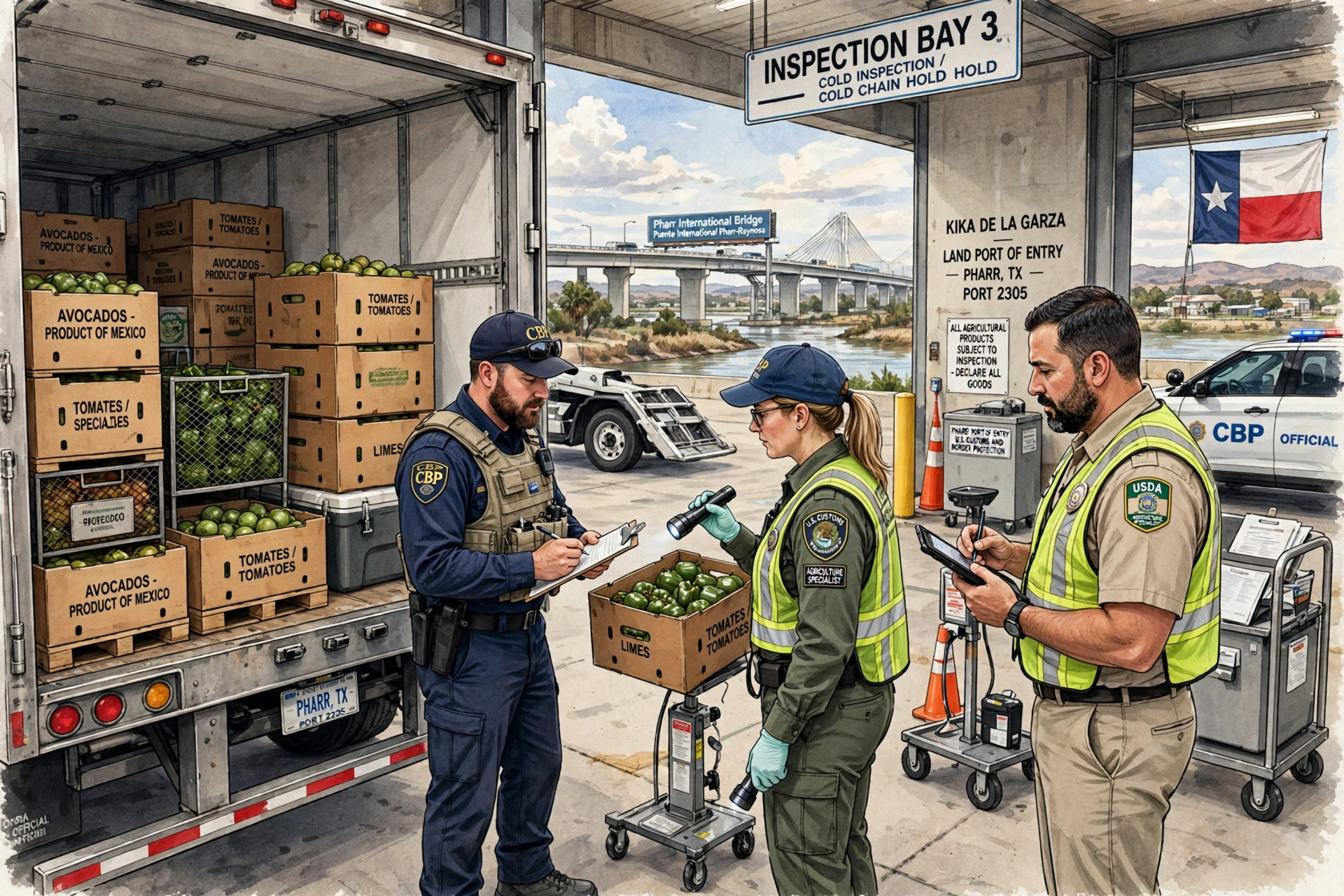
Image: Illustration: AI-generated by CDLWire
There is a new set of inspectors in the truck lanes at two Texas crossings: EPA agents spent last week working cargo exams beside CBP officers at Pharr and Brownsville, looking for banned products in commercial loads from Mexico, according to the U.S. Environmental Protection Agency on Nov. 24.
Senior EPA officials, including Assistant Administrator Jeffrey A. Hall of the Office of Enforcement and Compliance Assurance, joined EPA inspectors and U.S. Customs and Border Protection officers at land ports of entry on the southern border last week. The inspections ran for a week at the Port of Brownsville and the Pharr Port of Entry, also known as the Hidalgo Port of Entry. At Pharr, Hall and principal deputy assistant administrator Craig Pritzlaff met with Port Director Carlos Rodriguez — the director for the Hidalgo/Pharr/Anzalduas Port of Entry — to discuss emerging threats, opportunities for further cooperation, efficiencies in inspections and enforcement, and best practices. In parallel with the port work, EPA inspected retailers in the Brownsville and McAllen area suspected of illegally distributing and selling harmful pesticides, a step the agency says lets inspectors trace violative products through the supply chain and back to their foreign sources.
What the inspectors are hunting is specific. The target is the illegal importation of unregistered pesticides and other dangerous products — banned chemicals and consumer products that federal law keeps out of U.S. commerce. The agency spells out why a pesticide load matters beyond the paperwork: illegal importation of noncompliant pesticide products can result in pesticide misuse, illegal residues on food crops, human injury or exposure, and environmental damage, and illegal pesticides are also used on illegal marijuana grows operated by transnational organized crime groups. Hall framed the trucking connection directly: although EPA has handled some cases on the southern border, he said, this push to establish a firm and consistent inspection presence with CBP at land ports is critical to systematically curbing the illegal importation of unregistered pesticides and other dangerous products — and, in his words, commercial trucking traffic carrying illegal products from Mexico presents a substantial threat to national security from transnational organized crime and to consumers exposed to substances banned in the United States. Region 6 Administrator Scott Mason added the geographic logic: Texas has the longest state border with Mexico, which makes it a vital part of the agency's work to keep banned pesticides, illegal chemicals and consumer products out of American homes and businesses.
This was not a one-off surge. The Texas events were the first push of the agency's import inspections initiative in fiscal year 2027, following five seaport and land border inspection and training pushes in fiscal year 2026 — at the Savannah, New York/Newark, Los Angeles/Long Beach and Houston seaports and the Pembina, North Dakota port of entry — which together with Texas mean the program has now covered all four corners of the United States. The running totals since the coordinated work began in January 2026: inspectors have examined 461 products within 181 shipments, effectively blocking over 490,000 pounds of violative products from entering U.S. channels of trade. The legal authorities behind the inspections span the statutes EPA enforces at the border — the Federal Insecticide, Fungicide, and Rodenticide Act, the Toxic Substances Control Act, the Clean Air Act, the Safe Drinking Water Act and the American Innovation and Manufacturing Act — which is why the exam can reach beyond pesticides into chemicals, refrigerants and other regulated products in a mixed load.
One design feature of the program is aimed squarely at how importers route freight. The surge inspection initiative, EPA says, also deters importers from shopping around for different ports of entry after CBP has already directed the reexport of their illegal products following an inspection — in other words, a load refused at one crossing is not supposed to simply try its luck at the next one, and a multi-port presence is how the agency enforces that. CBP's role in the partnership is to facilitate EPA inspectors' access and identify potentially harmful products, with EPA inspectors making the final determination and enforcing the law.
The practical takeaway for drivers and carriers working the Rio Grande Valley crossings: an EPA hold is now a realistic part of a Pharr or Brownsville crossing, on top of the CBP exam the load already faces. The agency is describing its goal as a firm and consistent presence, not a one-week event, and the products that trigger it — unregistered pesticides, banned chemicals, noncompliant regulated goods — are a paperwork problem before they are a driver problem: the load that gets refused and ordered reexported is the load whose product registrations and documentation did not match what was in the trailer. Carriers hauling chemical, agricultural or consumer-product freight out of Mexico should confirm the shipper's product registrations are in order before dispatch, because at these two crossings the people checking that paperwork now include the agency that wrote the rules.
Sources
Related coverage
 November 24, 2026 · BorderFive drivers are asking FMCSA for their CDLs back — the first exemption petitions under the non-domiciled rule are open for comment until Dec. 24
 November 22, 2026 · BorderMexico's truckers and federal government advance 29 highway-safety agreements — a month after the nationwide strike shut down freight in 19 states
 November 16, 2026 · BorderLaredo's Saturday pilot is moving 400 to 500 trucks off Sundays — and CBP expects to extend it another 90 days
Comments
Loading comments…