Trucking group asks court to void the 2027 UCR fee increase — and halt UCR collections entirely
The Small Business in Transportation Coalition's Oct. 20 petition (D.C. Circuit No. 26-1297) challenges FMCSA's Sept. 1 rule raising 2027 UCR fees an average of 20% — $46 to $55 for the smallest carriers — and alleges FMCSA hands truckers' Social Security numbers to the UCR system without consent. The court has not acted; the fees remain in effect.
Summarized from PRWeb.
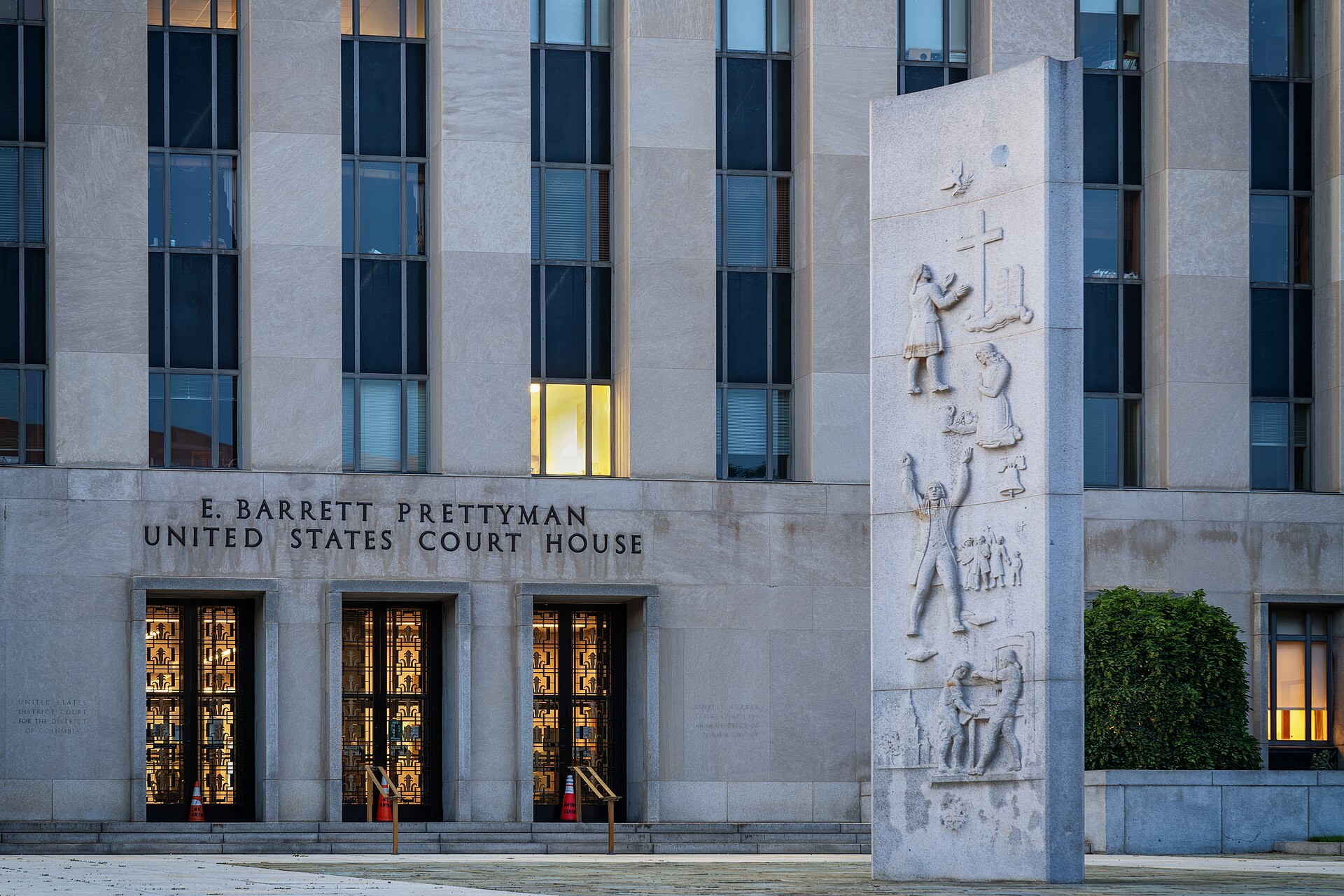
Image: Photo: Tony Webster, via Wikimedia Commons (CC BY 2.0) (file photo)
A small-carrier trucking group has asked a federal appeals court to throw out the 2027 Unified Carrier Registration fee increase, halt all UCR fee collections and disband the UCR Plan's board of directors, arguing that the entire registration system was never lawfully established, according to the group's announcement carried by PRWeb on Oct. 23.
The Small Business in Transportation Coalition (SBTC), a 501(c)(6) trade association, filed a petition for review on Oct. 20 in the U.S. Court of Appeals for the D.C. Circuit, docket No. 26-1297, brought under the Hobbs Act against the Federal Motor Carrier Safety Administration, the Department of Transportation and the United States. The target is FMCSA's final rule of Sept. 1, 2026, codified at 49 CFR \u00a7 367.50, which set the 2027 UCR fee schedule. SBTC is represented by attorney Laurence L. Socci.
UCR is the annual registration nearly every interstate motor carrier pays. The system is required by statute to generate $118 million a year, distributed to 41 participating states to fund motor carrier safety programs and enforcement, along with the UCR Plan's own administrative costs. Because collections rise and fall with the number of registered carriers and the size of their fleets, FMCSA adjusts the fees when the program runs short or long against that statutory total.
The 2027 schedule raised fees by an average of 20% over the 2025 and 2026 levels, with individual increases ranging from $9 to $9,329 depending on fleet size, according to Commercial Carrier Journal's report on the final rule. Bracket 1 — fleets of up to two commercial motor vehicles, a bracket that also covers the smallest operators and freight brokers — rises from $46 to $55. Bracket 6, fleets of 1,001 or more vehicles, rises from $44,836 to $54,165. FMCSA said the increase is needed to cover a projected $21.79 million shortfall, and noted that even after the increase the 2027 fees remain lower than those charged from 2019 through 2022.
SBTC's challenge reaches well beyond the size of the increase. The coalition alleges that the UCR System Plan and Agreement were never established through the rulemaking Congress required under 49 U.S.C. \u00a7 13908 of the UCR Act of 2007, making the fee rule itself unlawful. It asks the court to declare the fee rule, the UCR Board and the UCR Agreement unlawful and set the 2027 rule aside; to bar any further collection or enforcement of UCR fees; to bar FMCSA from issuing further fee rules until the system is lawfully established; to disband the board immediately; and to order FMCSA to issue a direct final rule under 49 CFR \u00a7 389.39 that lawfully establishes the system, so that states keep receiving safety enforcement money through a system SBTC says Congress actually authorized.
The petition also carries a privacy claim. SBTC alleges that FMCSA maintains a pattern and practice of releasing truckers' personally identifiable information, including Social Security numbers, to the UCR System Plan and its technical platform vendor without truckers' knowledge or consent, in violation of the Privacy Act and of FMCSA's own data release policy — and it asks the court to order that daily release stopped. In a related move, SBTC filed a data release complaint with the DOT Office of Inspector General on Oct. 13. These are allegations in a court filing; the court has made no findings on any of them.
The legal fight is not new. The fee adjustment grew out of a Sept. 18, 2025 recommendation by the UCR Board, and during the rulemaking SBTC, the Owner-Operator Independent Drivers Association and the National Propane Gas Association all objected, with commenters criticizing the inclusion of the UCR Plan's legal defense funds and technical platform expenses in the administrative budget passed down to registrants. SBTC previously went to the same court seeking to halt the rulemaking while litigation proceeded; the D.C. Circuit denied that motion to stay on June 17, 2026, and FMCSA finalized the rule. The agency's position is that Congress provided no separate appropriation for the UCR program, so the system must run on registration fees, and that adjusting those fees when collections fall short is a recalibration the statute requires.
For carriers, the practical position today is unchanged. Filing a petition for review does not suspend the rule: no court has ruled in this case, no stay has been issued, and the 2027 fee schedule remains in effect while the case moves forward. A one- or two-truck operation should budget $55 for 2027 UCR, $9 more than this year, and register and pay on the normal schedule — the lawsuit offers no protection to a carrier that simply does not pay. What is worth watching is docket No. 26-1297 itself: SBTC is asking for the most sweeping relief available, an end to fee collection altogether, and even a partial win would rewrite a registration system every interstate carrier touches once a year.
Sources
Related coverage
 October 21, 2026 · RegulationsNebraska gives fuel haulers hours and weight relief through Nov. 18 as harvest demand strains supply
 October 17, 2026 · RegulationsDOT disputes Overdrive's CDL-school reporting, denies AI was used to pick the 110 schools
 October 17, 2026 · RegulationsTwo driver-led petitions are under official FMCSA review: off-duty random drug tests and sleeper CO detectors
Comments
Loading comments…