Winter storm warning covers the Dalton Highway through Monday night: 8 to 16 inches in two waves
NWS Fairbanks warns of 8 to 16 inches on the Dalton Highway from Mile Post 165 to 232, including Coldfoot and Wiseman, through 10 p.m. Monday — with up to 20 inches and 55 mph gusts at Red Dog Mine in the western Brooks Range.
Summarized from Autoblog.
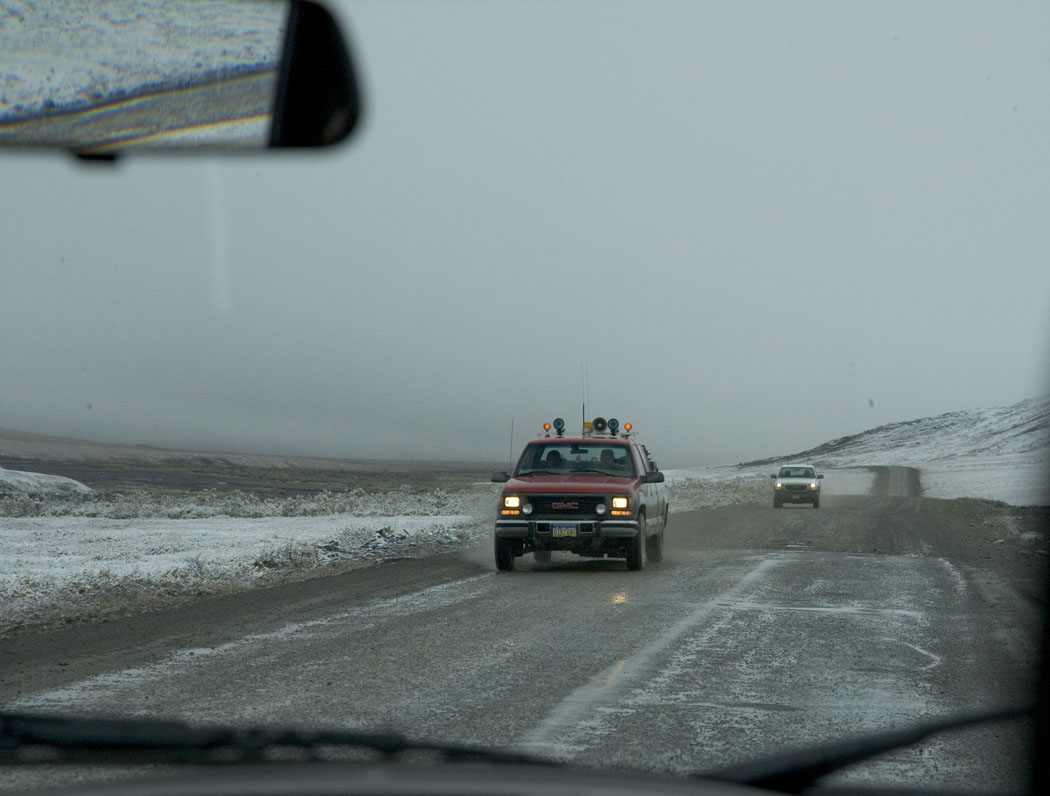
Image: Photo: Steve Hillebrand, U.S. Fish and Wildlife Service, via Wikimedia Commons (public domain) (file photo)
A winter storm warning from the National Weather Service in Fairbanks covers the Dalton Highway from Mile Post 165 to Mile Post 232 through Monday night, with 8 to 16 inches of snow expected in two waves and travel described as very difficult, according to Autoblog on Oct. 25. The warning, issued Oct. 23 at 11:57 p.m. AKDT and in effect until Oct. 26 at 10 p.m. AKDT, covers the south slopes of the Central Brooks Range, including Coldfoot, Wiseman and Chandalar DOT Camp — the middle of the haul road that keeps Alaska's North Slope supplied.
The snow is not arriving all at once. The National Weather Service expects the first wave from Saturday morning into Sunday morning, with accumulations around 4 to 8 inches, then a break with lighter snow Sunday afternoon through Sunday night. Heavier snow returns Monday morning and continues into the evening with an additional 4 to 8 inches, bringing the storm total to between 8 and 16 inches. Winds could gust as high as 35 mph in the Central Brooks Range zone — enough, with fresh snow on an exposed gravel-and-pavement corridor, to cut visibility and drift lanes between plow passes. The warning's own instruction is the standard one for a reason: if you must travel, keep an extra flashlight, food and water in your vehicle in case of an emergency, and check 511.alaska.gov or call 511 for the latest road conditions before setting out.
The Dalton is not the only zone under warning, and drivers working western Alaska face the harder end of the same system. A separate warning covers the south slopes of the Western Brooks Range and the Noatak Valley, where higher terrain including Red Dog Mine is set for 10 to 20 inches of snow, the community of Noatak for 3 to 6 inches, and gusts reach 55 mph, with forecasters wanting travel kept to emergencies until that warning expires Sunday evening. The same warning extends to the Upper Kobuk Valley around Kobuk, Shungnak and Ambler, with 4 to 8 inches and gusts to 50 mph; snow there has already turned to rain or a rain-and-snow mix on the valley floor, though accumulation continues in the hills north of the Kobuk River. Bettles and Allakaket in the Upper Koyukuk Valley run on the Central Brooks timeline with 8 to 12 inches and a glaze of ice — and Monday plays out differently there, as warmer air is expected to turn afternoon snow to rain that freezes on any surface still below freezing, leaving slick conditions early in the week.
Red Dog deserves a specific note because it is a working haul road, not a scenic route. The mine connects to its port on the Chukchi Sea by the DeLong Mountain Transportation System, a 52-mile, 30-foot-wide gravel haul road, according to the Alaska Industrial Development and Export Authority, which owns it. Teck operates the mine and the road, and a state permitting document describes fuel trucks running continuously between port and mine to keep the site's diesel engines supplied. The road is closed to the public, and its mine end faces the deepest snow in the forecast — up to 20 inches with gusts to 55 mph through Sunday evening. There is no detour and no services to fall back on; a truck that stops out there waits for the operator's own crews.
The stranded-vehicle guidance attached to these warnings is written for exactly this country. Both western zones carry the same instruction from NWS Fairbanks: if you get stranded, stay with your vehicle. Alaska's winter driving guidance, published through the state's 511 service, sets the threshold for leaving at help that is visible within 100 yards, and warns that a person can become disoriented and lost in blowing and drifting snow. The state advises running the engine for about 10 minutes each hour with the heater and dome light on, keeping the exhaust pipe clear of snow, and opening a window slightly on the downwind side to guard against carbon monoxide. For a distress signal, tie a brightly colored cloth to the antenna — and do not raise the hood, since a strong gust can snap it and break the windshield, a live risk with gusts forecast at 50 to 55 mph. Shoveling and pushing are on the list to avoid as well, because the exertion strains the heart. The state's kit list is a back-seat emergency kit with flashlights and spare batteries, blankets, a wool cap, sand, a small shovel, booster cables and tire chains or traction mats, and its winter guidance adds keeping the fuel tank above half full, since fuel stations may not be open in winter.
The practical takeaway: if you are dispatched up the Dalton this weekend, the decision point is Fairbanks, not Coldfoot. Check 511 Alaska before you leave, fuel past half, carry the kit and the food and water the warning names, and treat Monday's second wave — not Sunday's break — as the storm's real deadline. A lighter Sunday afternoon is a lull between waves, not a reopening, and on a corridor with no detour and no public services, the cheapest delay is the one taken at a truck stop instead of at Mile Post 200.
Sources
Related coverage
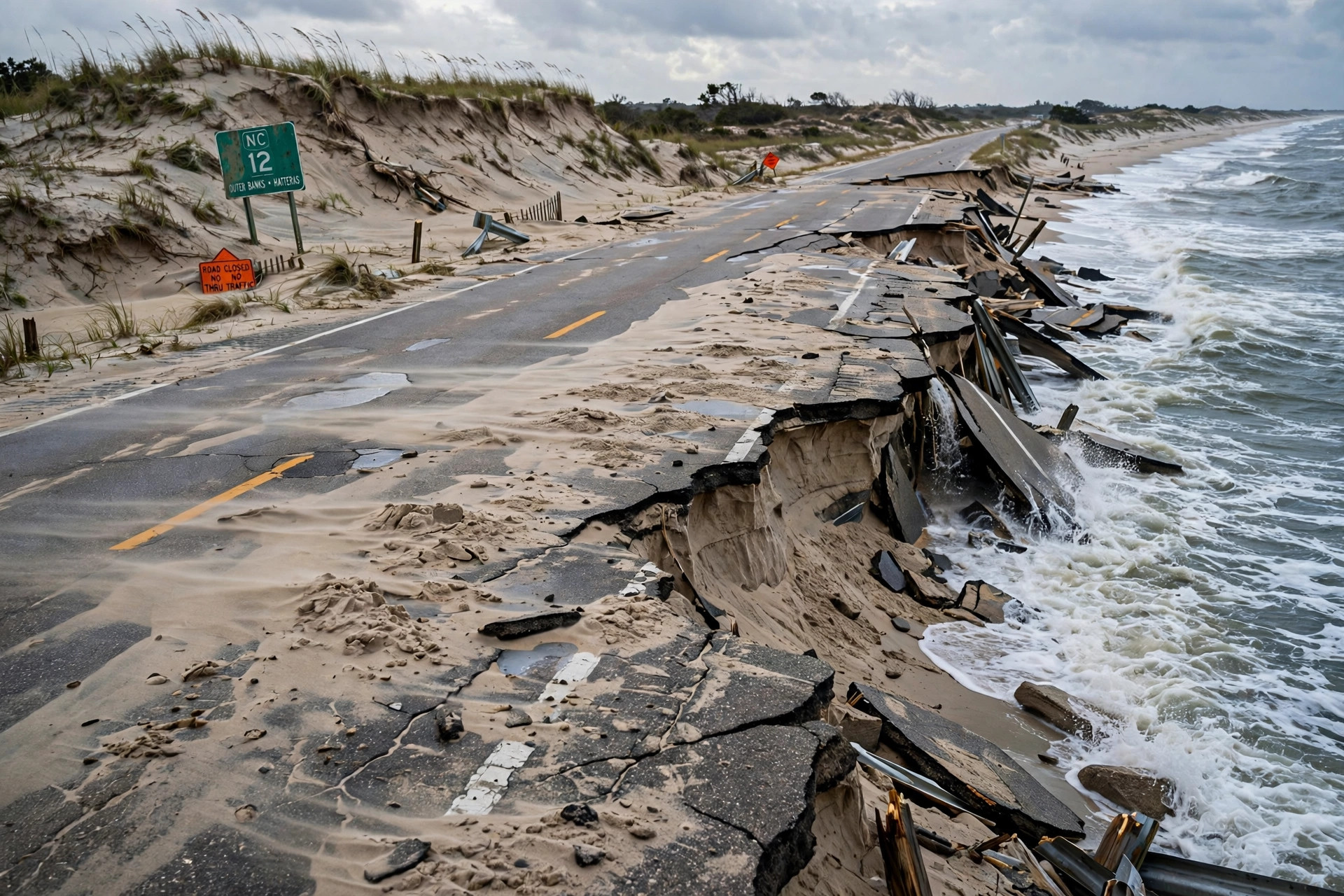 October 22, 2026 · Weather and roadsNC-12 damage put at 800 feet of pavement and 1,800 feet of dunes; emergency ferry in planning and no reopening timeline
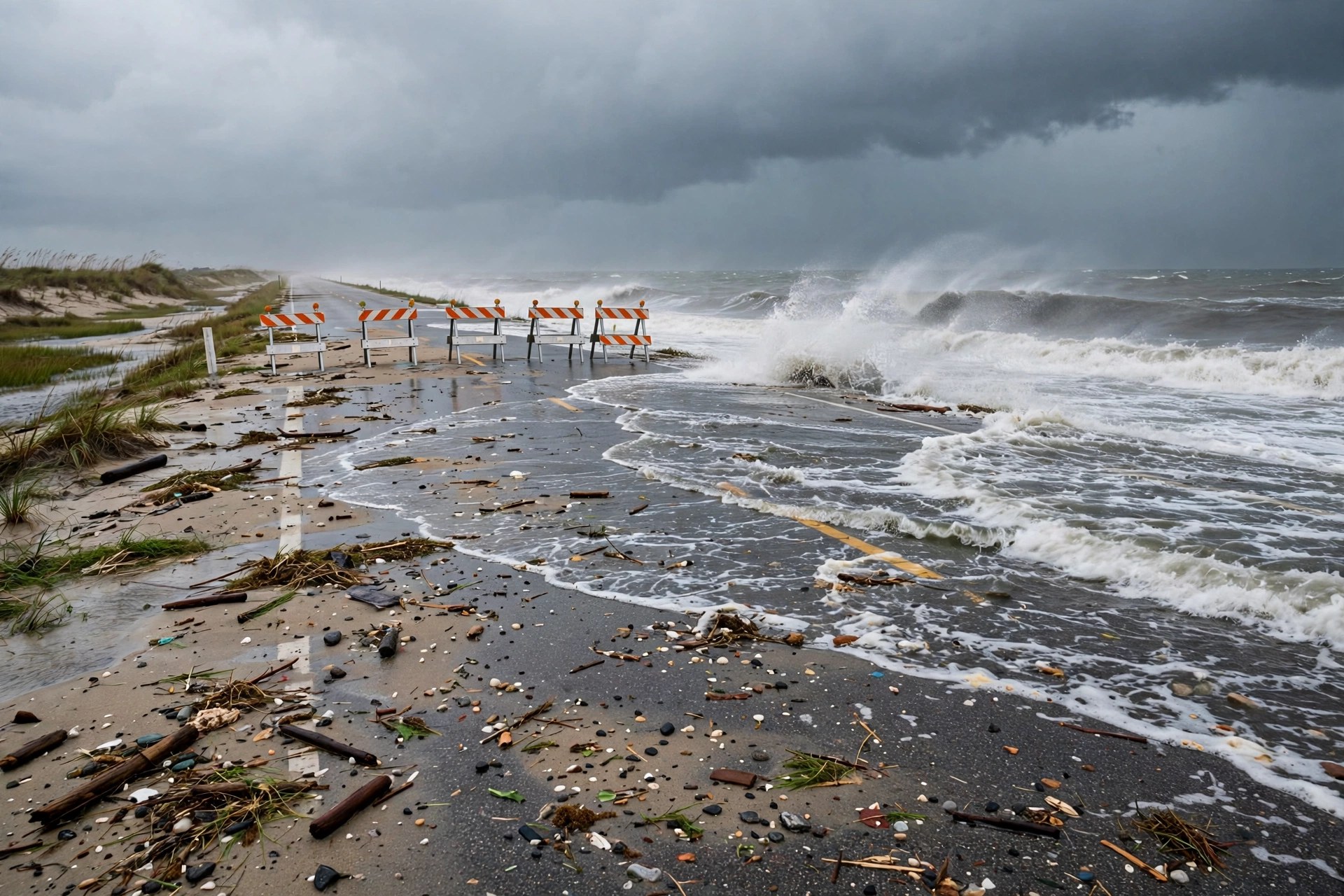 October 21, 2026 · Weather and roadsNor'easter closes NC-12 to Hatteras: the island's only road is still shut Wednesday, flood warnings extended
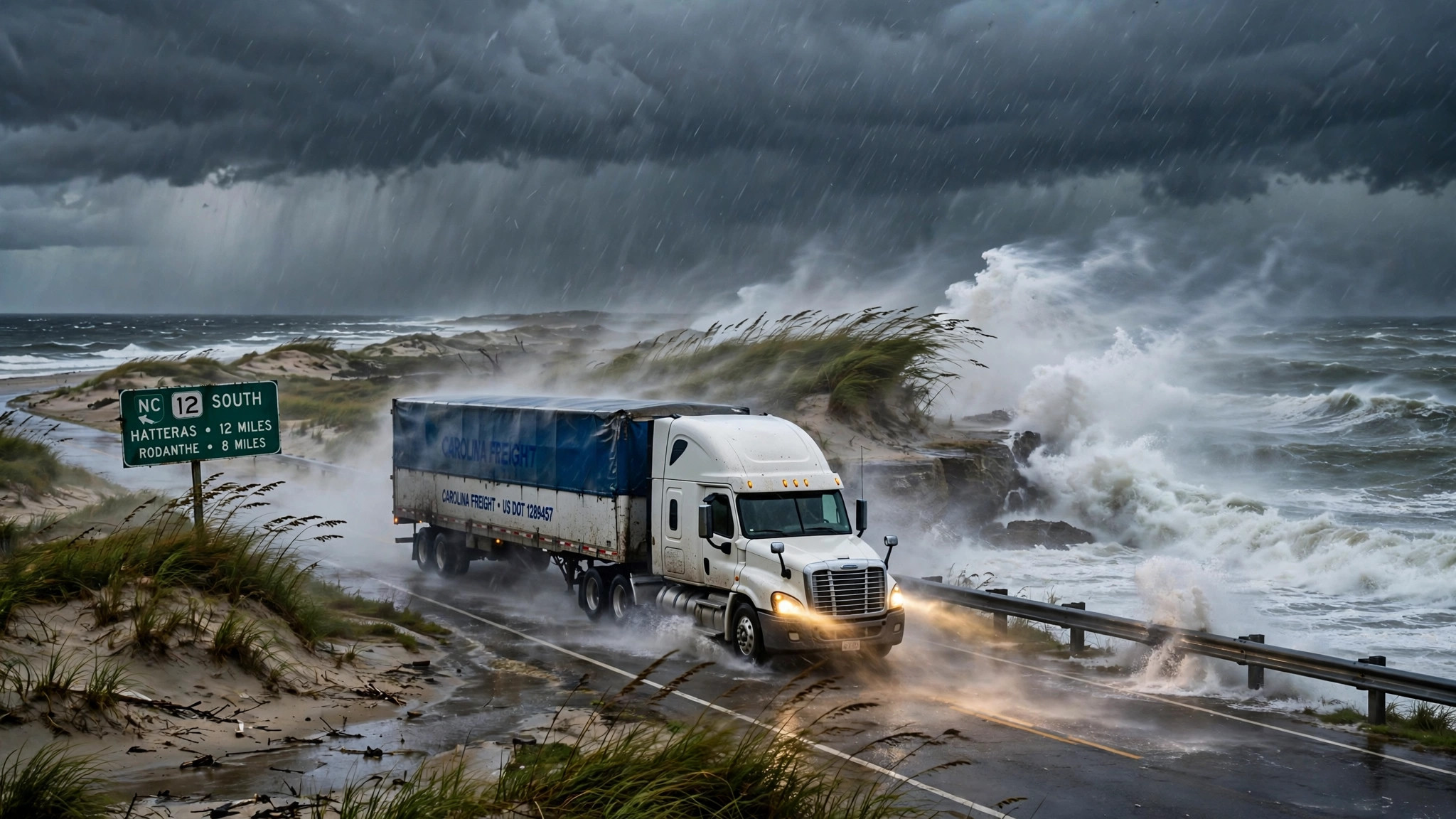 October 18, 2026 · Weather and roadsNor'easter takes shape off the Carolinas: gusts over 60 mph, a coastal flood warning and NC-12 overwash risk into Tuesday
Comments
Loading comments…