Knight-Swift cut its approved carrier pool by about 70% — and its CEO says the CDL crackdown could make the recovery last
CEO Adam Miller told the WEX OTR Summit on Tuesday that Knight-Swift requires a year of operating history before a carrier can haul its brokered freight, and that broker liability after Montgomery, organized cargo theft and stricter CDL enforcement are shrinking the pool of carriers brokers will touch.
Summarized from FreightWaves.

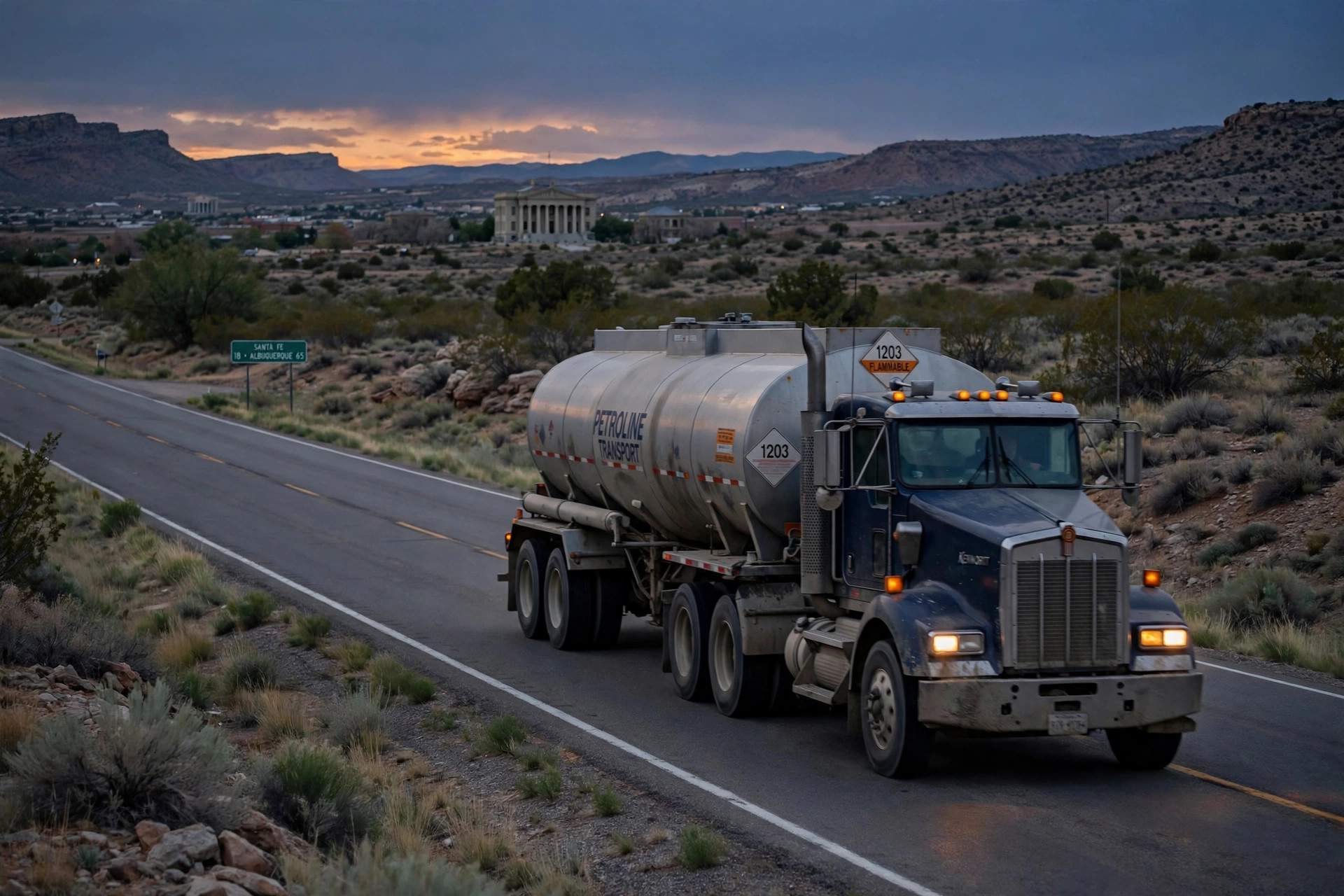
Image: Illustration: AI-generated by CDLWire
Knight-Swift Transportation has reduced its approved brokerage carrier pool by approximately 70% over the past two years as it tightens carrier vetting amid concerns over cargo theft, highway safety and potential broker liability, according to FreightWaves on Oct. 27. Chief Executive Adam Miller disclosed the reduction Tuesday during his keynote address at the second annual WEX OTR Summit in Jacksonville, Florida, saying the company has become increasingly selective about which motor carriers it allows to transport freight through its brokerage operations. 'We're down 70% from maybe two years ago,' Miller told attendees. 'Because we really vetted the type of carrier that we want.'
The summit drew more than 115 attendees, including trucking executives, fuel providers, technology companies and other transportation industry representatives. Miller's remarks came as Knight-Swift reports improving truckload market conditions despite relatively weak freight demand. During the keynote he said available trucking capacity continues to tighten while national tender rejection rates remain elevated — the classic setup in which rates firm up not because freight booms, but because trucks and carriers leave the available pool.
One concrete rule explains a large share of the cut. The company requires motor carriers to have been operating for at least one year before they can participate in its brokerage network. 'We wouldn't allow a carrier to come into our business unless they've been active for a year,' Miller said. He said some large freight brokers have historically allowed newly registered trucking companies to access freight with minimal operating history, creating potential exposure to fraud, cargo theft and safety-related claims, and that requiring a longer operating history helps brokers identify risks before tendering loads.
Broker liability is the second driver of the change. Miller referenced the U.S. Supreme Court ruling in Montgomery v. Caribe Transport II, arguing that brokers could face greater legal exposure when they hire trucking companies with questionable safety records. 'Now you have brokers who have some skin in the game if they're negligent in the carrier that they hire to move the load,' he said. He suggested some brokers have historically prioritized lower transportation costs over more stringent qualification requirements, and that potential legal exposure could prompt brokers to examine carrier safety records, operating history and insurance coverage more closely. 'If you're going to be willing to put in, to engage with a carrier that has an unsafe CSA score that's over threshold, you're at risk,' he said. CSA refers to the Federal Motor Carrier Safety Administration's Compliance, Safety, Accountability program, which uses inspection, crash and investigation data to identify potential motor carrier safety concerns. Miller said CSA scores do not necessarily provide a definitive measure of a carrier's safety performance, but warned that unfavorable scores could become a significant factor in litigation.
Cargo theft is the third pressure. 'Cargo theft went from a couple bad actors to organized crime,' Miller said. Knight-Swift uses outside carriers in its brokerage operations, including power-only arrangements in which a contracted motor carrier supplies a tractor to haul a trailer, and Miller said those arrangements make carrier screening particularly important. He also warned that major trucking accident verdicts and potential broker liability could increase insurance costs for freight brokers, suggesting insurers may reassess their exposure and charge higher premiums. 'Brokers are gonna have to pay multiples of what they're paying now to keep the same insurance limits,' he said, adding that shippers are also becoming concerned about whether they could face litigation if a motor carrier's insurance coverage is insufficient to satisfy a large accident judgment.
Miller's market argument is that these filters, layered on top of stricter federal enforcement of commercial driver's license requirements and other safety regulations, could prevent the pattern trucking knows too well: a rapid influx of capacity during the next upcycle, followed by steep declines in freight rates when too many carriers enter the market. More stringent broker screening creates an additional barrier to entry, he said, and the result could be a more sustainable recovery rather than sharp increases and declines. 'That's going to eliminate probably the cheapest capacity, the less compliant carriers out there in the market,' he said, and he warned that when brokers dial in the different vetting criteria, the carrier pool they can work with is going to be significantly smaller.
The practical takeaway cuts two ways depending on where you sit. If you are an established carrier with a clean record, a year or more of history, current insurance and CSA scores that stay under threshold, this shift is your friend: fewer eligible competitors for the same brokered loads is exactly how a supply-driven recovery reaches your rate. If you are a new authority, a recently reactivated carrier, or a small fleet that lives on spot freight, expect the door to be narrower — Miller said explicitly that more restrictive standards could make it harder for newly established companies to obtain loads, particularly those relying heavily on the spot market. Either way, keep your safety file boring and current: inspection record clean, insurance certificates ready, and no surprises a broker's vetting screen will find before you do.
Sources
Related coverage
 October 20, 2026 · Law & safetyNew Mexico jury awards $47 million to pickup driver and his mother in 2022 tanker crash case
 October 19, 2026 · Law & safetyTrucking lawsuit verdicts average nearly $28 million in U.S. Chamber study of 334 cases
 October 17, 2026 · Law & safetyTexas judge upholds $604 million nuclear verdict against C.H. Robinson in fatal-crash case
Comments
Loading comments…