New charges detail in the fatal I-81 pileup: driver admits he hid a narcolepsy diagnosis to keep his CDL, troopers say
CDLLife reported Tuesday, citing ABC 27, that the 43-year-old driver charged in Friday's seven-vehicle I-81 crash admitted speeding 65 to 70 mph in a 55 mph zone and lying about a narcolepsy diagnosis to keep his CDL. Troopers also found the truck's inspection expired in August and a phone mount partly blocking the windshield. He is held on $150,000 bail, with a hearing Nov. 4.
Summarized from CDLLife.
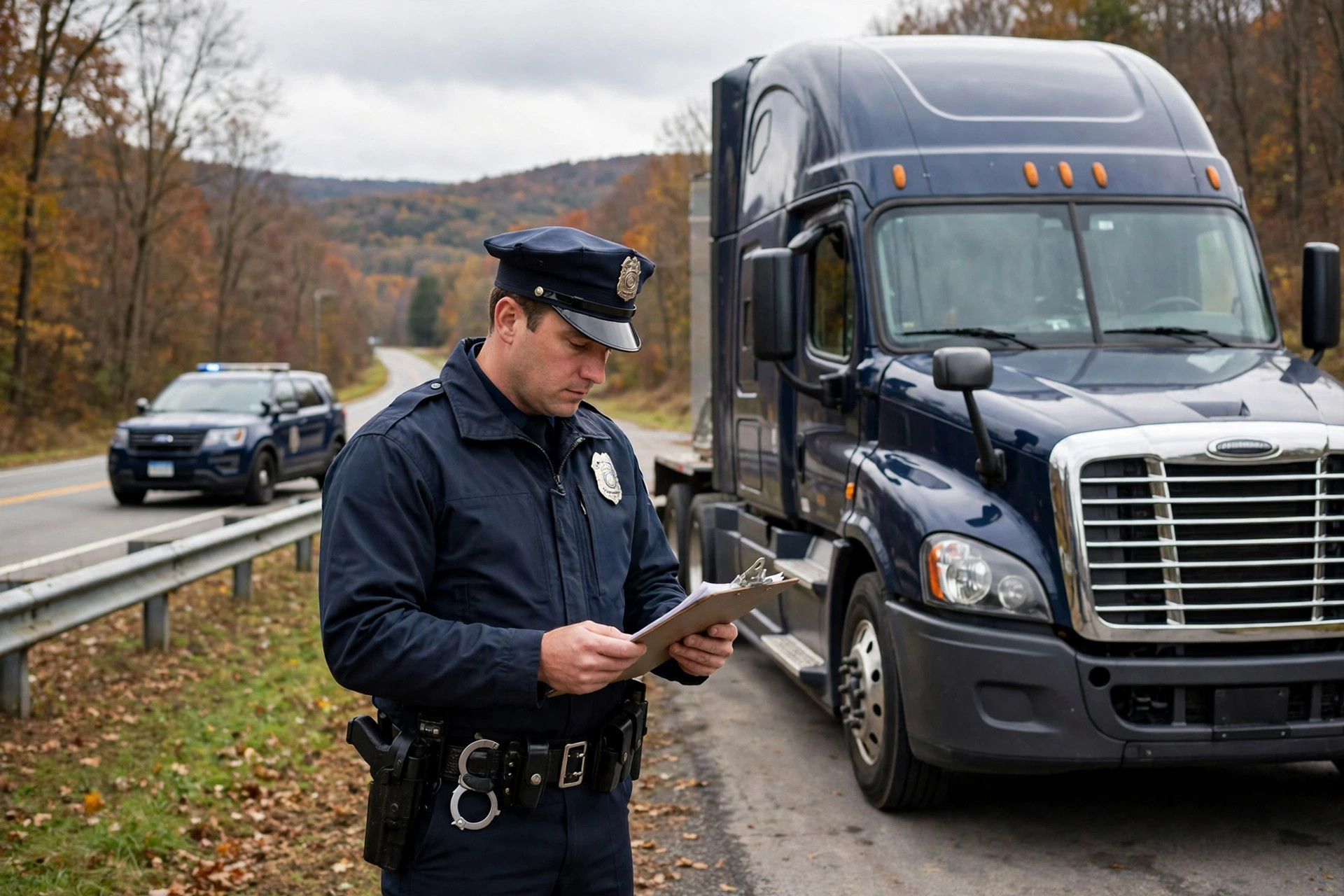
Image: Illustration: AI-generated by CDLWire
New charging details have emerged in Friday's fatal seven-vehicle crash on Interstate 81 — including an admission, reported by police, that the driver hid a medical diagnosis to keep his license — according to CDLLife on Oct. 27, reporting ABC 27. CDLWire covered the crash itself in its Oct. 23 edition; this story covers only what is genuinely new since then: what the driver is now reported to have told troopers, what investigators say they found on the truck, and the charges and bail that followed.
The crash, as previously reported and restated in Tuesday's reporting, happened on Interstate 81 on Friday, October 23, in Cumberland County, Pennsylvania, just before 7:30 a.m. According to ABC 27 as reported by CDLLife, 43-year-old Rodis David III was traveling along I-81 when he crashed into the back of a CRV, pushing it into a Mitsubishi. The tractor-trailer then pushed both passenger vehicles into a Subaru, which then hit a pickup truck towing a trailer, and several other vehicles were also hit in the crash. The Subaru caught fire as a result of the collision, killing the driver. Three other people were taken to a hospital with injuries that include broken bones and a brain bleed.
The new reporting centers on admissions attributed to the driver by police. David told police he had been speeding between 65 and 70 mph in the 55 mph zone when he failed to stop in time for a traffic backup caused by a previous wreck. He also admitted to troopers that he had lied about a narcolepsy diagnosis in order to keep his CDL. Those statements are reported as admissions to troopers; the charges they support are allegations to be tested in court, and a preliminary hearing — the first formal test of them — is set for November 4. This story reports the admissions as CDLLife and ABC 27 reported them, and the charges as charges, nothing more.
Investigators added two equipment and visibility findings. Further investigation revealed that the inspection on the tractor-trailer had expired in August, and that a cell phone mount was partially blocking the view out of his windshield. Either finding alone would be a roadside problem on an ordinary day. In a fatal-crash file they become part of the prosecution's picture: a driver who, on the reported facts, was speeding toward a known backup, in a truck out of inspection, with his own view partly obstructed, while holding a license that — if the narcolepsy admission is proved as reported — was kept by concealing a disqualifying medical condition.
The charges are felony-level. David has been charged with felony homicide by vehicle, aggravated assault by vehicle, and recklessly endangering another person, and was also charged with several driving violations. He is being held in Cumberland County Prison on $150,000 bail. A preliminary hearing is set for November 4. No plea has been reported, no trial has occurred, and nothing in the reporting states the outcome of that hearing in advance — the correct posture for readers is the same as the court's: charged, held, and awaiting the first hearing.
The medical thread is the one with consequences far beyond one courtroom. A CDL is a medical credential as much as a driving one: the certification system exists so that conditions that can take a driver out of consciousness or control — and narcolepsy is squarely that kind of condition — are disclosed and evaluated before an 80,000-pound vehicle is moving at highway speed, not reconstructed afterward from a crash file. If the reported admission holds up, the failure here was not a missed form. It was a deliberate concealment, maintained every day the driver climbed into the cab, and it put every motorist in Friday's backup inside a risk none of them could see.
The practical takeaway for working drivers is uncomfortable and direct. If you have a diagnosis that affects alertness, the medical exam is not an obstacle to route around — it is the system that keeps you, your license and everyone ahead of you legal and alive, and examiners and the FMCSA medical program have processes for evaluation that lying permanently destroys. Pair that with the ordinary items in this same file: an inspection that expired in August and a windshield partly blocked by a mount are the kind of small, fixable defects that read very differently after a fatal crash. Check the dates on your equipment, keep the windshield clear, and never protect a CDL by hiding the one thing the CDL system most needs to know.
Sources
Related coverage
 October 26, 2026 · EnforcementAbout 170 beer bottles in the cab: Texas driver arrested in New Hampshire faces arraignment today
 October 22, 2026 · EnforcementFeds charge driver in alleged $12 million cargo theft scheme built on hijacked carrier identities
 October 22, 2026 · EnforcementEl Paso starts truck inspections on both sides of Transmountain after deadly brake-failure pileup; city weighs limiting heavy trucks
Comments
Loading comments…