Driver pleads guilty in the I-35 construction-zone deaths: the cab camera showed Netflix as he reached slow traffic at 68 mph
Billie Joe Grimes, 57, switched his plea to guilty on Monday to two counts of criminal vehicular homicide and one count of criminal vehicular operation for the August 2023 crash south of Faribault, Minnesota. Investigators said a driver-facing camera showed him watching a Netflix show as he approached stopped traffic he never braked for. Sentencing is March 17, 2027.
Summarized from CDLLife.
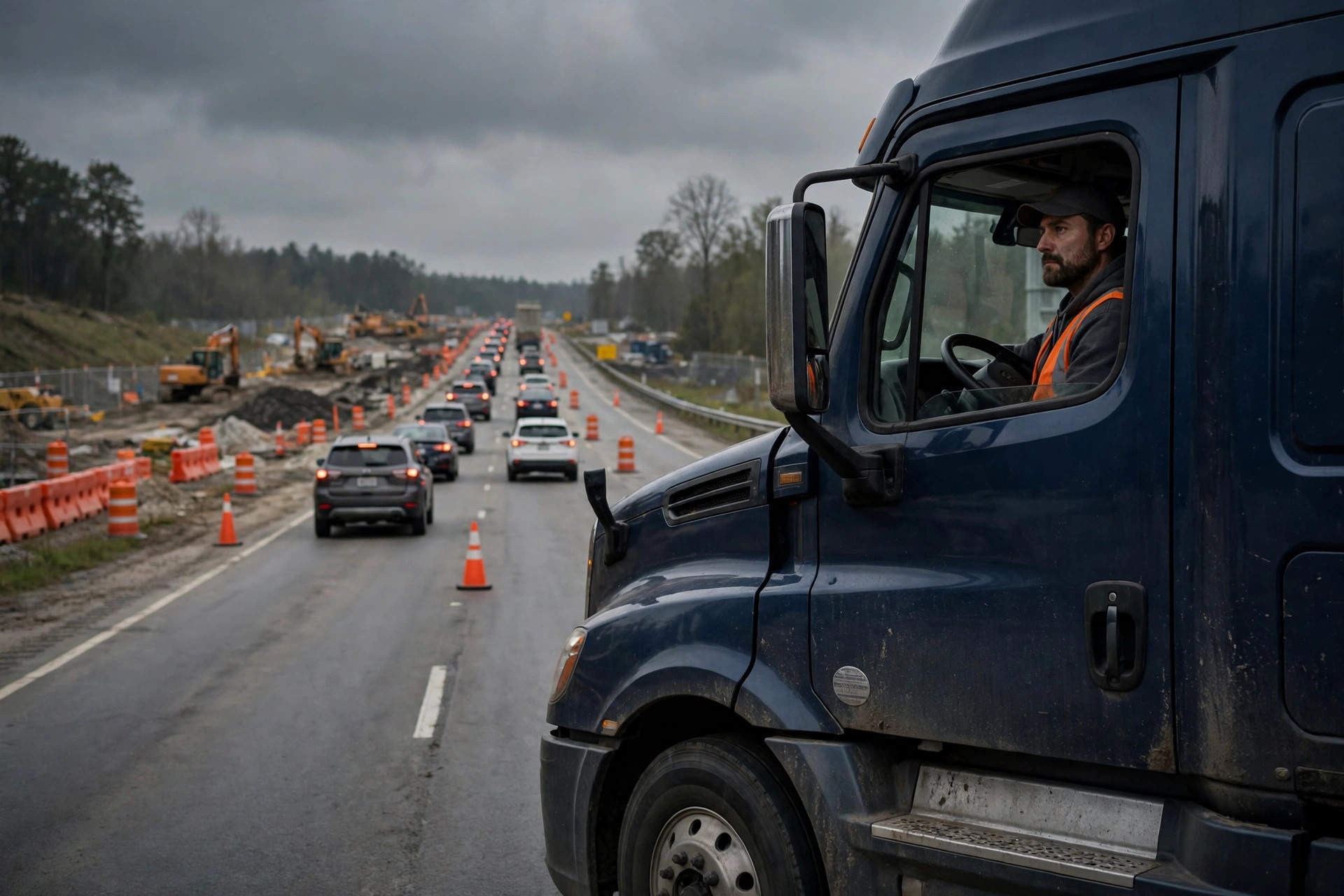
Image: Illustration: AI-generated by CDLWire
A truck driver has switched his plea to guilty for a construction-zone crash that killed two people in August of 2023, according to CDLLife on Oct. 27. Billie Joe Grimes, 57, originally pleaded not guilty and requested a jury trial nearly a year ago. As of Monday, October 26, 2026, he has switched his plea to guilty to two counts of criminal vehicular homicide and one count of criminal vehicular operation. With the plea entered, no jury trial will be held, and Grimes is scheduled to be sentenced on March 17, 2027.
The crash happened on Interstate 35 south of Faribault, Minnesota. According to the reporting CDLLife cited from WeAreIowa News, Grimes was driving along I-35 when he crashed into a line of slow-moving traffic. The crash killed two people inside one of the two cars hit in the crash. The victims were a couple inside a Toyota, in the words the investigation used: he 'was distracted to the extent that he failed to apply the brakes before he crashed into the Toyota and killed' the couple inside.
What Grimes told officers at the time, and what the camera showed, are different accounts — and the difference is the case. During the investigation, Grimes told officers he had been downloading an episode of 'Rust Valley Restorers' from Netflix at the time of the crash, but said the episode was for later, and denied using his phone in the moments before the crash. He told troopers he had 'just a split second, a couple seconds,' to react to the stopped cars. 'I just didn't have time to stop, I didn't have time to react and I couldn't stop the truck,' he explained, citing the heavy load, and he also told officers he 'could not remember if he applied the brakes prior to impact.'
Investigators used a driver-facing dash camera to determine that Grimes was 'watching a Netflix show as he approached stopped or slow-moving traffic as he approached a construction zone.' Grimes was found to be traveling at 68 mph at the time of the collision, and it was determined that he was distracted to the extent that he failed to apply the brakes before impact. Prosecutors say he passed multiple orange DOT signs warning motorists of possible slow-moving traffic in the construction zone. Those three facts together — video of viewing, highway speed, and no braking before a warned, slowing queue — are what turned a fatal crash into criminal vehicular homicide counts, and they are the facts a guilty plea now accepts rather than contests at trial.
It is important to keep the legal posture exact. A guilty plea is a conviction on the counts pleaded to; it is not an allegation, and this story does not treat it as one. At the same time, sentence has not been imposed: the March 17, 2027 date is when a court will decide the punishment, and no source in this reporting states a sentence, a sentencing agreement, or what Grimes's CDL status will be afterward. Anyone reporting a prison term today would be inventing it. What is settled is responsibility for the crash, admitted by the driver himself in court.
The background every working driver already knows is why this case will be cited in safety meetings for years. Construction zones compress every risk at once: lanes narrow or shift, speeds drop unevenly, traffic queues form where no queue existed a mile earlier, and the warning signs arrive long before the brake lights do. The prosecution's account has all of it — multiple orange DOT warnings passed, traffic slowing ahead, and a heavy truck still at 68 mph with its driver's eyes on entertainment video. The heavy load Grimes cited to troopers is precisely the reason a loaded truck needs more attention in a work zone, not less: stopping distance grows, and the margin that a split second of distraction consumes is the whole margin there is.
The practical takeaway is blunt, because the facts are. Entertainment video in a moving cab is not a gray area, a hands-free question, or a policy debate — in this case it is the admitted center of a double homicide plea. A driver-facing camera recorded it, investigators reconstructed speed and braking from it and from the truck, and the driver's own roadside explanation did not survive that record. Set the phone down, set the download for the bunk, and treat every orange sign as the start of the event, not scenery before it. Two people are dead, a driver waits for a March sentencing, and the only thing that had to be different was eyes up on I-35.
Sources
Related coverage
 October 26, 2026 · EnforcementAbout 170 beer bottles in the cab: Texas driver arrested in New Hampshire faces arraignment today
 October 22, 2026 · EnforcementFeds charge driver in alleged $12 million cargo theft scheme built on hijacked carrier identities
 October 22, 2026 · EnforcementEl Paso starts truck inspections on both sides of Transmountain after deadly brake-failure pileup; city weighs limiting heavy trucks
Comments
Loading comments…