Analysts' third-quarter verdict: a supply-driven recovery, with about 70,000 drivers taken out of a pool of a million and a half
Transport Topics' post-earnings review finds rates strengthened in the third quarter on capacity constraints and rising costs despite soft consumer demand. Stephens calls it a supply-side recovery and expects contract rates to keep rising with driver pay; Bank of America puts the enforcement-driven driver exit at somewhere around 70,000; Baird credits DOT enforcement and post-Montgomery broker scrutiny — while spot rates sit below their summer peaks.
Summarized from Transport Topics.

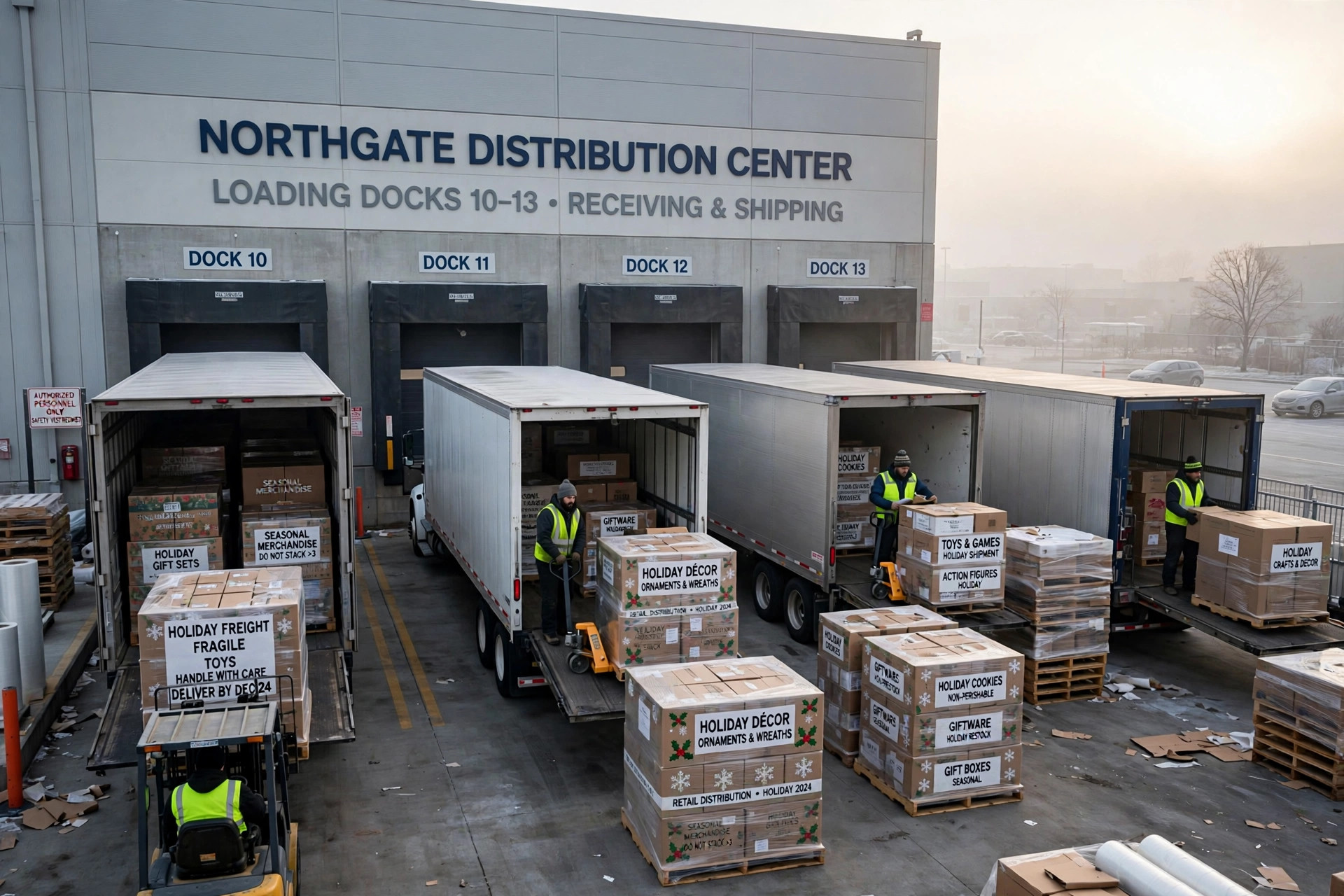
Image: Illustration: AI-generated by CDLWire
The third quarter did not bring the freight market a demand recovery — it brought carriers pricing power anyway, according to Transport Topics on Nov. 12, in an analysts' review of the quarter's results. Freight rates strengthened in the third quarter as capacity constraints and rising costs gave the trucking industry greater pricing power despite soft demand. The results followed a prolonged freight downcycle that began with the pandemic-era surge and correction, which left an oversupply of capacity in the years since; this year, the analysts said, a federal crackdown on noncompliant drivers alongside ongoing market pressures has produced a supply-driven recovery instead.
The Stephens view frames the whole quarter. "Heading into earnings season, we said we felt worse about costs, better about pricing and worse about demand for retail-centric truckload," said Bascome Majors, managing director of transportation equity research at Stephens. "Exiting earning season, our views have only been reinforced — this remains a supply-side recovery for truckload." Majors expects contract rates to continue to rise along with driver pay and other inflationary costs, and his team views intermodal as best positioned to show meaningful growth, with shippers continuing to convert truckloads to lower overall costs — the one demand-side threat the truckload analysts named to the recovery itself.
Bank of America's estimate puts a number on the supply side. "There's no doubt in our view that this is a supply-driven recovery," said Ken Hoexter, managing director at Bank of America. "You've taken out somewhere around 70,000 drivers of a pool of a million and a half." The figure is an analyst's estimate of the enforcement-driven capacity exit, and it lands in the same range as the federal government's own running totals in other coverage this week — tens of thousands of drivers placed out of service and tens of thousands of licenses revoked since the April 2025 executive order. Hoexter noted his investors have expressed concern over whether the peak of capacity reductions has passed; he expects the pressure on capacity to continue, at an unclear pace, and the analysts were unsure when freight demand will improve. On rates, his read of the quarter is a two-part summary drivers should hold onto: spot rates peaked during the summertime and have come down from those peaks — but from an elevated level, still up significantly year over year.
R.W. Baird's analyst added the mechanism that turned enforcement into pricing. "Assessed conditions remain pretty constructive, especially as it relates to carriers' ability to pursue rate increases," said Dan Moore, senior transportation analyst at R.W. Baird & Co. He described the demand environment as "maybe seasonably a little bit more muted," with some freight pulled forward into the second quarter, and pointed to the Department of Transportation's increased enforcement as a major factor in the disruptions that shaped the quarter. Brokers have also faced increased scrutiny over how they select carriers after the Montgomery v. Caribe Transport II Supreme Court ruling — a legal change that raises the cost of tendering freight to a questionable carrier, and so pushes volume toward compliant capacity. Through July and August's weaker seasonality, Moore said, base rates continued to improve, and spot rates began to inflect in August.
The split in the economy underneath the rates is the analysts' shared caveat. Consumer-related freight remains soft, held back by a weak housing market, automobile sales, interest rates and fuel costs, and Moore warned that the weak consumer market is preventing a robust freight economy. The industrial economy is carrying the load instead: "We have tailwinds related to the One, Big Beautiful Bill, and we have tailwinds related to the buildout of AI," Moore said, with emerging signs of an oil field-services recovery besides. Jason Seidl, managing director at TD Cowen, called the macroeconomic news "slightly better" and noted the consumer base remained stable despite higher energy prices, with companies such as UPS and Knight-Swift anticipating a normalized peak shipping season; he also flagged broad industrial strength alongside semiconductors and healthcare, and some investor concern that so many companies are attacking the same data-center-driven market.
Carriers, meanwhile, have responded to the rebound by focusing on increasing utilization — running the trucks they have harder — while grappling with driver pay that is starting to scale upward alongside operational costs across the truckload sector. That pairing is the quarter in one line: the recovery is real, it is priced off a shrinking driver pool rather than growing freight, and part of what it produces is immediately spent on keeping the drivers who remain.
For drivers and small carriers, the analysts' consensus cuts two ways. The pricing power is genuine and, on the Stephens view, contract rates keep rising into next year with driver pay — a negotiating fact for anyone renewing a contract lane or a pay package this winter, supported by a named figure for the capacity exit rather than a rumor of one. The caution is in the structure: a recovery built on removed capacity, with consumer demand soft and spot rates already down from their summer peaks, depends on enforcement continuing and on the industrial economy holding freight up. If either leg weakens — capacity discipline or industrial demand — the pricing side of this recovery is the first thing that goes, because the demand side was never what built it.
Sources
Related coverage
 November 11, 2026 · Fuel & ratesVan spot rate hits $3.05 a mile in October, highest since early 2022
 November 10, 2026 · Fuel & ratesDiesel drops $0.165 to $6.127 in EIA's week ending Nov. 9, but the agency raises its 2027 forecast 12% to $5.03 a gallon
 November 10, 2026 · Fuel & ratesFreight demand jumps nearly 5% and van contract rates hit a 52-week high: SONAR puts tender volume at 11,600, rejections at 12.95% and van spot at $3.49 a mile
Comments
Loading comments…