Nevoya and Meta team up again: 25 electric Class 8 trucks for Interstate 10, launching in 2027
The multi-year agreement deploys 25 battery-electric trucks between San Bernardino and Phoenix, builds corridor charging that other operators can use, and has Meta buying the service's environmental attribute certificates rather than the freight itself — its second Nevoya corridor, after backing a 63-truck Houston-Dallas deployment.
Summarized from Commercial Carrier Journal.
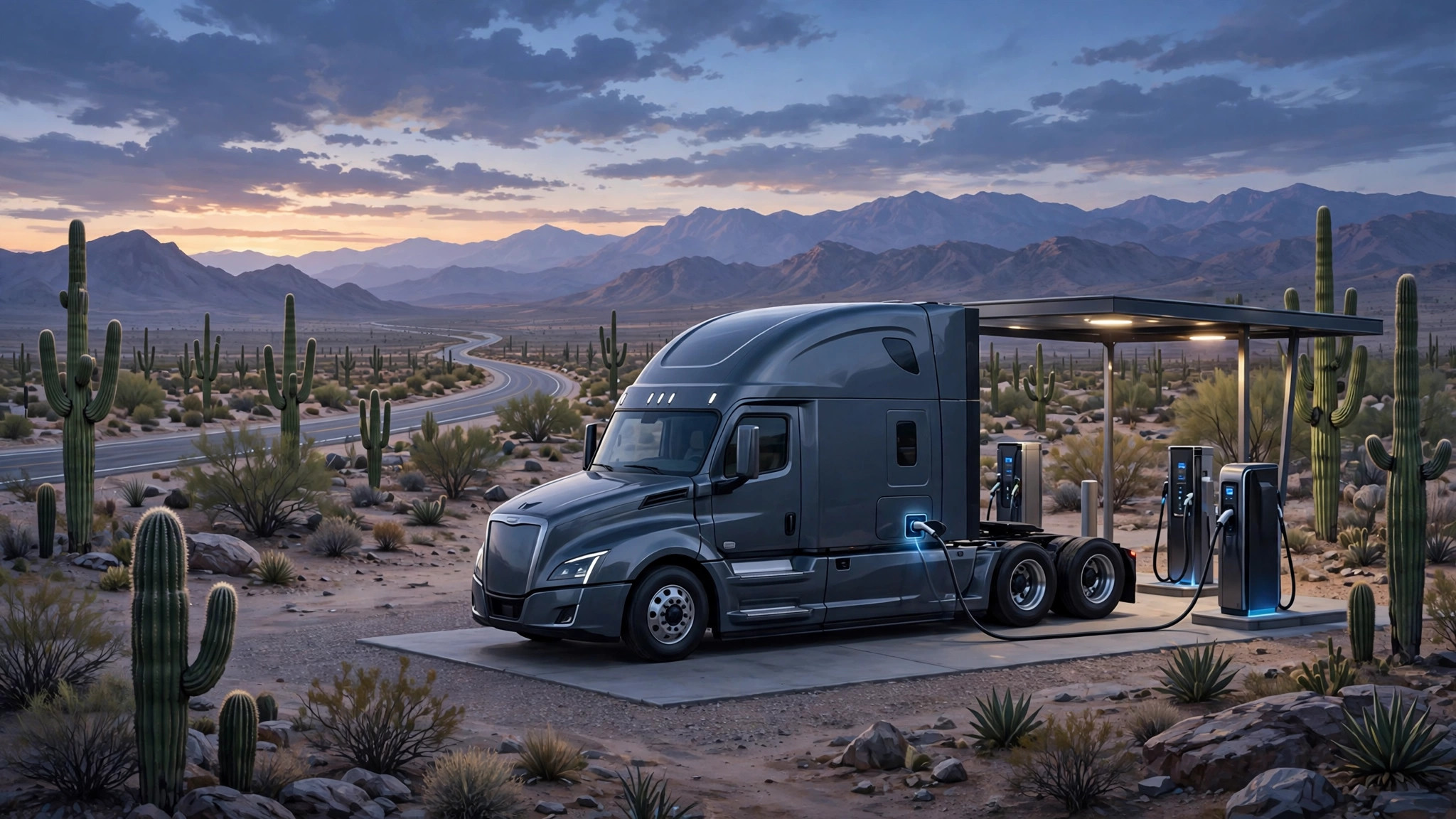
Image: Illustration: AI-generated by CDLWire
All-electric truckload carrier Nevoya has signed a multi-year agreement with Meta to deploy 25 Class 8 battery-electric trucks along the Interstate 10 corridor between San Bernardino, California, and Phoenix, Arizona, according to Commercial Carrier Journal on Nov. 12. The agreement includes the development of charging infrastructure along the route, and the electricity powering the fleet will be matched 100% by renewable energy certificates. The deployment is scheduled to launch in 2027, and the fleet is expected to cover approximately 4 million freight miles annually.
The structure of the deal is the part worth understanding, because it is not a freight contract in the ordinary sense. Meta will purchase environmental attribute certificates representing the environmental benefits of Nevoya's electric freight service, and the purchase is not tied to the physical transport of Meta's cargo. In other words, Meta is buying the emissions attribute of electric trucking on the corridor — a book-and-claim style arrangement companies use to address value-chain emissions, including logistics and supply-chain operations — rather than tendering its own loads to those 25 trucks. The freight context for the corridor is real, though: Interstate 10 serves as a major route for moving data center construction materials across the southern United States, and Meta describes freight as part of the emissions footprint of building and operating its data centers.
This is the second Nevoya corridor Meta has backed. Meta previously participated as a buyer in a Green Market Activation buyers' alliance in Texas, supporting a 63-truck Nevoya deployment along the Houston-Dallas corridor. The new agreement operates as a standalone contract and, in Meta's framing, establishes a framework for potential expansion into additional freight corridors. "Meta coming back for a second corridor is a strong signal that this model works," said John Verdon, co-founder and chief commercial officer of Nevoya. "Electric trucks already win on the corridors we run; what unlocks them at scale is multi-year demand that drives financial and operational innovation. That is what this agreement does, and we intend to repeat it corridor by corridor." Devon Lake, Meta's head of net zero strategy, made the same point from the buyer's side: "Coming back to Nevoya for a second corridor reflects what we look for in our value chain work: partners that can scale, and agreements we can repeat."
One element of the deal reaches beyond the two companies. Nevoya plans to make the charging infrastructure built for the deployment accessible to other freight operators along the corridor. Corridor charging that only one fleet can use is a private cost; charging other operators can plug into is the beginning of public infrastructure on a route — Interstate 10 between the Inland Empire and Phoenix — that carries heavy diesel freight today. Class 8 battery-electric trucks produce zero tailpipe emissions and run at lower noise levels than diesel trucks, with potential reductions in localized air pollutants, including nitrogen oxides and fine particulate matter, along the route.
For drivers, the honest sizing matters. Twenty-five trucks launching in 2027 on one corridor, covering about 4 million miles a year, does not change the diesel labor market this winter, and the announcement names no driver pay, hiring or equipment details for the fleet. What it signals is where a specific kind of freight money is going: multi-year, shipper-side commitments that pay for electric capacity's emissions attribute separately from the freight itself, repeated corridor by corridor by a buyer that has now done it twice. The corridor model — fixed route, return-to-base or endpoint charging, a credit buyer underwriting the premium — is the shape electric Class 8 deployment keeps taking when it actually gets financed, and Interstate 10 is now on that list twice over: the trucks, and charging that other operators will be able to use.
Sources
Related coverage
 November 7, 2026 · EquipmentAxle and engine shortages dented Daimler's truck output even as sales jumped 51% — and its largest U.S. plant site will likely be named by Christmas
 November 6, 2026 · EquipmentNo cab, no hitch, no driver: Humble Robotics raises $51 million to pilot its cabless electric hauler on port and warehouse runs under 250 miles
 November 5, 2026 · EquipmentKodiak's first Gen7 Western Star day cabs go driverless in the Permian — and a 75-truck fleet deal queues up behind them
Comments
Loading comments…