ArcBest beats Q3 on heavier freight: ABF tonnage up 10% on 13% heavier shipments, and October ran 20% ahead
FreightWaves reports adjusted earnings of $2.62 a share, up 79%, on revenue of $1.21 billion, up 15%. The asset-based unit's operating ratio improved to 90.4% even with an annual union wage increase in the quarter, contractual rates averaged 5.1% higher, and the brokerage side beat guidance it had already raised.
Summarized from FreightWaves.
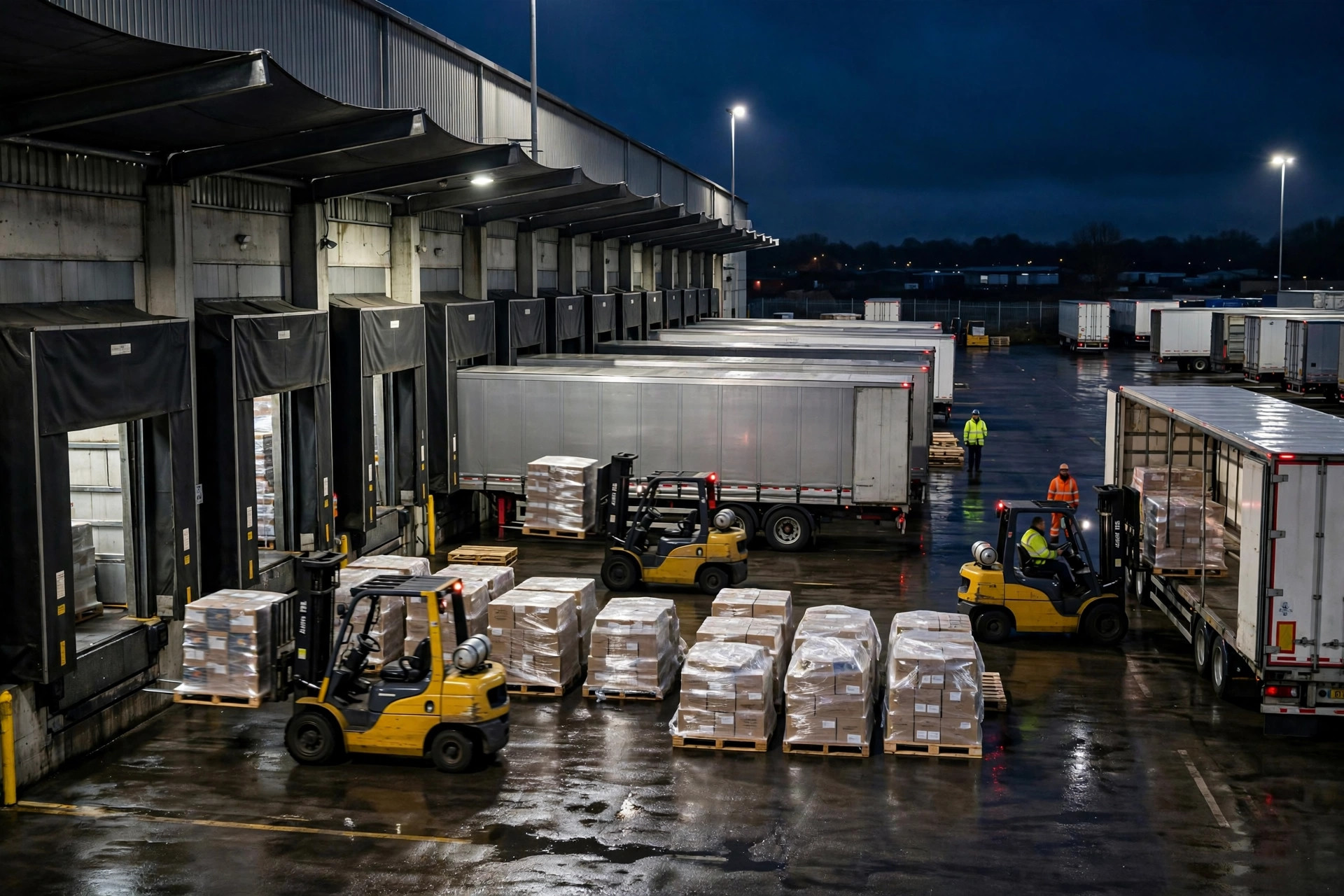
Image: Illustration: AI-generated by CDLWire
ArcBest beat third-quarter expectations on Wednesday because its less-than-truckload freight got heavier: shipments fell, but weight per shipment jumped 13% and tonnage rose 10%, according to FreightWaves on Nov. 4. The result is a useful read on where LTL freight is coming from in a tight truckload market — freight lost to a once-depressed truckload segment is returning to LTL networks as manufacturing expands and shippers accept heavier, fewer bills.
The headline numbers came before the market opened on Wednesday. ArcBest, traded on NASDAQ as ARCB, reported adjusted earnings per share of $2.62, a result 79% higher year over year and $0.11 better than the consensus estimate; the adjusted figure excluded restructuring, technology and other nonrecurring costs. Consolidated revenue was up 15% year over year to $1.21 billion, in line with consensus. Behind the quarter sits a manufacturing backdrop that has stopped contracting: the Institute for Supply Management's Manufacturing PMI remained in expansion territory for a 10th consecutive month in October, at 55.5 — 100 basis points above expectations and above the September mark, on a scale where a reading above 50 signals expansion and a reading below 50 indicates contraction.
The asset-based unit, which includes LTL subsidiary ABF Freight, reported revenue of $799 million, up 10% year over year. Tonnage was up 10% as shipments declined 3% and weight per shipment jumped 13% — the mix shift in one line: fewer, heavier shipments. The improvement built through the quarter, with tonnage up 8.1% in July, 9.1% in August and 11.6% in September. Revenue per hundredweight was 1% higher year over year including fuel surcharges, and revenue per shipment was 14% higher, with both metrics affected by the heavier weights. Excluding fuel, yield dropped by a low single-digit percentage in the period, dragged down by the heavier shipment weights and a 2% shorter average length of haul — heavier freight prices differently per pound, and ArcBest's yield line shows it. Contractual rate increases averaged 5.1% in the quarter, up 9.6% on a two-year-stacked comparison, and the company implemented a 5.9% general rate increase for LTL services in both of its business units in June.
Profitability improved even with a union wage increase in the period. The asset-based unit posted a 90.4% adjusted operating ratio — the inverse of operating margin, so lower is better — which was 210 basis points better year over year and 40 basis points better than the second quarter, against management's outlook for no material sequential change. ArcBest said it reduced its base liability insurance premiums while maintaining coverage limits during a recent renewal, although it has retained higher risk on one of its excess insurance layers — a layer that has only been touched twice over the past 25 years. For drivers at ABF, the combination matters more than the stock move: a carrier improving its operating ratio by more than two points year over year while absorbing an annual union wage increase is a carrier whose freight and pricing are covering its labor costs, which is the condition that keeps pay packages and hiring intact.
October, the first month of the fourth quarter, ran hotter than the quarter behind it. Asset-based revenue per day was up 20% year over year as tonnage increased 15% and yield increased 4%; shipments were up 1% with revenue per shipment up 18%, and weight per shipment up 14%. October tonnage was down only 1% from September — it is normally down 3.4% — a seasonal detail FreightWaves flagged because it suggests freight did not take its usual early-fall step back. Management cautioned that weight-per-shipment growth will moderate as prior-year comparisons get tougher, and said it will keep leaning on its dynamic quote tool, which matches network capacity to transactional shipments each day. The unit's operating ratio normally deteriorates by 180 basis points from the third quarter to the fourth, but management expects just 50 to 150 basis points of erosion this year; the implied 91.4% operating ratio at the midpoint of that range would be 480 basis points better year over year, and the company said 2027 will likely be another positive step on its path to its 2028 financial targets.
The asset-light segment, which includes truck brokerage, beat expectations that had already been raised. Adjusted operating income of $14.4 million in the third quarter came in ahead of the revised guidance of $10 million to $12 million that management provided in its August update — and well ahead of the initial guide of $6 million to $8 million. Revenue of $446 million was 25% higher year over year as shipments increased 1% and revenue per shipment jumped 24% including fuel. Purchased transportation was 85% of revenue, up 10 basis points; shipments per person per day rose 8% and selling, general and administrative expenses fell 2%. The trends carried through October, with asset-light revenue per day 27% higher year over year on shipments up 8% and yield up 18%, and adjusted operating income for the fourth quarter is expected to range from $7 million to $10 million. FreightWaves' closing note is the right frame: ArcBest is one of a few publicly traded LTL companies, so its results illuminate a subsegment with few public datasets. Read that way, the quarter says LTL demand is being carried by weight and manufacturing rather than shipment counts — good news for dock and linehaul hours, and one more signal that truckload freight is spilling into LTL while truckload capacity stays tight.
Sources
Related coverage
 November 3, 2026 · Carrier watchPamt posts its truckload unit's 12th straight operating loss — a 109.1% operating ratio — as diesel timing and driver costs outrun an 11% sequential rate gain
 October 30, 2026 · Carrier watchSuper Ego is back — and as of Nov. 1 it won't lease to non-domiciled drivers, ELP violators or Conditional-rated carriers
 October 29, 2026 · Carrier watchStrong quarters, slammed stocks: insurance and claims costs knocked 11% off C.H. Robinson and nearly 18% off Landstar in a day
Comments
Loading comments…