Cargo theft is rarer but far more expensive: Q3 incidents fell 33% to 547, losses rose to $230.1 million, and fictitious pickups now drive 1 in 4 cases
Verisk CargoNet's third-quarter analysis records 547 supply chain crime incidents across the U.S. and Canada, down 33% year over year, but estimated losses climbed 12% to $230.1 million and the average documented theft is now worth $448,456. Fictitious pickups held near last year's level at 138 incidents, lifting their share to about 25%, and four states — California, Texas, Illinois and New Jersey — still account for 57% of cases.
Summarized from Verisk CargoNet.
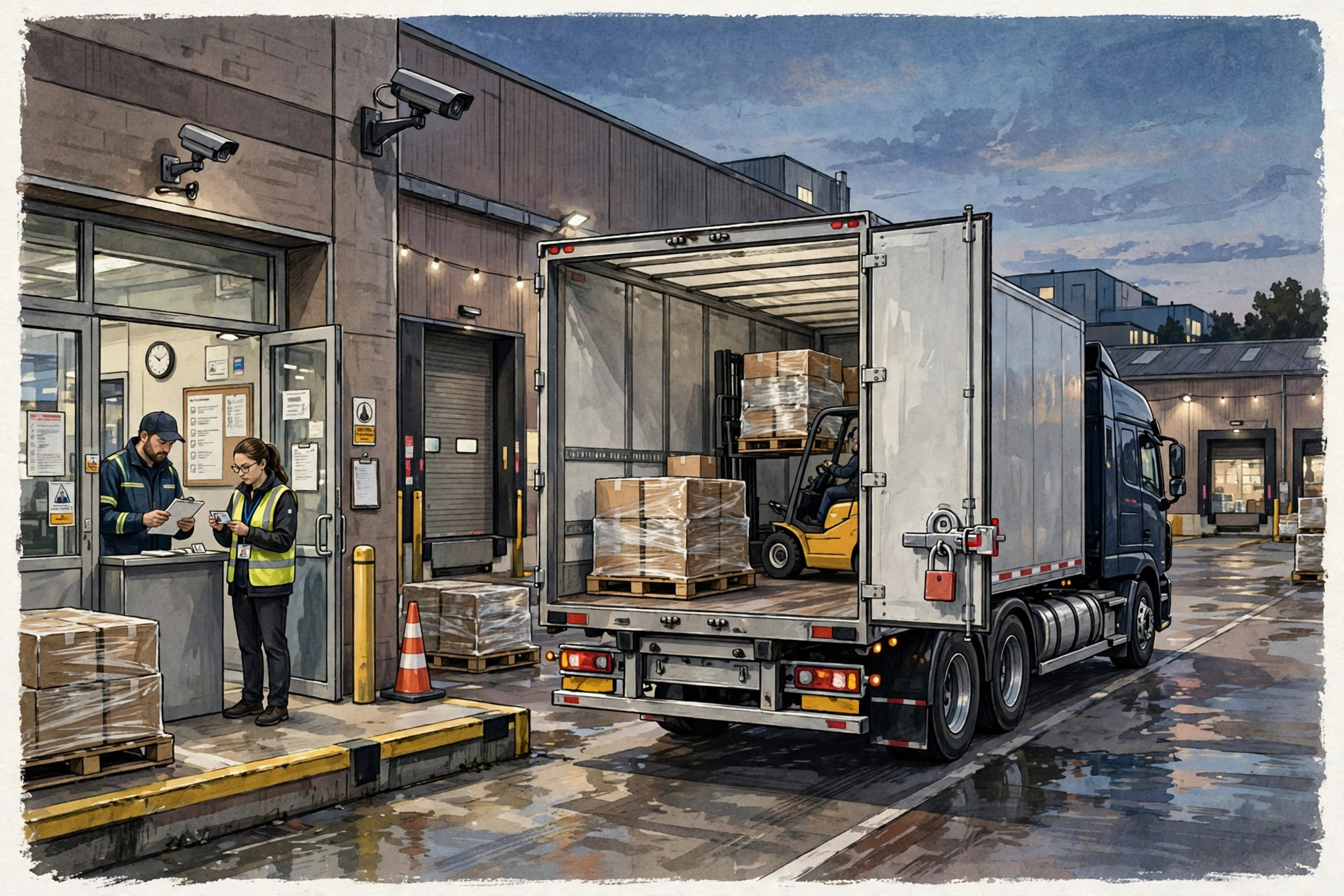
Image: Illustration: AI-generated by CDLWire
Cargo theft is becoming less common and much more expensive at the same time. Verisk CargoNet recorded 547 supply chain crime incidents across the United States and Canada from July through September of 2026, according to Verisk CargoNet on Nov. 4 — a decline of 33% from the same period in 2025 and 19% from the second quarter. Even with that sharp drop, estimated losses for the quarter totaled $230.1 million, up 12% from $205.1 million in the third quarter of 2025. Fewer loads are being stolen, but the loads that disappear are worth far more than they used to be.
The year-to-date figures make the shift plain. Estimated losses reached $718.9 million through September, up 39% from the same period last year, while reported incidents fell 25%, from 2,755 to 2,072. The average value of stolen commodities across incidents with a documented value increased by approximately 72%, from $261,115 to $448,456. Nineteen thefts with documented values of $1 million or more were reported in the third quarter, compared with nine in the third quarter of 2025, with many involving high-value electronics and data center materials. Thieves are not stealing more freight; they are choosing their freight better.
The method that refuses to shrink is the fictitious pickup, in which deception is used to obtain a shipment. Fictitious pickups accounted for 138 incidents in the third quarter, close to the 147 recorded in 2025, which raised their share of reported activity from 18% to approximately 25% — one case in four. Earlier in 2026, CargoNet documented fraud schemes involving compromised business email accounts, internet-based phone systems and transportation applications — methods that let criminals impersonate legitimate companies, obtain shipment information or redirect freight already moving. Keith Lewis, vice president of operations at Verisk CargoNet, said criminals are combining digital deception with traditional tactics to identify, intercept and redirect high-value shipments.
Geographically, the risk stayed concentrated. California accounted for approximately one-third of all reported incidents, with 182 events, down from 261 a year earlier. Texas fell from 105 incidents to 43, Illinois from 52 to 40, and New Jersey from 66 to 46. Together, those four states still accounted for 57% of the quarterly total. County-level concentrations sit in Los Angeles, San Bernardino and Riverside counties in California, Harris County, Texas, and Cook County, Illinois.
What thieves take has shifted less than how they take it. Food and beverage remained the leading commodity category with 94 incidents, though that was down from 178 in the third quarter of 2025; within the category, nonalcoholic beverages accounted for 22 incidents, meat products for 21 and alcoholic beverages for 12. Metals were the second most frequently reported category, with 63 incidents, down only slightly from 68, and copper accounted for 34 of those. Household goods declined from 95 incidents to 49, and electronics fell from 69 to 46. Personal care incidents eased from 44 to 39, but cosmetics thefts rose from nine to 14 — a reminder that individual product lines can stay hot while broader totals fall.
The same quarter brought a different shift south of the border, according to FreightWaves on Nov. 5, reporting Overhaul's third-quarter 2026 cargo theft analysis for Mexico. Thefts involving parked commercial vehicles accounted for 42.2% of reported incidents there, up 9 percentage points from the same period last year, while thefts involving trucks intercepted while traveling declined 8.6 percentage points to 55.4%. Overhaul found that 61% of cargo thefts occurred between 6 p.m. and 6 a.m., and that 76% of incidents occurred in central Mexico and the Bajío manufacturing region; the State of Mexico accounted for 22.5% of incidents, Puebla for 15% and Guanajuato for 9.6%. Food and beverage products were the largest target category at 32.6% of incidents. Luis Enrique Villatoro, president of the National Association of Vehicle Tracking and Protection Companies, projected in an Overhaul webinar that Mexico cargo theft could rise between 9% and 11% in November as holiday shipments accelerate — a projection, not a confirmed result. For cross-border carriers, the Mexican exposure is the parked truck at night, not only the pickup.
Looking ahead, CargoNet says it has historically observed increased theft activity during the fourth quarter and into the new year, and activity could escalate as criminals exploit extended facility closures and reduced staffing over the holidays.
For drivers and carriers, the practical takeaway is that the risk now concentrates at two moments: the pickup, and the high-value load in a known hotspot. A fictitious pickup only works if the paperwork, the phone call or the app message is trusted without a second check, so identity verification at the dock — confirming the carrier, the driver and any last-minute change to pickup details through a known contact, not the number on the changed instruction — is the cheapest defense in this report. Treat unexpected changes to contact information, pickup numbers or routing as a stop-and-verify event, and plan secure parking for high-value freight through the four hotspot states and on overnight cross-border runs through Mexico. The thieves in this data are not taking more loads than last year. They are taking better ones — increasingly by convincing someone to hand over the keys.
Sources
Related coverage
 November 4, 2026 · EnforcementCVSA sets its 2027 calendar: Brake Safety Week moves to April 18–24 and Roadcheck follows on May 11–13 — 17 days later
 November 2, 2026 · EnforcementDHS says Operation Guardian arrested more than 230 people across 15 states in 72 hours — including more than 40 CDL holders taken off the road
 October 29, 2026 · Enforcement22 and a half years for the I-71 stopped-traffic crash — and a CDL investigators say was built on identity fraud
Comments
Loading comments…