Ohio will downgrade every remaining non-domiciled CDL — about 3,000 of them — while a court case could reopen California's program
Ohio's BMV has already downgraded about 2,000 of 5,000 reviewed credentials and will mail 30-day downgrade letters to the rest, OTR News reports. Louisiana and Colorado have also ended their programs, seven-plus states have resumed issuing under the new rule, and Overdrive reports the D.C. Circuit could rule any day on California's bid to vacate FMCSA's noncompliance findings.
Summarized from OTR News.
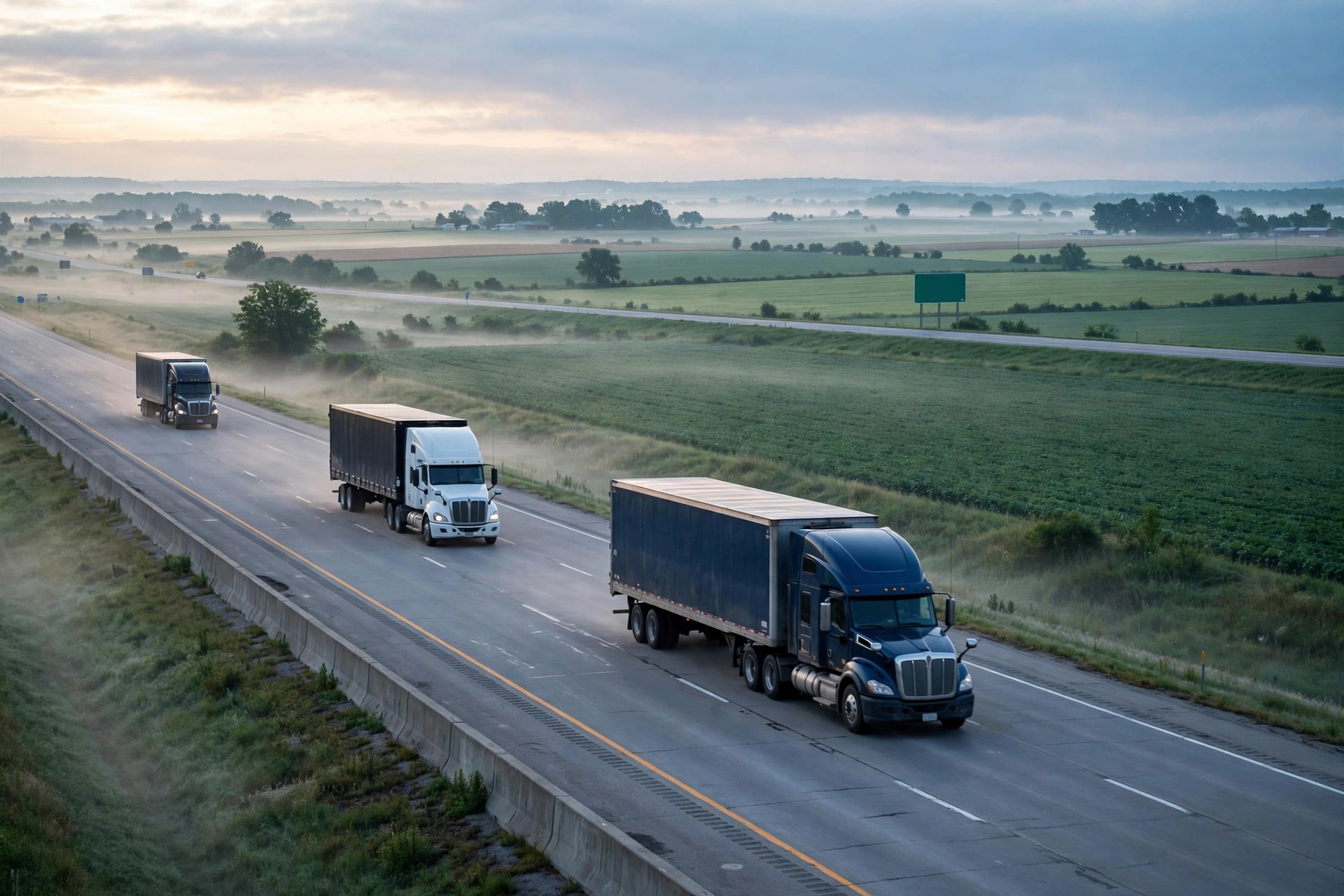
Image: Illustration: AI-generated by CDLWire
Ohio is closing its non-domiciled CDL program for good, and every driver still holding one of the roughly 3,000 remaining credentials will be downgraded to a standard driver's license, according to OTR News on Nov. 5. The Ohio Bureau of Motor Vehicles announced the decision Oct. 23, and the coverage this week — with a second, related court fight in California moving toward a ruling that could push the other way — shows the states splitting into camps that will decide, state by state, whether thousands of drivers keep working.
Registrar Charlie Norman announced the end of the Ohio program after the BMV reviewed the credentials of about 5,000 non-domiciled CDL holders against updated FMCSA requirements. Since May, the BMV has already downgraded around 2,000 of them to standard licenses because they did not meet the new federal rules. The remaining roughly 3,000 licenses will also be downgraded. The BMV will mail a letter to each affected person, and the downgrade takes effect 30 days after the date on the letter — not the day it arrives. Holders can ask the BMV for a hearing to dispute the downgrade. Ohio has not renewed or issued a new non-domiciled CDL since FMCSA changed the requirements in September 2025, as Transport Topics also reported, updated Nov. 2.
The federal rule behind the downgrades is the one FMCSA published Feb. 13, 2026, which took effect March 16. A non-domiciled CDL goes to a driver who lives outside the state, or the country, that issues the license. Foreign-domiciled applicants now need proof of H-2A, H-2B or E-2 status to get a non-domiciled permit or CDL, shown with an unexpired foreign passport and an I-94 in an eligible category. Employment authorization documents no longer qualify on their own. A license cannot run past the I-94 admit-until date or one year, whichever comes first. Drivers who had qualified on an employment authorization document — including DACA recipients, asylum seekers and refugees — no longer qualify under that route. FMCSA expects the rule to take about 200,000 non-domiciled CDL holders off the road, and the rule is in force while the legal fight continues: on May 5, the D.C. Circuit denied a petition to pause the ban, and the challenge is moving on an expedited schedule.
Ohio is not alone in ending its program, but it is not the majority outcome either. Louisiana and Colorado have also ended their programs — Louisiana stopped issuing on Oct. 2, 2025 and has said it will not resume, and Wyoming stopped in September 2025 and does not plan to resume, according to Transport Topics. Illinois and Texas have resumed issuing licenses to people who qualify under the updated rule, and Iowa, Kentucky, Maine and North Dakota have resumed as well; Oklahoma and New Jersey have also resumed, and Missouri continues to issue to applicants who meet the revised requirements. North Carolina and Washington have not issued any since last year's audit; both are considering restarting, with no timeline. Where a driver holds the license therefore matters: two drivers in the same situation can keep a CDL in one state and lose it in another.
California is where the split could widen. Overdrive reported on Nov. 4 that a related case, California Department of Motor Vehicles v. U.S. DOT, could bring non-domiciled CDL issuance back in California even apart from the challenge to the ban itself. The D.C. Circuit heard oral arguments in California's case on Sept. 11 and in the broader ban case on Sept. 15, and more than six weeks later the court could decide any day, likely both cases together. California is asking the court to vacate FMCSA's findings that its licensing program was noncompliant, along with the related federal funding penalties — $160 million of highway funding is at stake, on a determination that cites about 20,000 licenses whose expiration dates exceeded the drivers' legal-presence documentation. At the time of FMCSA's September 2025 emergency rulemaking, California had issued more than 60,000 non-domiciled CDLs, DOT said about a third of those were wrongly issued, and the state has since revoked some 17,000. If the court blocks the broader ban, most states would remain under special instructions not to re-issue; if it also grants California's petition, California would not need to abide by its own special instructions. FMCSA could also win, or answer a loss with another rulemaking or a special order — nothing about Ohio's announcement suggests Ohio would restart even if a court ruled against FMCSA.
The takeaway splits by license. An Ohio non-domiciled holder should watch the mail, count 30 days from the date on the BMV letter, and use the hearing right if the downgrade is wrong — a downgraded driver cannot legally run a commercial truck, and driving on a standard license risks citations and out-of-service orders for the driver and trouble for the carrier. Drivers in other states should confirm their status with their state licensing agency, not a recruiter, and check the visa category and I-94 date on their paperwork, because work authorization alone no longer makes a driver eligible. Carriers should pull every non-domiciled driver's state of issue and expiration date now and plan coverage for anyone whose state is ending its program, while watching the D.C. Circuit: a California ruling could reopen the largest licensing pipeline in the country, but until it lands, the rule — and Ohio's downgrades — are in force.
Sources
Related coverage
 November 4, 2026 · RegulationsDemocrats win both chambers of Congress — and trucking's highway bill, lawsuit fights and CDL oversight now run through new committee chairs
 November 4, 2026 · RegulationsA $23, two-hour online CDL theory course grew fat on FMCSA's school shutdowns — now ELDT Nation faces a proposed removal of its own
 November 3, 2026 · RegulationsOral-fluid drug testing is still not an option for DOT tests — HHS says no laboratory is certified yet, and marijuana rescheduling is down to written arguments due Nov. 5
Comments
Loading comments…