Trailer orders stayed hot in October at 35,800 — down from September's exceptional 42,700, but 126% above a year ago
ACT Research's preliminary count puts October net trailer orders at 35,800 units, nearly 20,000 higher than last October and a 126% year-over-year gain, even as orders fell 6,900 units from September on a nominal basis and 31% after seasonal adjustment. ACT attributes the surge to four forces at once — ordering ahead of tariff-related price increases, healthier carrier profitability, pent-up replacement demand and a sharply tighter driver supply — and expects industry backlogs to rise by about 16,800 units when final data are reported.
Summarized from The Trucker.
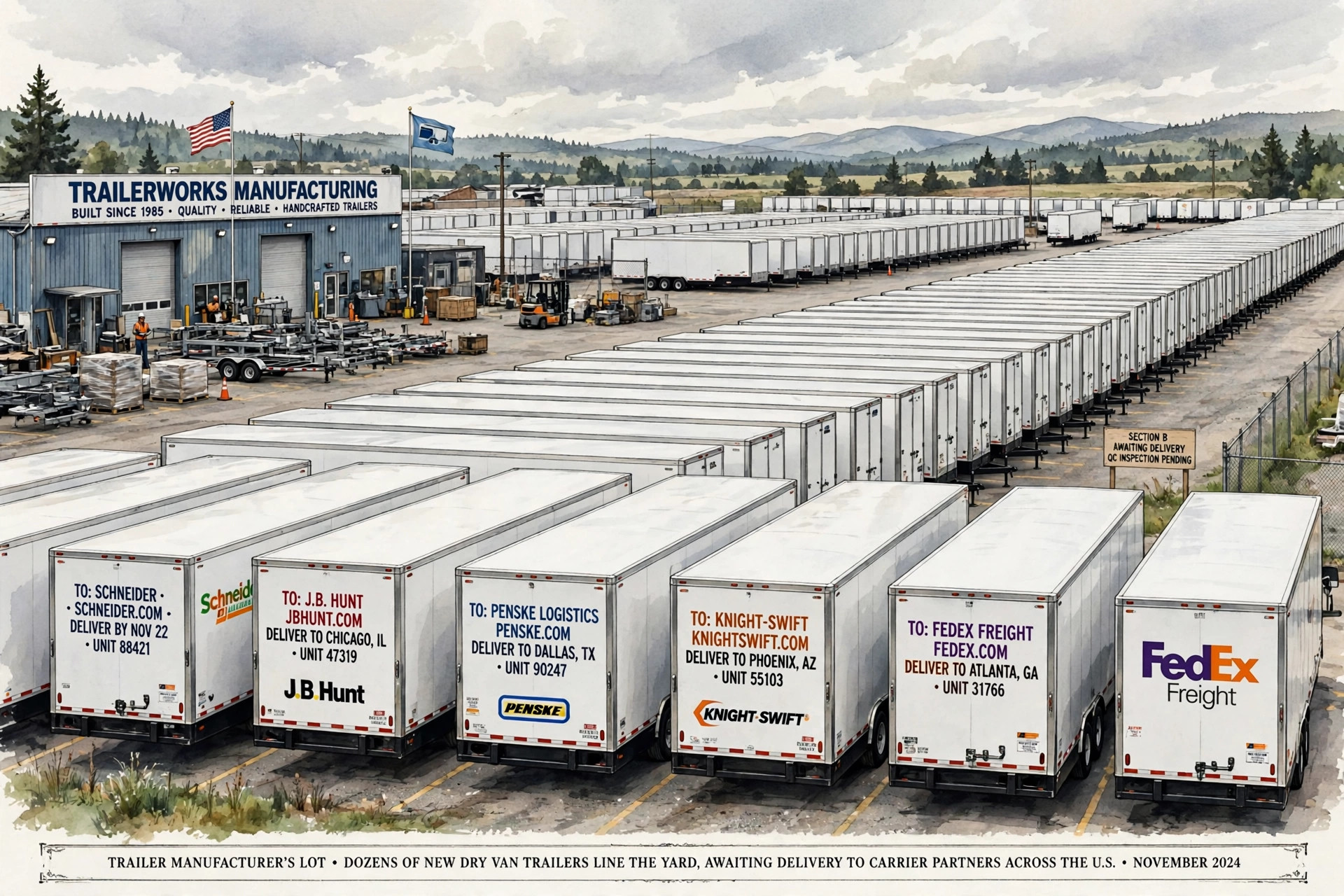
Image: Illustration: AI-generated by CDLWire
Fleets kept ordering trailers at a pace the industry has not seen in this cycle, even as October's number stepped down from September's exceptional intake, according to The Trucker on Nov. 19, reporting ACT Research's preliminary data.
Preliminary net trailer orders in October were 35,800 units, nearly 20,000 units higher than last October's order intake. ACT is careful with its own headline: the 126% year-over-year gain is against a very easy 2025 comparison, when the trailer market was in what the firm has called “stay afloat” mode. Seasonal adjustment takes the month's volume to 25,200 units. While net orders were down 6,900 units, or 16% lower sequentially on a nominal basis, on a seasonally adjusted basis they dropped 31%, or about 11,500 units, from September's seasonally adjusted intake. The figures are preliminary — ACT notes the estimate is typically within 5% of the final tally, with final October data due later this month — so the month's ranking may move slightly, but its scale will not.
September is the comparison that makes October legible. September's net orders soared to 42,700 units in ACT's final data for that month, driving a 29% month-over-month increase in industry backlogs and lifting the backlog-to-build ratio to 5.9 months — a commitment of production slots well into 2027, with a cancellation rate of just 1.0% of backlog. Against that month, an October dip was almost arithmetic. “Seasonally speaking, October net orders should have improved sequentially, so the dip from September was somewhat surprising,” said Jennifer McNealy, director of CV market research and publications at ACT Research. “On the other hand, September's order intake was exceptionally high enough that the downward-pointing data, albeit unexpected, is not worrisome. This simply continues the unusual pattern of the 2025–2026 order cycle that began in the fourth quarter of 2025, when orders that should have been placed in September, for the new cycle, weren't placed until December and January. October's performance builds on seasonally strong orders since May.”
Why fleets are ordering is the part of the release with the longest reach. “ACT Research continues to hear that the dramatic spike in United States trailer orders is a four-fold event: customers ordering ahead of tariff-related price increases, healthier long-term profitability conditions for carriers, pent-up replacement demand, and a sharply tighter driver supply,” McNealy said. Each force pulls the same direction. Tariff exposure rewards ordering before prices reset; profitability supplies the cash and the credit; replacement demand is the deferred maintenance of the fleet itself, accumulated through the freight recession years when carriers stretched trailer life rather than spend; and a tighter driver supply raises the value of the capacity a carrier already has, which makes equipping it properly worth more.
McNealy's summary of the combined effect is the quote equipment buyers will be planning against. “The current United States trailer industry environment is a perfect storm: carriers now have both the willingness and the ability to purchase equipment, and are inspired to do so sooner rather than later, as they also face rising prices and an untested domestic supply chain that could cause build constraints, lengthier production queues, and delayed deliveries,” she said. “We often make the case that there is a profitability-related component that makes demand somewhat binary. It would appear that the switch has been flipped. Coming in well above current build levels, industry backlogs are expected to rise around 16,800 when full industry data are reported.” A backlog rising by roughly 16,800 units in a month when orders fell is the arithmetic of demand outrunning production: builders shipped fewer trailers than fleets ordered, so the queue lengthened anyway.
The point inside ACT's own release worth noting for anyone speccing a 2027 fleet is that October's orders came in well above current build levels even after stepping down from September, which is why ACT expects industry backlogs to rise by about 16,800 units when final data are reported. Fleets are committing to trailers now, in volume, rather than waiting — and on ACT's four forces, the reasons to commit early are still in place as the order season continues.
For carriers and owner-operators, the practical read is about queues and timing rather than enthusiasm. A backlog-to-build ratio of 5.9 months in September, rising backlogs again in October, and a 1.0% cancellation rate together describe an order book that is real — fleets are not placing speculative orders they intend to cancel — and lengthening. A trailer ordered into this book is a 2027 delivery conversation, and the four forces ACT lists are all still in place as the order season continues: tariff-driven pricing has not resolved, replacement demand has not been worked off, and profitability, on the rate data CDLWire has published this week, is still improving. Fleets that need trailers in 2027 are ordering them in 2026, in October's numbers as in September's — 35,800 at a time.
Sources
Related coverage
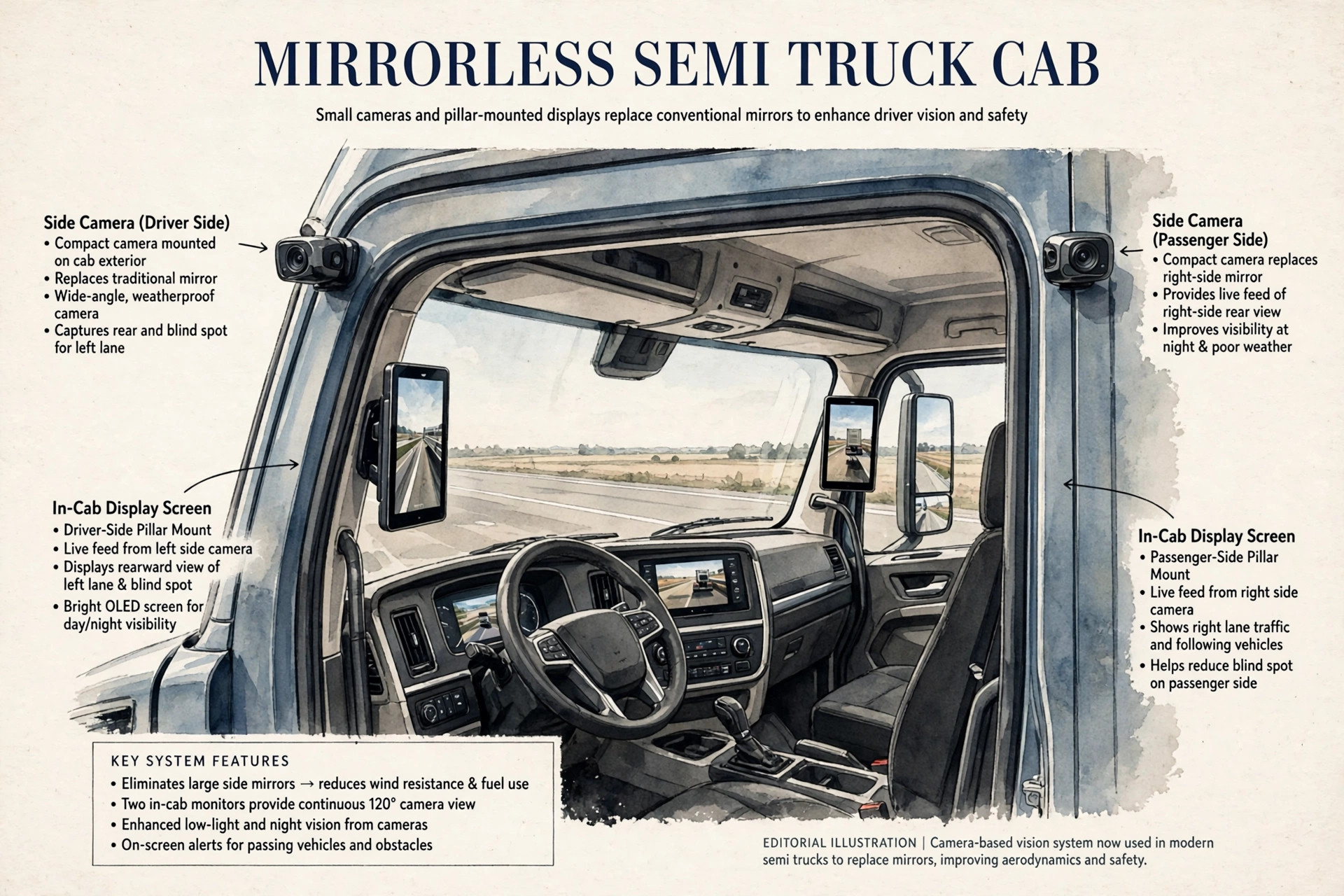 November 19, 2026 · EquipmentFMCSA wants comments on replacing both side mirrors with cameras and cab screens — Safety Vision's five-year exemption request
 November 13, 2026 · EquipmentNevoya and Meta team up again: 25 electric Class 8 trucks for Interstate 10, launching in 2027
 November 7, 2026 · EquipmentAxle and engine shortages dented Daimler's truck output even as sales jumped 51% — and its largest U.S. plant site will likely be named by Christmas
Comments
Loading comments…