Congestion cost trucking $128.2 billion in 2024 — 1.24 billion hours of delay and 6.66 billion gallons of diesel burned standing still
ATRI's Cost of Congestion 2026 Update, released Nov. 18, puts 2024 highway congestion costs at $128.2 billion — the third straight year above $120 billion — with 1.24 billion hours of delay equal to more than 450,000 drivers idled for a year, 6.66 billion gallons of diesel wasted at a cost of $25.04 billion, and an average cost of nearly $8,000 per truck.
Summarized from TruckingInfo.
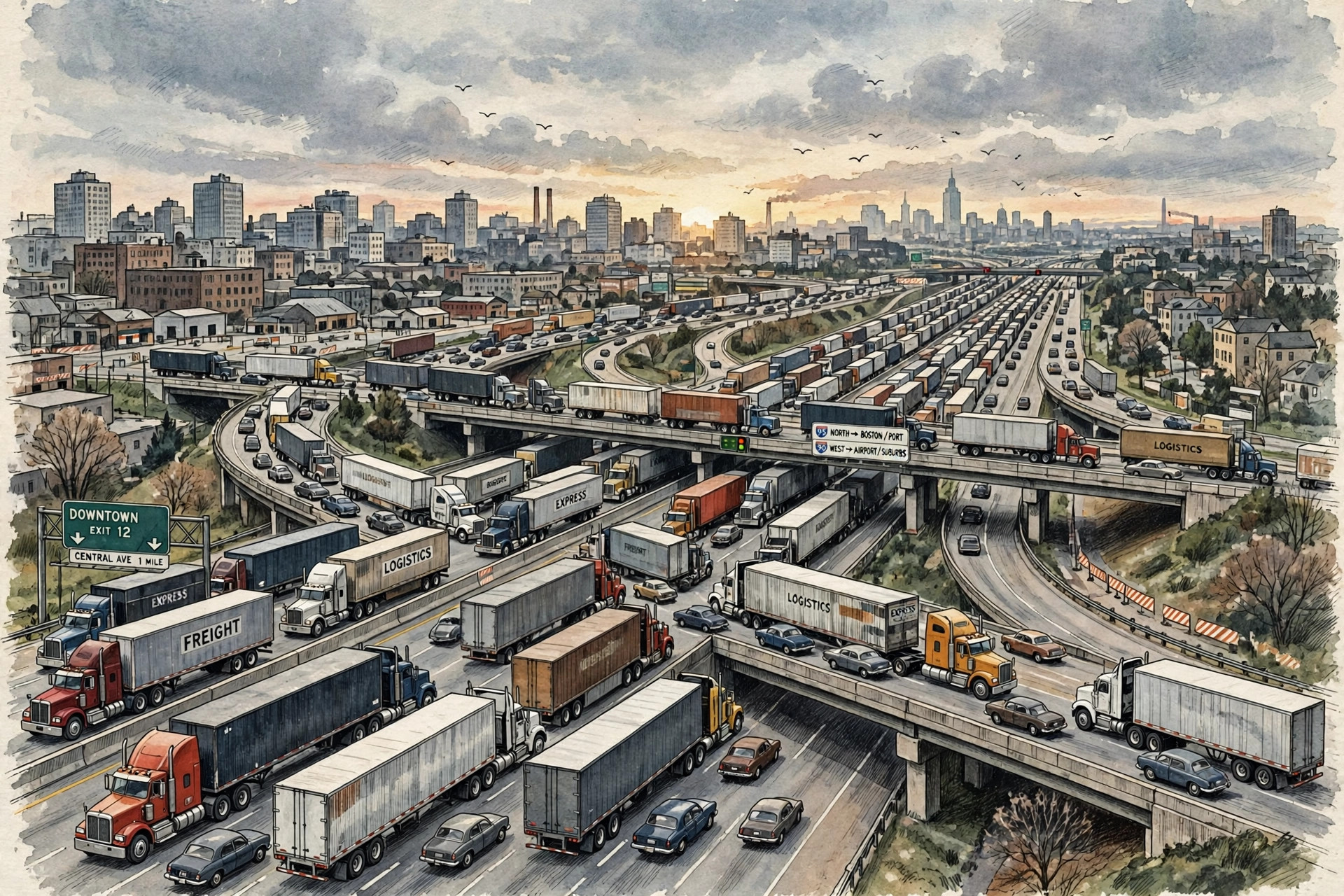
Image: Illustration: AI-generated by CDLWire
Highway congestion cost the trucking industry $128.2 billion in 2024, the third straight year the bill has topped $120 billion, according to TruckingInfo on Nov. 18, reporting the American Transportation Research Institute's newly released Cost of Congestion study.
The report, \"Cost of Congestion to the Trucking Industry: 2026 Update,\" counts what delay itself costs — not only gridlock, but all types of delays, from slight slowdowns to a standstill. Its components are the numbers a driver feels one hour at a time. Congestion produced 1.24 billion hours of delay in 2024, the equivalent of more than 450,000 truck drivers sitting idle for an entire year. Trucks burned 6.66 billion gallons of diesel fuel in that congestion, for additional fuel costs of $25.04 billion — ATRI estimates the fuel economy of a truck in congestion at 3.73 miles per gallon, or 5.36 gallons of diesel consumed per hour of congested operation. Spread across the fleet, the average congestion cost per truck was nearly $8,000.
The direction of the total needs its context, because it moved down while the roads got worse. The $128.2 billion for 2024 was down slightly from the record high of $129.8 billion in 2023, but it was $4.7 billion higher than in 2022, 3.8% higher than 2022 overall, and 28.8% higher than the pre-pandemic peak of $99.5 billion in 2018. ATRI's explanation is that congestion itself worsened in both 2023 and 2024 as measured by average truck speeds, while the operational costs of trucking remained stable and truck vehicle miles travelled declined under the prolonged freight recession — fewer miles driven through worse traffic produced a slightly smaller total than 2023's record. The average truck speed in 2024 was 1.7% lower than its 2020 peak, when COVID-19 closures had emptied the roads of personal vehicle traffic, and speeds have fallen gradually since, in part, ATRI says, because employer policies across the nation are requiring workers to work in the office more often or continuously.
Underneath the annual totals sits a structural gap. The majority — 57% — of tractor-trailer mileage is driven on interstate highways. Over the past 10 years, that mileage has grown by nearly 25%, while interstate lane miles have increased just 4.5%. ATRI calculates its costs from three areas of data: average truck speeds, truck volumes, and the average cost of operating a truck. A freight system that adds a quarter more interstate truck miles to a lane network that grew by less than a twentieth bills the difference to the trucks, in hours and fuel.
Geography decides who pays most of it. The Northeast had the highest congestion costs, followed by the South Atlantic, and combined, the top ten states accounted for more than half — 53% — of trucking's congestion costs nationwide. Three of the top ten states had costs of more than $10 billion: Texas, California and Florida, which, along with New York, have had the highest congestion costs of all states since ATRI released its first Cost of Congestion research over a decade ago. This year Illinois rose to the number 5 spot from 7 in 2022, while Tennessee, Georgia and North Carolina dropped in comparison to 2022. The metropolitan areas with the highest congestion costs were New York City, Miami and Chicago — and earlier this year ATRI named a Chicago interchange the most congested freight bottleneck in the country for the first time. \"It is no surprise that the New York City metro area ranked first in the nation for congestion costs,\" said Zach Miller, vice president of government affairs for the Trucking Association of New York, pointing to the region's port complex, air cargo hubs and freight corridors, and calling investments like the Hunts Point Interstate Access Project in the Bronx essential.
The report lands in the middle of a funding fight. The findings come as Congress prepares to tackle a new surface transportation funding bill. The 2021 Infrastructure Investment and Jobs Act provided federal highway funding of direct outlays of $54.6 billion in 2024, and total highway expenditures across all levels of government were $159.1 billion that year — a record high even after adjusting for inflation, according to ATRI. But the IIJA's authorization expired in September 2026 and was temporarily extended, no new reauthorization has passed, and the Congressional Budget Office projected in mid-2026 that the Highway Trust Fund will be exhausted by the end of 2028 if no action is taken.
For drivers and carriers, the study's use is as a costing document, not a headline. An average of nearly $8,000 per truck per year, 5.36 gallons of diesel burned per congested hour, and a delay pool equal to more than 450,000 drivers are the figures a carrier can set against its own lanes: a route's congestion cost is already inside its fuel and hours whether itemized or not, and ATRI's tables show where it concentrates. The trend line offers no relief: speeds fell again in 2024, and interstate truck mileage has outgrown lane miles by roughly five to one over a decade. Price the delay you can measure; this report is the industry's receipt for the delay everyone is already paying.
Sources
Related coverage
 November 18, 2026 · InfrastructureMichigan will close five rest areas Dec. 1 through April 12 — St. Ignace, Topinabee and Hebron on I-75, Ludington and Hart on US-31
 November 2, 2026 · InfrastructureTruck parking is named in a $1 billion federal safety package — but only four grants mention it, none promises a new space, and they total about $21.6 million
 November 1, 2026 · InfrastructureThe Los Angeles–Long Beach watchmen strike is off for today — talks now run to 5 p.m. Wednesday, Nov. 4, and the gate risk is still live
Comments
Loading comments…