Labor Department finalizes the independent-contractor rule — control and profit-or-loss decide, with lease-purchase tests written for trucking
The U.S. Department of Labor announced its final rule on Nov. 19, rescinding the 2024 six-factor standard for a streamlined economic-reality test that weights control and opportunity for profit or loss above the rest — with 14 worked examples that include an owner-operator whose safety requirements do not make him an employee and two lease-purchase drivers who land on opposite sides of the line. It takes effect 60 days after Federal Register publication, and it does not override state tests like California's AB 5.
Summarized from U.S. Department of Labor.

Image: Illustration: AI-generated by CDLWire
The federal test that decides whether an owner-operator is running a business or working as an employee has been rewritten again — this time back toward the version trucking asked for — according to the U.S. Department of Labor on Nov. 19.
On Thursday, Nov. 19, the Department of Labor announced a final rule, RIN 1235-AA46, revising how it distinguishes employees from independent contractors under the Fair Labor Standards Act. The rule rescinds the 2024 regulations and replaces them with a streamlined analysis substantially similar to the 2021 framework; the same analysis now applies under the Family and Medical Leave Act and the Migrant and Seasonal Agricultural Worker Protection Act. It takes effect 60 days after Federal Register publication — announced but not yet published on Thursday, so the clock has not started.
The test is an "economic reality" test: an employee is economically dependent on the employer for work; an independent contractor is in business for themselves. Five non-exhaustive factors structure the analysis, and two are elevated as "core" factors — the nature and degree of control, and the worker's opportunity for profit or loss based on initiative or investment. If both core factors point the same way, there is a substantial likelihood that classification is accurate. The other three — skill required, permanence of the relationship, and whether the work is part of an integrated unit of production — carry less weight. Actual practice matters more than what a contract says is possible; the rule carries 14 examples.
The 2024 rule weighed six factors with none given greater importance — an approach the department now calls unclear and unpredictable, and a possibly higher bar for contractor status than the law requires. The department stopped applying it on May 1, 2025, proposed rescinding it on Feb. 27, 2026, and received more than 16,000 comments; the final rule's new truck-driver examples were adopted, it says, in response to commenter feedback.
For trucking, the control factor carries the clarification carriers have sought for years. Requiring compliance with legal obligations, health and safety standards, insurance, or agreed-upon deadlines or quality standards is not, the department advises, control that indicates an employment relationship. One worked example makes the point directly: an owner-operator hauling for a logistics company that requires federal drug and alcohol testing and sets agreed delivery deadlines, with incentives and penalties, is not shown to be an employee by those requirements. The edge is substance over label — detailed instructions governing how, when or where work is performed can indicate employment-type control even when described as safety or quality measures. Holding a CDL also counts as specialized skill, weighing toward contractor status.
The sharpest trucking pages are the paired lease-purchase examples. In the first, the carrier sets non-negotiable rates the driver does not see before committing, and the lease offers no realistic path to ownership — facts read toward employee status, the payments a cost of obtaining work rather than an investment. In the second, the driver negotiates rates before committing, lines up backhauls, and holds a lease that actually leads to ownership — facts read toward contractor status. A lease-purchase agreement by itself decides nothing; the economics decide it.
The industry's two largest voices split on enthusiasm, not direction. The American Trucking Associations, which opposed the 2024 standard, said the rule protects the more than 350,000 independent truckers who have chosen that model. "This is a monumental, hard-fought victory for the hundreds of thousands of truckers who choose to work as independent contractors," said ATA Chief Advocacy and Public Affairs Officer Henry Hanscom. The Owner-Operator Independent Drivers Association was measured: "While the rule does not address all of our concerns, it also does not create new barriers for an owner-operator to work as an independent contractor," said OOIDA President Todd Spencer, who welcomed the speed-limiter acknowledgement and the lease-purchase provisions — adding that "the effectiveness of this regulation will be determined by how its details are interpreted and enforced."
The limits belong in the same story: the rule reclassifies no one automatically and requires no action when it takes effect. It does not change classification under the Internal Revenue Code or the National Labor Relations Act, and it does not bind the courts — attorney Richard Reibstein's standing warning, repeated by FreightWaves on Nov. 19, is that courts apply their own precedent rather than deferring to a rule that changes with each administration. Nor does it preempt state law: California's AB 5 and its ABC test are exactly as restrictive on Thursday night as on Wednesday. The department estimates an annual benefit of $2.63 billion if the rule increases the number of independent contractors by 2%, against a one-time familiarization cost of $495.7 million.
For owner-operators and their carriers, the practical work is a two-question audit before the rule takes effect. Control: can the driver in practice set the schedule, decline loads and work for others — or does the carrier direct how, when and where the work is done? Profit or loss: can the driver change the bottom line by negotiating rates, finding backhauls and managing the truck as an investment — or only by working more hours? Lease-purchase drivers now have a federal document to hold their deal against. Watch for Federal Register publication to start the 60-day clock — and keep answering to your state's test, because Thursday's rule did not move it.
Sources
Related coverage
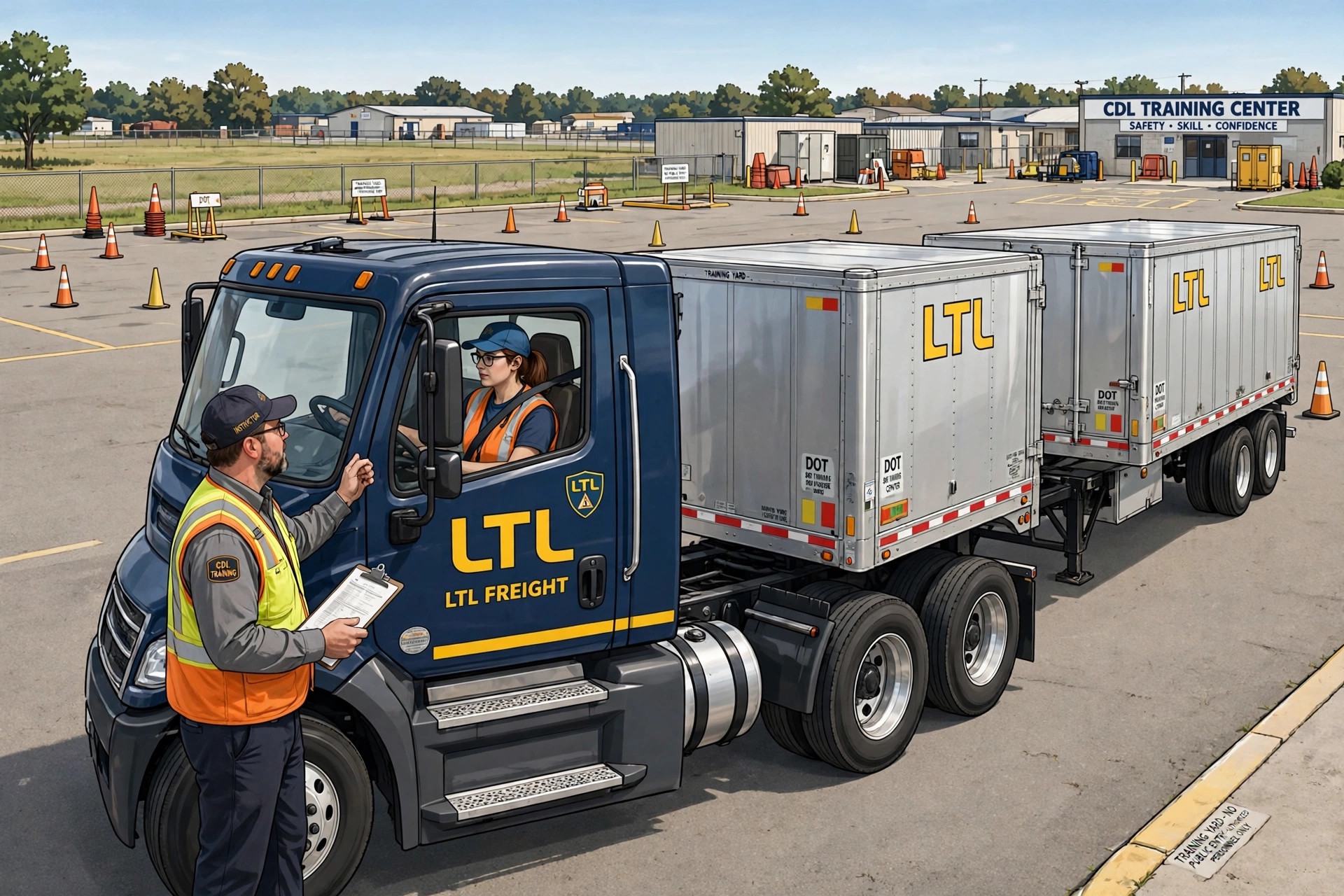 November 18, 2026 · RegulationsSaia asks FMCSA to let learner's-permit trainees pull doubles under supervision — about 300 trainees a year
 November 17, 2026 · RegulationsA House bill would write the CDL fraud tipline into law — hotline, web form and annual reports to Congress
 November 16, 2026 · RegulationsThe 121 revoked ELDs came from just 84 providers — and more than half of this year's revocations trace to repeat names
Comments
Loading comments…