The Trucker Bathroom Access Act advanced out of Senate committee on Nov. 18 — its furthest step yet
The Senate Commerce, Science and Transportation Committee advanced S.5718 at its Nov. 18 markup, with Republican members voting it forward without objection while Democratic members boycotted the hearing over an FCC nomination — moving the bill that would require shipper and receiver facilities with existing restrooms to open them to drivers on to the full Senate.
Summarized from Land Line.
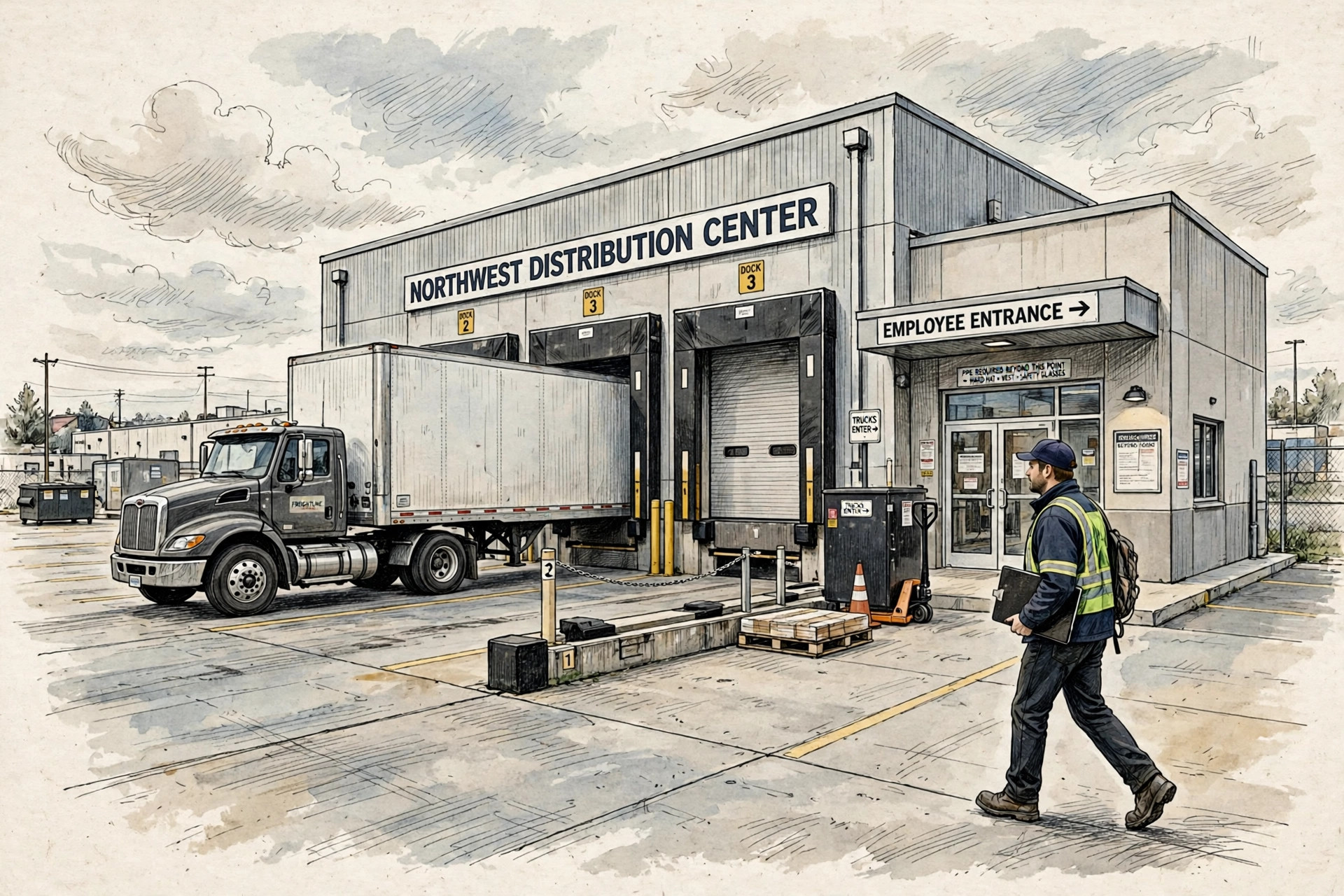
Image: Illustration: AI-generated by CDLWire
Efforts to guarantee truckers' restroom access while on the job took their furthest step yet on Wednesday, when a Senate committee voted the Trucker Bathroom Access Act forward, according to Land Line on Nov. 18.
On Wednesday, Nov. 18, the Senate Commerce, Science and Transportation Committee advanced the Trucker Bathroom Access Act during a markup hearing. The bill, S.5718, was introduced last week by Sens. Lisa Blunt Rochester, D-Del., and Deb Fischer, R-Neb., and would ensure that truck drivers have access to restrooms while waiting at shipper and receiver facilities. CDLWire covered the bill's introduction and its scheduled markup earlier this month; Wednesday's vote is the new development — the bill has now cleared the committee that oversees surface transportation and is eligible for the full Senate.
The vote happened under unusual conditions, and Land Line is precise about them. The bipartisan bill was not hindered by Democratic committee members' decision to boycott the hearing in protest of the nomination of a sole Republican to the Federal Communications Commission. Republican committee members advanced the bill without objection. Meanwhile, the Trucker Bathroom Access Act is expected to find plenty of support among Democrats as well — a reading supported by the bill's House history: the House version, introduced by Reps. Troy Nehls, R-Texas, and Chrissy Houlahan, D-Pa., is co-sponsored by 13 Democrats and five Republicans. A boycott aimed at an unrelated nomination is not the same thing as opposition to the bill, and nothing in Wednesday's record shows a senator voting against restroom access itself.
What the bill would do has not changed since introduction, and its limits are as important as its promise. Businesses would not be required to construct any new restrooms. However, shipper and receiver facilities that already have restrooms available for employees or customers must grant access to truck drivers who are picking up or delivering freight. The obligation attaches to facilities that already have a restroom and already open it to their own people or the public; it does not order a warehouse without facilities to build them. For a driver, the practical meaning is narrow and concrete: at a facility with an employee or customer restroom, being told to wait in the yard without access would no longer be the facility's legal option, once — and only once — the bill becomes law.
The support behind the bill is the industry's own. The Trucker Bathroom Access Act is supported by the Owner-Operator Independent Drivers Association, as well as numerous other trucking organizations. OOIDA President Todd Spencer said that truck drivers shouldn't be forced to \"hold it\" while keeping the nation's supply chain moving, and OOIDA applauded the Senate Commerce Committee for passing the bill on Nov. 18, thanking Blunt Rochester and Fischer for the bipartisan effort. Support also came from the shipper side of the dock: Sarah Ruffcorn, president of Trinity Logistics, agreed, saying that for drivers who spend long hours on the road, access to a restroom shouldn't be something they have to worry about, and that showing drivers they are valued starts with how they are treated in everyday moments. Blunt Rochester's own framing, from last week's news release, ties the bill to who is entering the industry: \"Increasingly, more women are filling these critical jobs, and they should feel confident their basic needs will be met,\" she said.
The bill also has a second, larger vehicle already moving. The Trucker Bathroom Access Act is already rolled into the House version of the highway bill, known as the BUILD America 250 Act. That matters procedurally: a standalone bill needs floor time in both chambers in a crowded end-of-session calendar, while a provision inside a surface transportation package can move with the package. Wednesday's committee advancement strengthens both paths at once — the Senate bill now stands on its own as a committee-passed measure, and its text already sits inside the House highway bill.
For drivers, nothing changes at the dock today. Committee advancement is not law: the bill still needs passage by the full Senate and the House and a presidential signature, or enactment as part of the highway bill, before any facility's restroom policy is governed by it. What changed on Nov. 18 is the bill's position. It entered the week as a newly introduced Senate bill with a scheduled hearing; it leaves the markup as a committee-advanced bill with bipartisan House co-sponsorship, the industry's largest owner-operator association publicly applauding, and its language already written into the House highway package. That is the furthest this idea has travelled in Congress, and the next step to watch is a Senate floor vote.
Sources
Related coverage
 November 18, 2026 · RegulationsSaia asks FMCSA to let learner's-permit trainees pull doubles under supervision — about 300 trainees a year
 November 17, 2026 · RegulationsA House bill would write the CDL fraud tipline into law — hotline, web form and annual reports to Congress
 November 16, 2026 · RegulationsThe 121 revoked ELDs came from just 84 providers — and more than half of this year's revocations trace to repeat names
Comments
Loading comments…