Indiana police and the FBI are investigating a 45-truck carrier over alleged ELD cheating and pay-skimming — and the owner says fired employees invented it
Overdrive reports Indiana State Police have involved the FBI in an investigation of South Bend-based Majestic Cargo Lines over allegations that it manipulated electronic logging devices to cheat driver hours and skimmed driver pay. Owner Nikola Gavrilovic denies the allegations, blames disgruntled fired employees, and points to a July 2026 FMCSA audit that reviewed drivers' records of duty status and passed them. Nothing has been charged, and police confirmation of an investigation is not a finding of guilt.
Summarized from Overdrive.
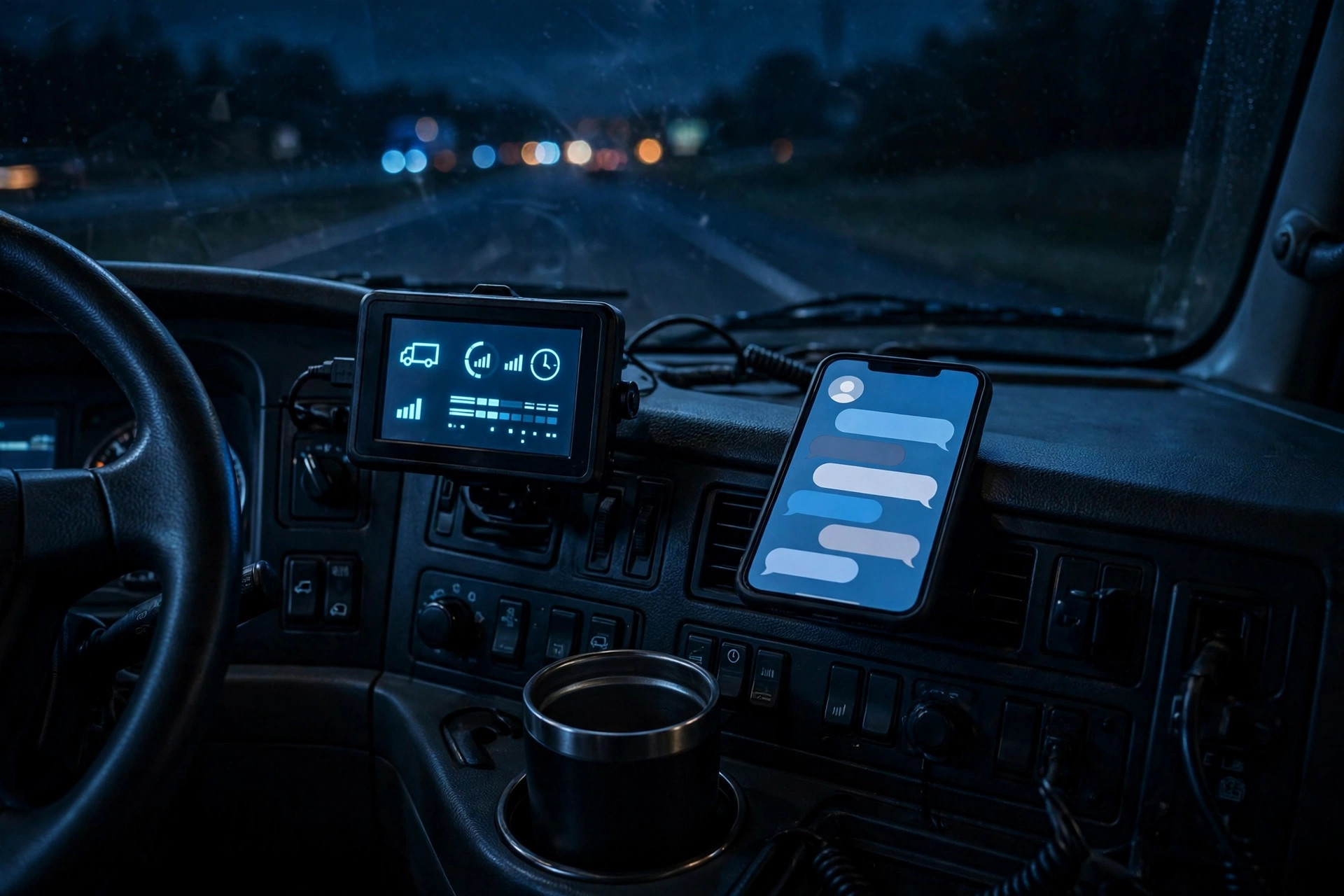
Image: Illustration: AI-generated by CDLWire
Indiana State Police have involved the FBI in an investigation of Majestic Cargo Lines, a 45-truck motor carrier based in South Bend, Indiana, over allegations that the company manipulated electronic logging devices to cheat driver hours and skimmed driver pay, according to Overdrive on Nov. 6. The allegations are exactly that — allegations. Overdrive is explicit that police confirmation of an investigation does not mean the fleet or its owner is guilty of any crime, no charges are reported in its account, and the company’s owner denies the claims outright and attributes them to employees he fired.
Owner Nikola Gavrilovic told Overdrive the reports trace back to people he let go. “I fired one dispatcher and a couple owner-operators that worked for me, and they got pretty upset, so I’m guessing” one of them made false reports, Gavrilovic said. He also pointed to the fleet’s recent experience with the regulator: Federal Motor Carrier Safety Administration records show Majestic underwent a routine audit and investigation in July 2026, and Gavrilovic said it included an investigator visiting his office and reviewing drivers’ Records of Duty Status — and passing them.
The two former drivers Overdrive reached did not tell the same story. One former driver, who said he hopes to return to the company, denied the ELD-cheating and pay-skimming claims — and sent a recording of Overdrive’s call with him to Gavrilovic. The second former driver alleged both ELD cheating and pay skimming. Overdrive’s account is partly a he-said, she-said situation — which is why the investigation matters: what actually happened is now a question for state police and federal investigators, not competing recollections.
One detail in Overdrive’s reporting is not a matter of recollection, because the magazine produced it itself. When Overdrive called Majestic’s dispatch line and asked whether hours could be reset, the representative who answered said to ask “on the Viber group,” referring to the encrypted messaging app Viber. Gavrilovic confirmed that Majestic has a Viber chat group where drivers can request hours resets, but denied that the requests are actually granted. “Dispatch is just doing the dispatch, they don’t do anything with the fleet,” Gavrilovic said. “If you call dispatch and say, ‘Can you change my tire?’, they tell you that you can go to the Viber group and someone will tell, ‘Call this guy for repair.’” Whether the group is a repair-and-logistics channel, as the owner describes it, or a reset channel, as the allegation holds, is one of the things an investigation can establish from records rather than interviews.
The technology context explains why a passed audit does not settle the question either way. Overdrive has documented several fleets using white-labeled ELDs — devices that share the same core technology but are registered and marketed by separate business entities — typically paired with an encrypted chat where drivers request hours resets. Majestic uses two ELD systems, Motive and Extreme ELD, and a researcher with inside knowledge of white-labeled, manipulable ELD networks told Overdrive that one of them shares technology with devices that allow tampering. Manipulable ELDs, Overdrive has previously reported, leave no trace of remote changes in a driver’s Records of Duty Status. A records review can therefore pass a fleet whose hours were changed remotely, because the record an auditor sees is the record after the change.
That invisibility is the enforcement problem this case sits inside. Roadside inspectors are limited by time: to catch this kind of cheating they have to catch a driver over hours before a call to a call center can get the hours reset or corrected. At this year’s Roadcheck, Overdrive visited three states and found varying degrees of capability for detecting remote manipulation. In October, Overdrive attended a meeting between fleet owner Zach Meiborg, FMCSA and Illinois State Police at which Meiborg showed one of his trucks running a manipulable ELD, and a driver demonstrated getting his hours reset on the spot with a phone call. The ELD Meiborg demonstrated has not been revoked. Even when FMCSA does revoke an ELD, it does so one device at a time, while researchers flag to the agency that hundreds of revoked devices use identical technology. A few states have cracked the detection problem — Arizona and Oregon, and more recently Alabama, judging by the number of tampering violations their inspectors have written in federal data analyzed by Overdrive and its sister company RigDig.
The procedural status is narrow and should be stated plainly. Indiana State Police confirmed that Majestic is under investigation; the FBI’s involvement was reported by the state police through Overdrive’s account. FMCSA did not respond to Overdrive’s requests for comment. No arrest, charge or out-of-service action against Majestic or Gavrilovic is reported, and the owner’s denial and the July audit are part of the record alongside the allegations.
For drivers, the practical lessons do not depend on how this one case ends. An hours reset granted through a chat app puts the violation on the driver’s record and the driver’s CDL, not on the dispatcher’s — and a manipulable ELD means the clean log a driver is handed may not match the hours the driver actually worked, which is the driver’s exposure in a crash investigation or a wage dispute. Keep your own contemporaneous record of hours and pay outside the carrier’s systems, and treat any instruction to seek a reset through an encrypted chat as the red flag this investigation suggests investigators now treat it as. Drivers in Arizona, Oregon and Alabama should also know their states are demonstrably writing tampering violations — the detection gap that protects this practice elsewhere is closing unevenly, state by state.
Sources
Related coverage
 November 6, 2026 · Enforcement1 in 7 trucks parked for brakes: CVSA's Brake Safety Week puts 2,369 vehicles out of service, and the 15.3% failure rate barely moved from last year
 November 6, 2026 · EnforcementThe Brenham DPS attack ends in a plea: Clenard Parker gets life without parole for driving a stolen rig through the office that denied his CDL renewal
 November 6, 2026 · EnforcementUp to 40 years for shooting a Prius with a toddler inside: former driver Christian Ramos is sentenced for the I-83 attack — and Pennsylvania charges still wait
Comments
Loading comments…