Trump threatens to immediately double tariffs on Mexico over migrant caravans
The president's Thursday Truth Social post names no tariff line, no exemption and no effective date — but the rates now on Mexican goods run from 25% on most non-USMCA imports and Mexican-made autos to 50% on steel and aluminum, on a trade lane that moved $96.34 billion in September, $38.9 billion of it through Laredo.
Summarized from FreightWaves.
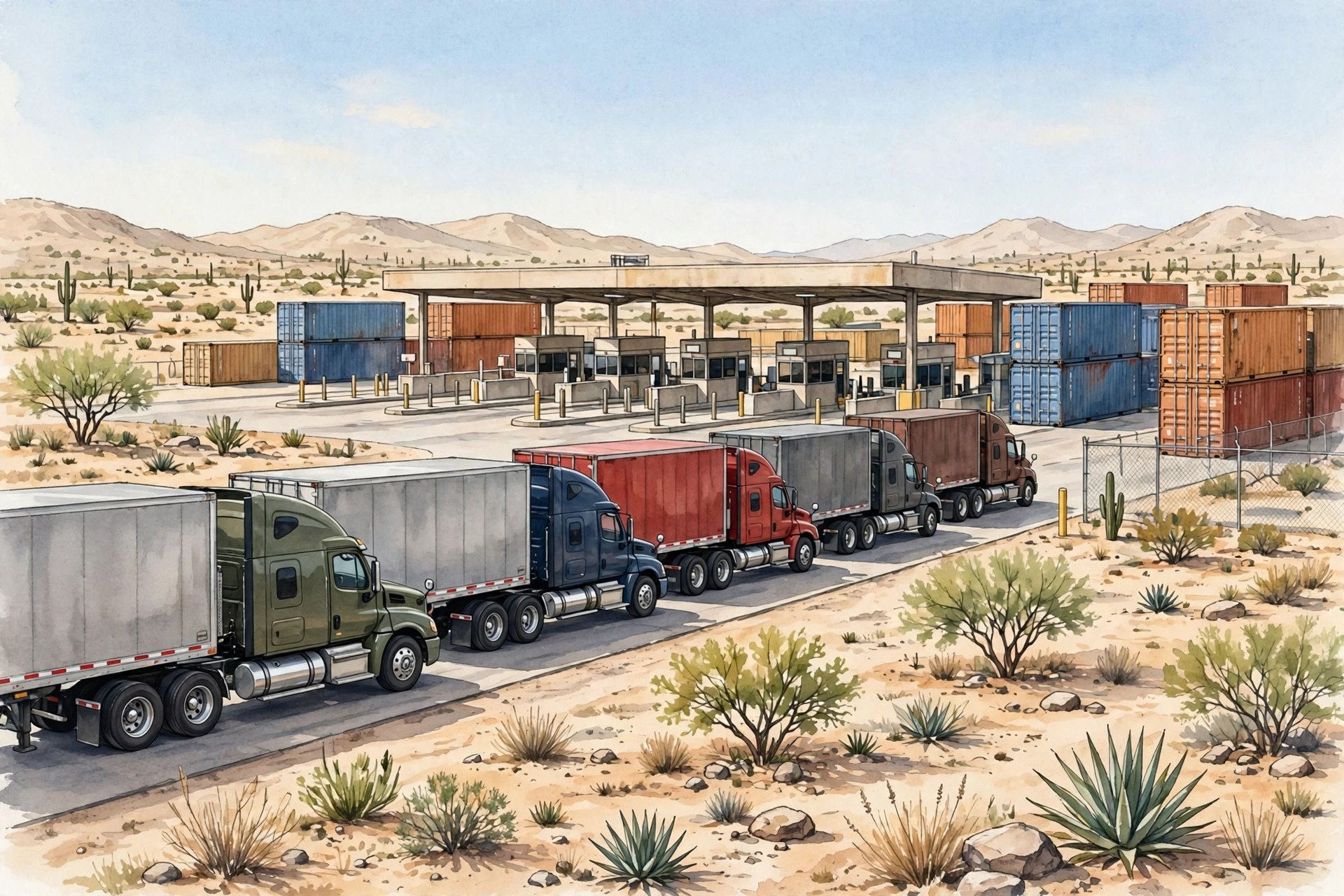
Image: Illustration: AI-generated by CDLWire
President Donald Trump threatened on Thursday to immediately double U.S. tariffs on Mexican imports unless Mexico stops migrant caravans traveling toward the U.S. border, according to FreightWaves on Nov. 12, raising the prospect of another major disruption to North American trade. The warning came in a Truth Social post. "Here we go again!" Trump wrote. "They will not be accepted!" he added. "MEXICO MUST STOP THEM, NOW, and if they do not do so, the Tariffs on Mexico will be IMMEDIATELY DOUBLED." He said Mexico, the governor of Texas, the Border Patrol and Immigration and Customs Enforcement had been informed, and closed with: "There will be no leniency!"
What the post does not say is the operative fact. The president did not specify which tariffs would be doubled, whether existing trade exemptions would remain in place, or when any new duties would take effect. It remains unclear whether the threatened increase would affect non-USMCA goods, automotive products, steel and aluminum, or a broader range of Mexican imports. A threat that covers every Mexican import and a threat that covers only the goods already paying the highest sector duties are very different events for a cross-border carrier, and no published order says which one this is.
The rates currently in place show what doubling would mean if it landed on the existing structure. Current U.S. tariffs on Mexican imports generally include 25% on most goods that do not qualify for preferential treatment under the United States-Mexico-Canada Agreement, 0% on qualifying USMCA-compliant goods, 25% on Mexican-made automobiles, subject to applicable adjustments and exemptions, and 50% on steel and aluminum products imported from Mexico, alongside additional sector-specific duties. Doubling those headline rates, if that is what the threat means, would take the non-USMCA and auto rates to 50% and the steel and aluminum rate to 100% — figures that are arithmetic on the published structure, not rates the administration has announced.
The caravan at the center of the threat is real but still deep inside Mexico. Reuters, cited by FreightWaves and reporting the same post on Nov. 12, put the group at an estimated 1,500 people, mostly from Central America, who set off on Tuesday from the southern city of Tapachula, near the Guatemalan border, hoping Democrats' victory in last week's U.S. midterm elections could open pathways to live and work in the United States. The Spanish news agency EFE reported the group initially included roughly 2,000 people, and the New York Post added on Nov. 12 that this is the third caravan to attempt to traverse Mexico since September — the other two were broken up by authorities, their members granted temporary stay permits.
Mexico's president pushed back the same day. At her daily morning news conference on Thursday, President Claudia Sheinbaum disputed Trump's characterization, saying Mexico has prevented migrant caravans from reaching the U.S. border since Trump returned to office in January 2025. "Since President Trump came into office, no migrant caravan has reached the northern border," Sheinbaum said, according to a translation of her remarks. She acknowledged two caravans are traveling through southern Mexico, but said authorities are managing them, providing information and humanitarian assistance rather than letting them reach the border.
The trade underneath the argument is the largest the United States does with any country. Mexico remains the United States' largest overall trading partner, with bilateral commerce totaling $96.34 billion in September, and Laredo, Texas, the nation's leading international trade gateway, handled $38.9 billion in two-way trade that month. The automotive, industrial equipment, electronics and metals sectors are especially dependent on cross-border supply chains, with components and finished products frequently transported by truck between factories, distribution centers and customers in both countries — freight that crosses the border repeatedly on its way to a finished vehicle or machine.
The threat also lands in the middle of live negotiations, not a settled truce. Washington and Mexico City are already negotiating trade issues and potential tariff reductions, including duties affecting Mexican steel and other manufactured products, following Trump's decision in July not to extend the USMCA framework. As CDLWire reported on Nov. 7, the United States declined to confirm a 16-year extension of the agreement on July 1, putting it on annual reviews that could continue until the pact expires in 2036, while southern-border freight volumes run about 6.5% higher than a year ago and spot rates on lanes out of the Texas border have climbed 24% on tightening capacity. Border carriers were already describing "tariff fatigue" — customers' plans going stale within a week as announced tariffs changed — before Thursday's post.
For drivers and carriers, the practical position on Thursday evening is narrow. No new duty is in effect: a tariff threat in a social media post is not a customs rate, and nothing in the post reprices a load already rolling. What would make it one is a formal action that names the tariff lines covered, the treatment of USMCA exemptions and an effective date — the three facts the post omits. Until one appears: expect calls from shippers and brokers on Mexico lanes, keep the paperwork on who bears duty costs on cross-border contracts current, and watch whether Mexico's handling of the two caravans in its south — the condition the president set — is answered with a withdrawal of the threat or with an order carrying the numbers this post does not.
Sources
Related coverage
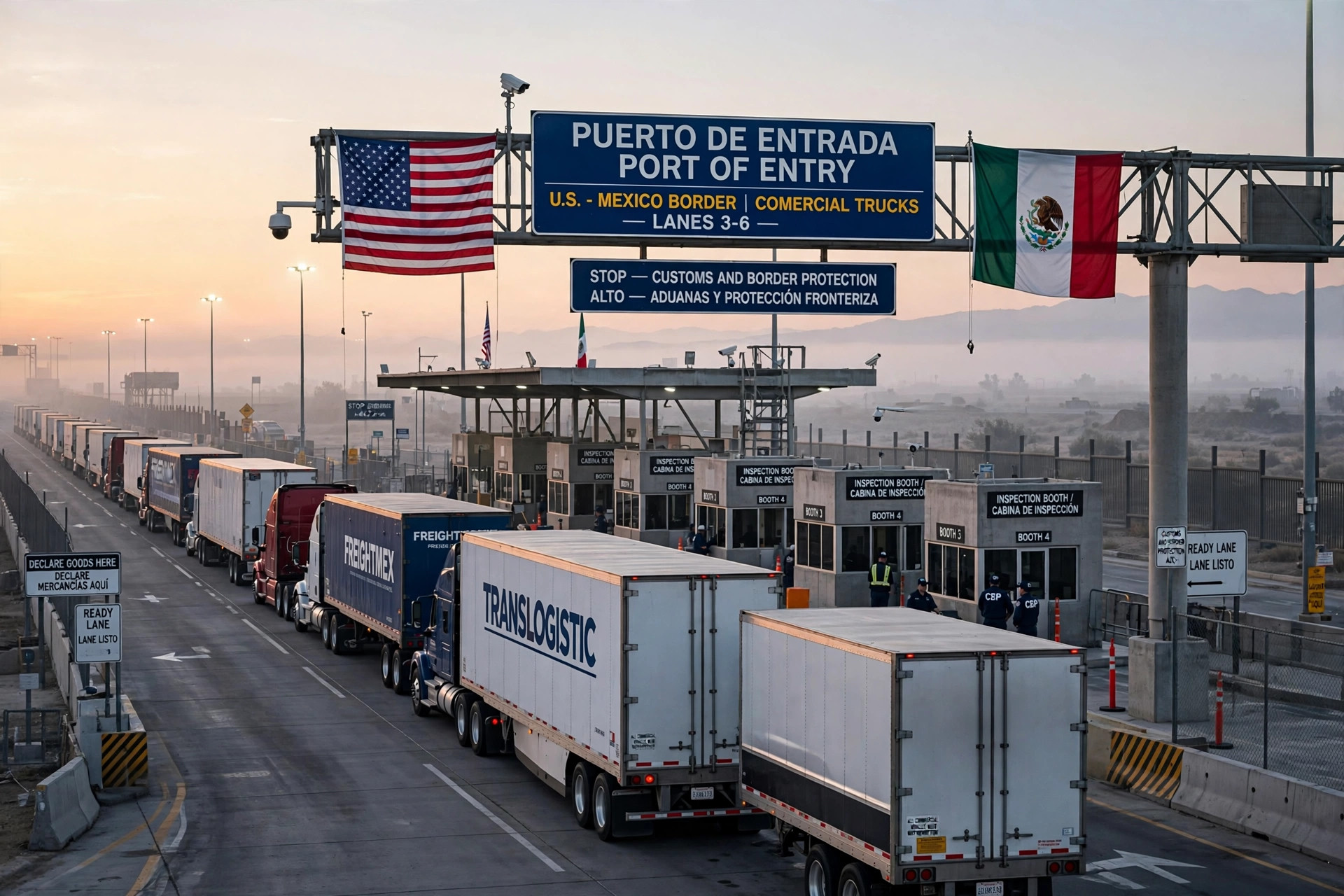 November 7, 2026 · BorderTexas-border spot rates are up 24% as USMCA goes to annual reviews — and DAT says exiting capacity, not demand, is doing the work
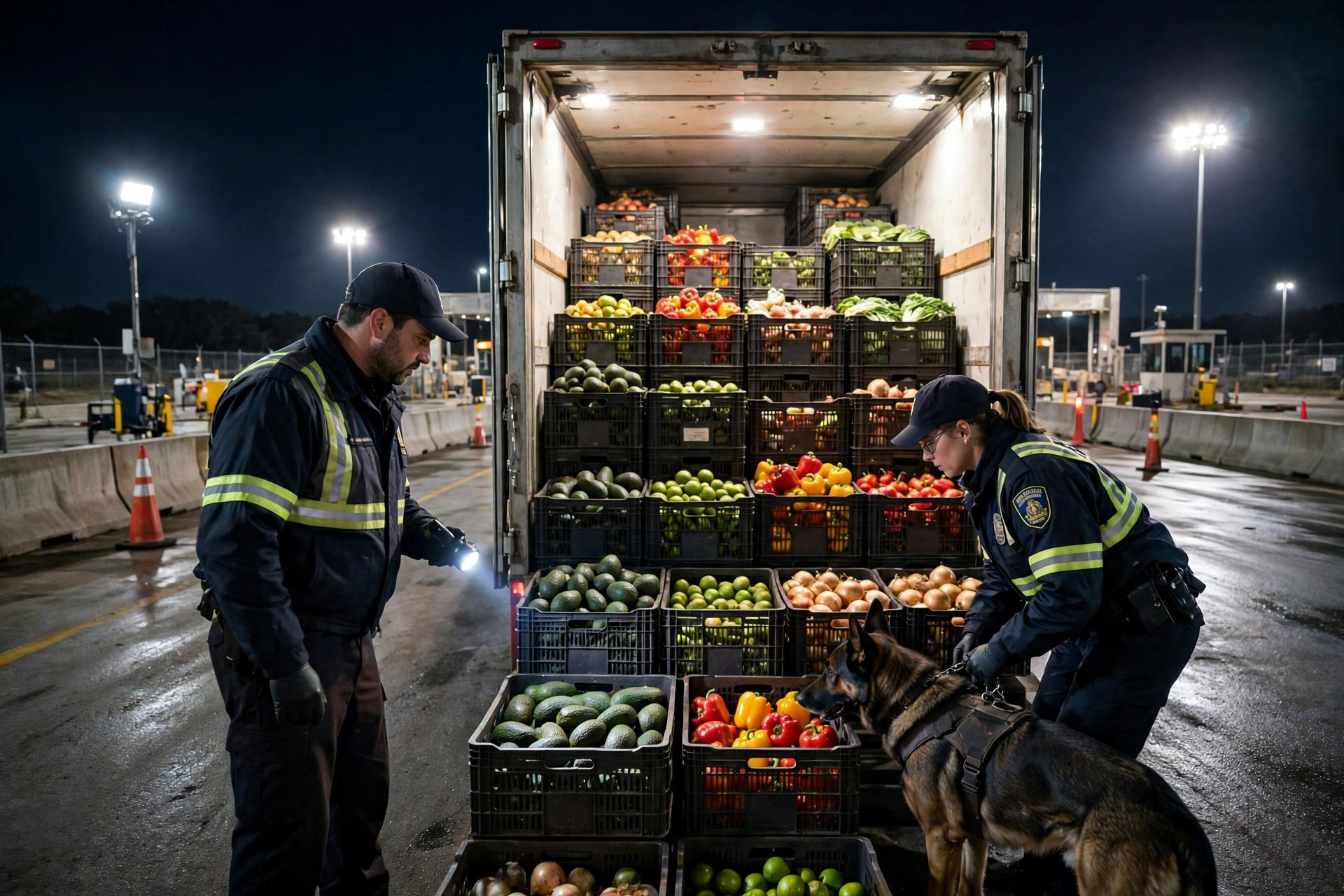 November 5, 2026 · Border909 packages of meth in a load of leeks: CBP's 1,082-pound Pharr seizure anchors Operation Southern Surge's first results
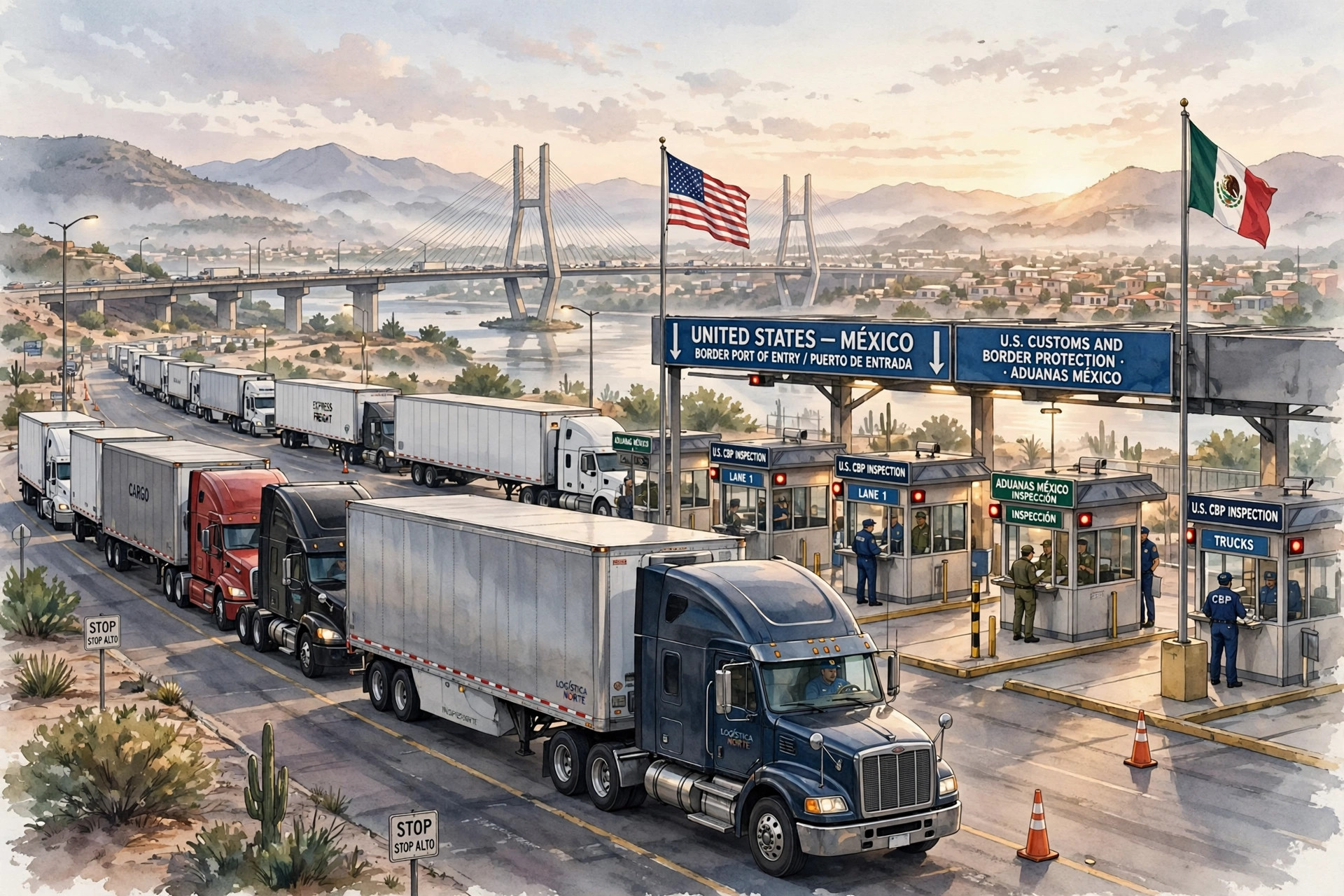 November 1, 2026 · BorderCabotage enforcement is 'really ramping up,' Knight-Swift's CEO warns — as Nuevo León halves the Colombia Bridge truck toll
Comments
Loading comments…