Truck tonnage slipped 1.8% in October to an index reading of 114.0 — but it was up 1.8% from a year ago, on a record month for container imports
ATA's For-Hire Truck Tonnage Index fell back in October after September's 2.7% gain, and September itself was revised up to 116.1. Underneath the monthly dip: container imports hit an all-time high of 2,674,808 TEUs in October, Los Angeles posted back-to-back million-TEU months for the first time, and shipper spending rose 32.1% in the third quarter.
Summarized from Transport Topics.

Image: Illustration: AI-generated by CDLWire
For-hire truck tonnage gave back part of September's gain in October, while the year-over-year trend stayed positive for a second straight month, according to Transport Topics on Nov. 24, reporting the American Trucking Associations' latest release.
ATA's advanced seasonally adjusted For-Hire Truck Tonnage Index equaled 114.0 in October, down from 116.1 in September — a 1.8% sequential decline that followed a 2.7% gain in September. The index, which uses 2015 as its base of 100, was up 1.8% year over year in both October and September, and through the first 10 months of 2026 tonnage is up 1.1% compared with the same period last year. October's figure is the advanced reading and remains subject to revision; September's number itself was revised upward from the 114 ATA originally reported on Oct. 20, after fleets submitted additional data.
ATA Chief Economist Bob Costello described the start of the final quarter as mixed, with a slight drop in volumes sequentially after a very strong gain the previous month. Compared with a year earlier, however, tonnage was up for the second straight month, and Costello credited rising imports, along with moderate growth in factory output and consumer spending, for helping the increase from last October.
The import numbers behind that comment are striking. Descartes Systems Group data cited in the report shows container import volumes rose 16% year over year in October to an all-time high of 2,674,808 twenty-foot-equivalent units — 2% above the previous record set in May 2022 and 5% higher than September's total. The West Coast did much of the lifting: the Port of Los Angeles reported its second-busiest month on record, with volume jumping 21% to 1,026,872 TEUs from 848,424 in October 2025, and September and October marked the first time the port surpassed 1 million TEUs in two consecutive months. The Port of Long Beach reported volume up 11.7% to 937,715 containers from 839,671.
Money is moving with the freight. Shipper spending rose 32.1% year over year in the third quarter, according to the U.S. Bank Freight Payment Index — the largest annual increase since 2021. The Southwest led the regional spending increases with a 51.6% year-over-year rise, which U.S. Bank attributed to tight capacity as enforcement actions reduced the number of drivers available for domestic loads. That regional detail lines up with what drivers on border and port lanes have been reporting: the freight exists, and the constraint is increasingly the supply of trucks and drivers cleared to haul it, not the demand.
The forward view in the report comes from ACT Research. Tim Denoyer, ACT's vice president and senior analyst, said in Nov. 20 commentary that the freight cycle is shifting gears, with volumes ramping up into the holidays and capacity likely to tighten further through January, and that driver availability and regulatory changes — from FMCSA rules to the looming EPA low-nitrogen-oxide requirements constraining driver and equipment supply — would likely boost both spot and contract rates.
Drivers should read the two signals in this story separately. The month-to-month index dip is real but follows an unusually strong, upwardly revised September, and monthly tonnage is a noisy series. The structural facts — record imports, back-to-back million-TEU months at Los Angeles, double-digit spending growth and year-over-year tonnage gains two months running — point the other way. The practical takeaway: October was a pause in volume, not a reversal, and the freight that record imports represent has to move inland by truck in the weeks ahead, which is exactly the demand the spot board is already pricing.
ATA's index is built from surveys of its member fleets and is dominated by contract freight rather than the spot market, which is why it can soften in the same week that load boards are surging — the two measures answer different questions, and this month they are describing a contract market pausing after a strong September inside a freight economy that is still growing year over year.
Sources
Related coverage
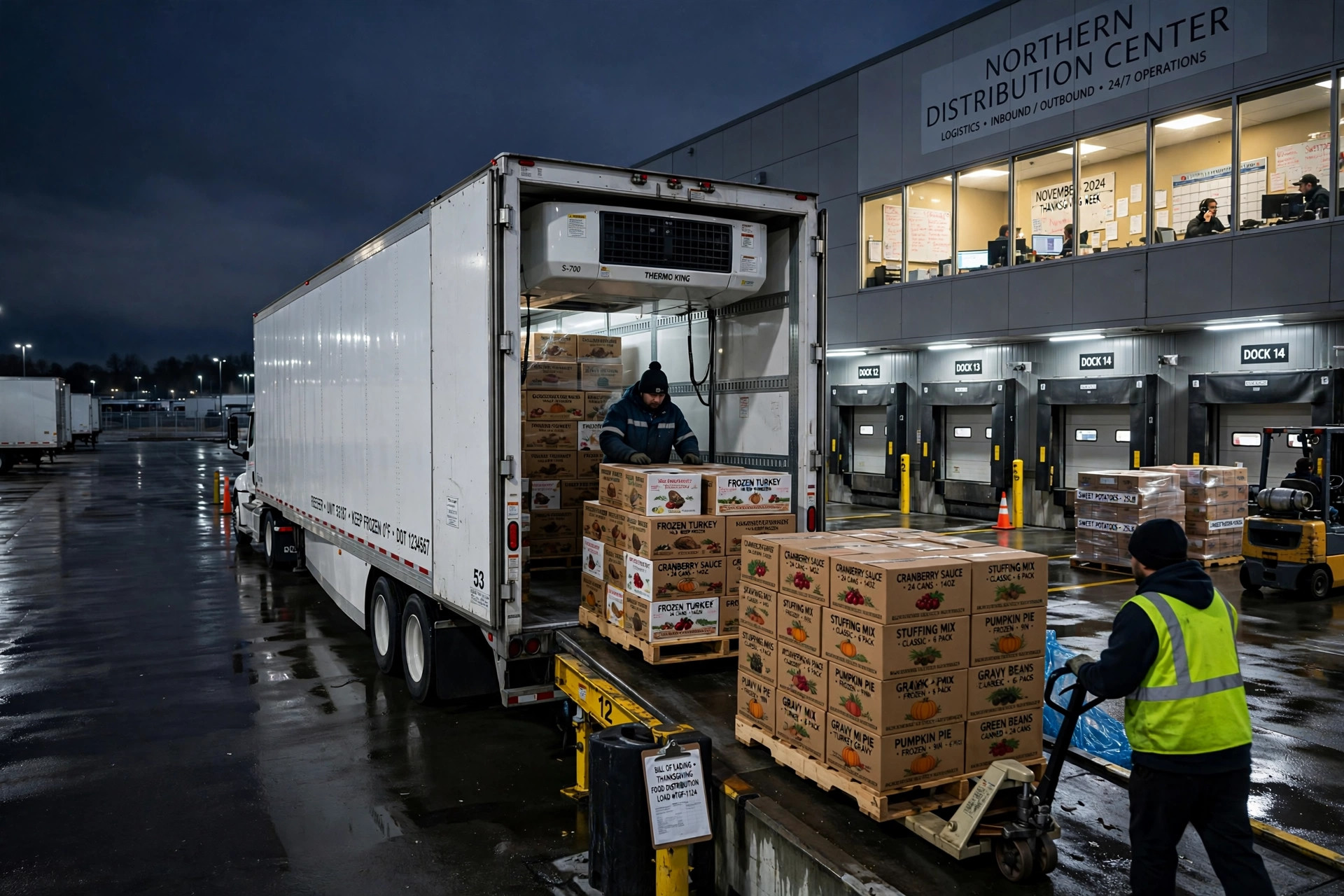 November 24, 2026 · Fuel & ratesRefrigerated spot rates jumped $0.181 to $3.73 a mile — the strongest gain ever recorded for the week before Thanksgiving, and the highest level since the first week of 2022
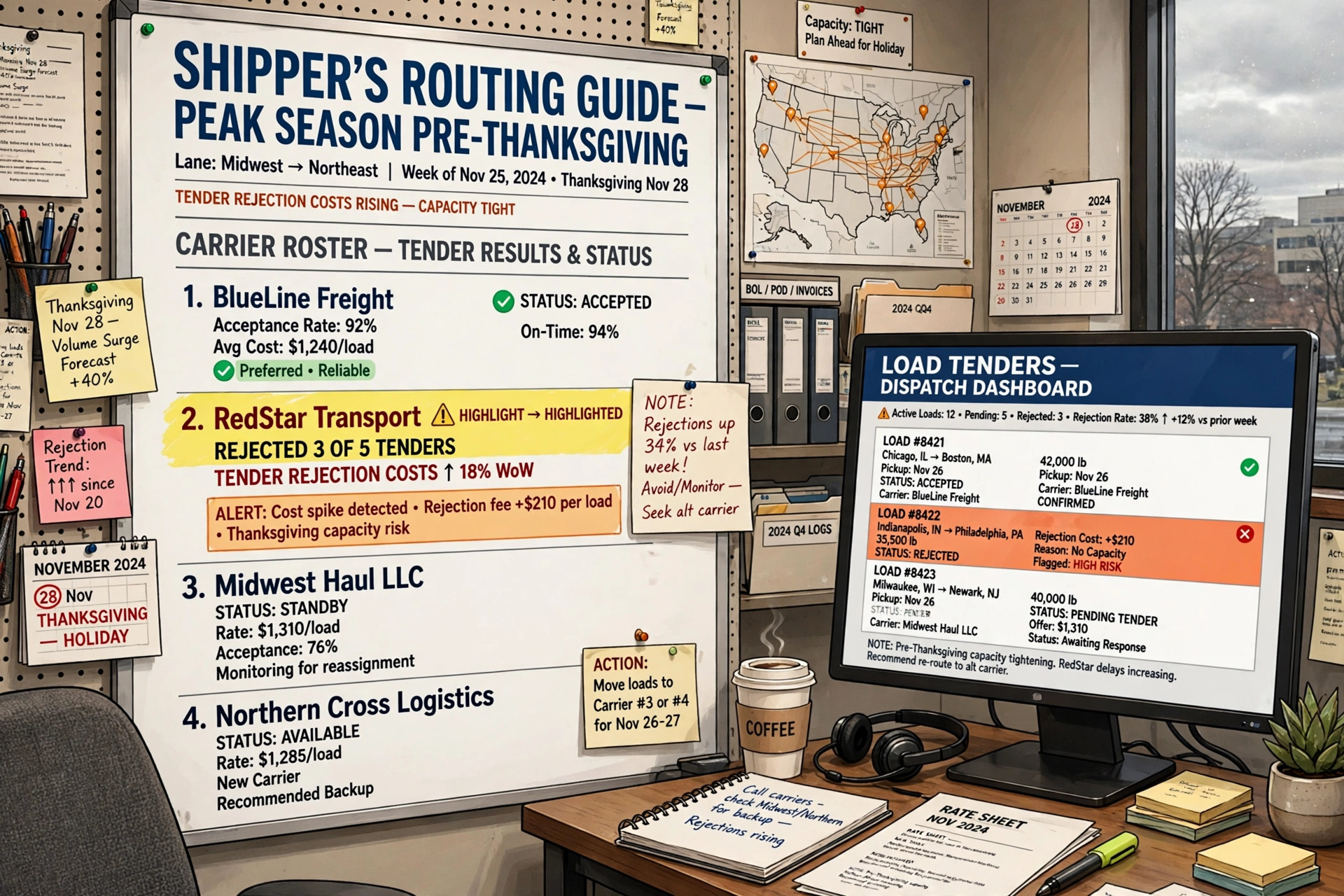 November 22, 2026 · Fuel & ratesA rejected tender now costs shippers 10.69% more to cover — the backup-plan premium hit its highest level since September
 November 21, 2026 · Fuel & ratesTender rejections climbed back toward 13% before Thanksgiving — SONAR sees roughly 14% next week, and says fuel is not the reason
Comments
Loading comments…